




Live chat script examples are pre-written response templates that help support agents and AI chatbots handle customer conversations consistently and efficiently. With 200 categorized scripts covering greetings, sales, escalation, and more, these ready-to-use templates can cut response times by 60% while keeping satisfaction rates above 85%.
What Are Live Chat Scripts?
Live chat scripts are pre-written messages that guide customer service agents and AI chatbots through conversations. They act as a blueprint for interactions, keeping responses consistent, accurate, and aligned with your brand's voice.
Scripts typically include predetermined phrases, transition statements, and response templates. They reduce errors, speed up replies, and make sure every query gets handled with the same level of care. Whether you're running a five-person support team or managing thousands of daily conversations with an AI chatbot, scripts give your team a reliable starting point.
Why Should You Use Live Chat Scripts?
Customer expectations keep climbing. People want fast, personalized answers, and live chat delivers on both fronts.
Scripts help your team hit that mark by removing guesswork from conversations. New agents can handle queries from day one, experienced reps can move faster, and your brand voice stays uniform across every chat.
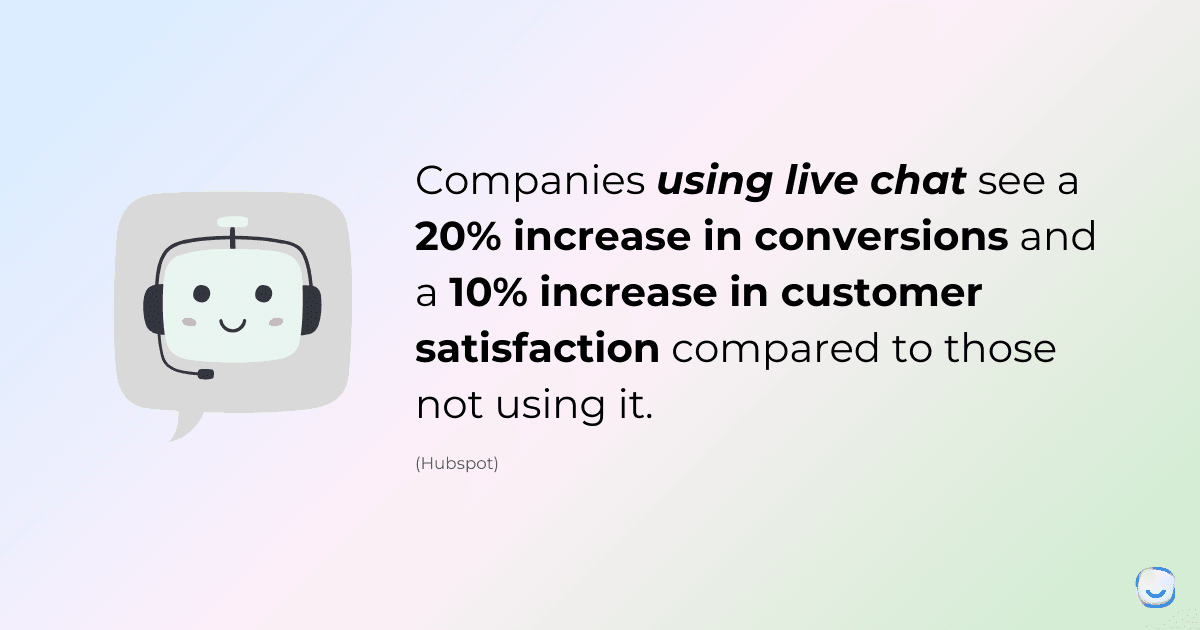
According to Digital Minds BPO, businesses can achieve a customer satisfaction rate of 84.7% with a live chat response time of just 5 to 10 seconds. Scripts make that speed possible.
How AI Enhances Live Chat Scripts
AI takes static scripts and makes them adaptive. Instead of one-size-fits-all replies, AI-powered chatbots can pull from your script library and tailor responses based on customer data, browsing behavior, and conversation context.
According to Kayako, citing McKinsey research, generative AI in live chat could add $2.6 trillion to $4.4 trillion annually across analyzed use cases. That's not a distant possibility. Companies across industries have already doubled down on live chat infrastructure to meet rising customer expectations.
Here's what AI brings to the table:
Personalization at scale. AI analyzes customer data in real time, customizing script responses to match individual preferences, purchase history, and browsing patterns.
Higher volume without lower quality. Your team can manage hundreds of simultaneous conversations while AI handles routine queries. This is one of the most effective ways to reduce support tickets without hiring more agents.
Proactive engagement. AI can trigger chat scripts based on user behavior. If someone lingers on your pricing page for 30 seconds, an AI chatbot can initiate a conversation with a relevant script before the visitor bounces.
The conversational AI market in intelligent contact centers is growing at a CAGR of 18.66% from 2025 to 2030, according to Nextiva. Scripts paired with AI aren't optional anymore. They're the standard.
200 Live Chat Script Examples Across Different Scenarios
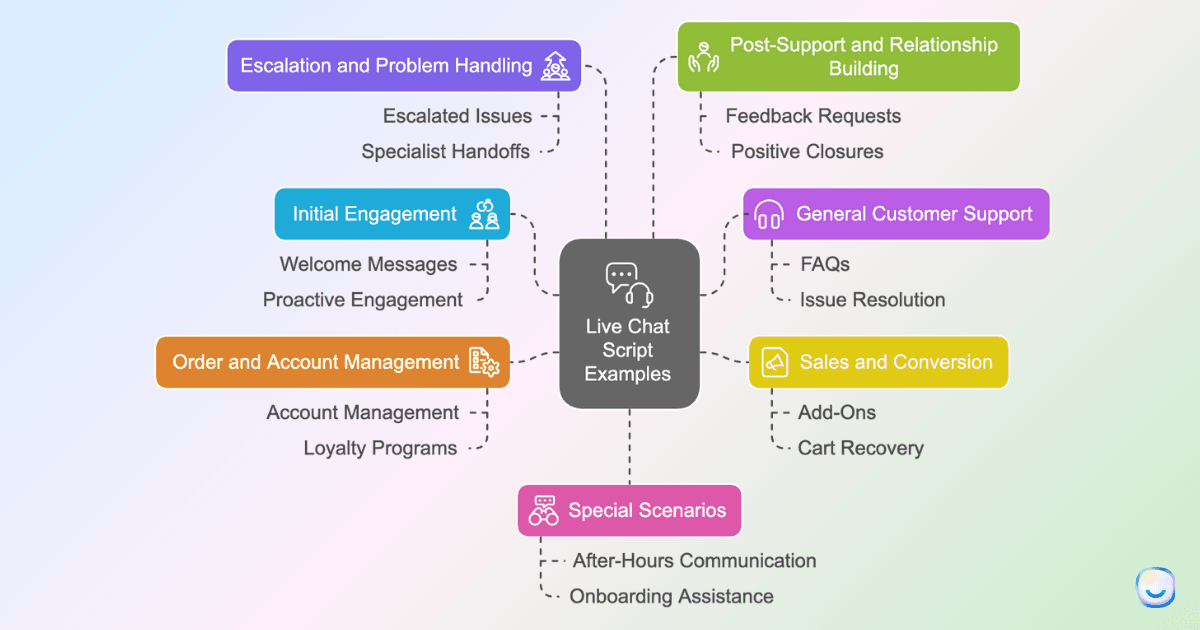
Below you'll find 200 scripts organized into 7 major categories and 20 subcategories. Each script is ready to copy and customize for your business. Swap in your company name, product names, and agent details where you see brackets.
I. Initial Engagement
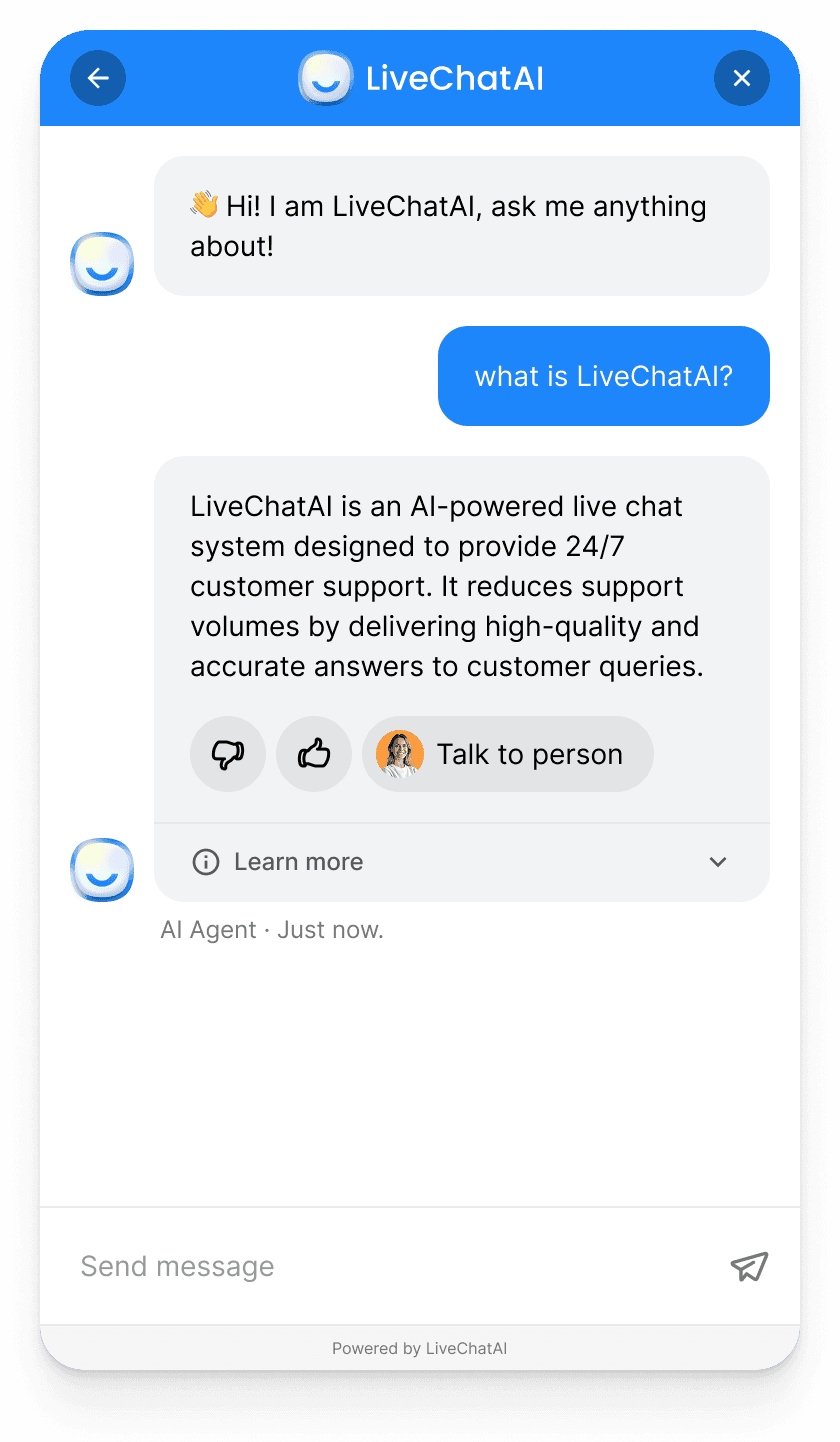
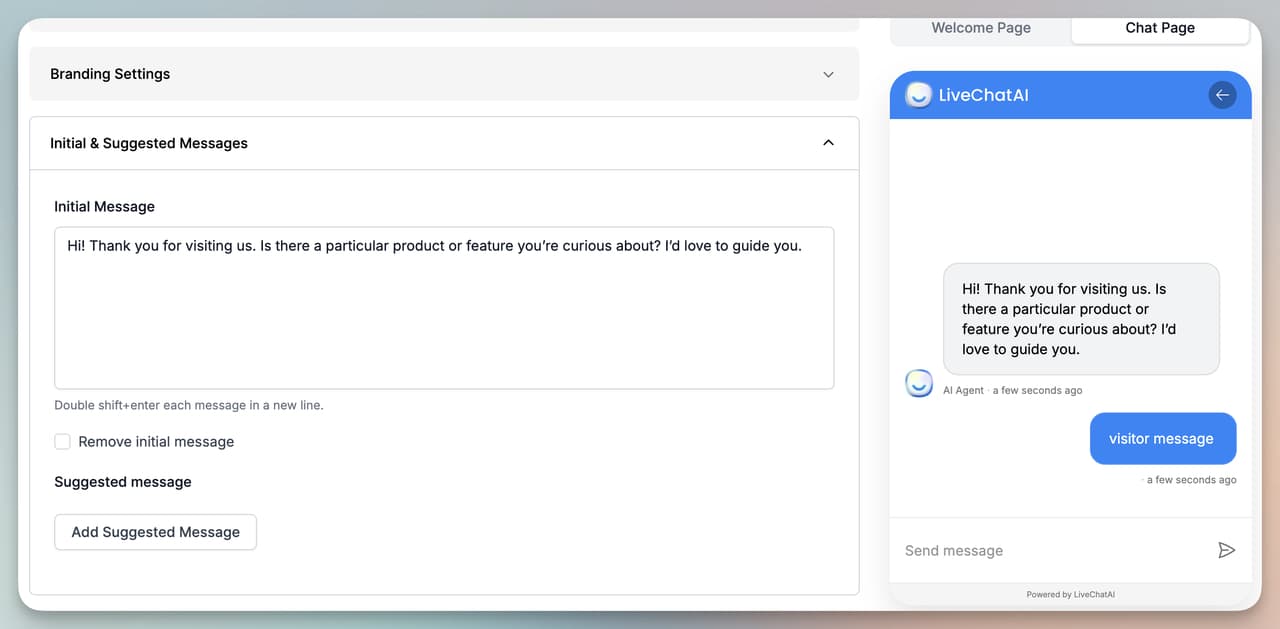
First impressions shape the entire conversation. Personalized greetings set a friendly, solution-oriented tone and can increase customer engagement from the very first message. Here's how a greeting looks inside the LiveChatAI dashboard with initial suggested messages.
1. "Hello [Name]! Thanks for stopping by today. I'm here to answer any questions you might have or help you explore our services. How can I assist you?"
2. "Hi there! I'm [Agent Name], and I'm delighted to connect with you. Is there anything specific on your mind that I can help you clarify?"
3. "Hey [Name], welcome to our website! I can walk you through our latest offerings if you'd like. Feel free to share what you're looking for."
4. "Good day! My name is [Agent Name]. I'm here to help make your experience as smooth as possible — just let me know what you need."
5. "Hi! Thank you for visiting us. Is there a particular product or feature you're curious about? I'd love to guide you."
6. "Welcome to [Company Name]! I'm on standby to make your journey with us enjoyable. How can I assist you right now?"
7. "Hello! It's great to have you here. I see you're exploring our site — any questions I can help answer to get you started?"
8. "Hi [Name]! I'm excited to chat with you today. If you'd like any recommendations or guidance, I'm ready to assist."
9. "Thanks for reaching out to [Company Name]. I'm here to make sure you find exactly what you need. What's on your mind?"
10. "Hello and welcome! I appreciate you choosing our live chat. How can I provide value for you today?"
Sometimes visitors browse your site without starting a conversation. A well-timed proactive message can turn a passive visitor into an active lead. These scripts work well with live chat triggers that fire based on user behavior.
11. "I noticed you've been looking at [product/service] for a bit. Can I share any insights or tips to help you decide?"
12. "Hi again! Just checking if you found everything you were looking for. I'm here if you need any additional information."
13. "Thanks for browsing our FAQ page. If something still isn't clear, feel free to ask — I'm happy to clarify."
14. "I see you're comparing our subscription plans. Would you like a quick rundown on the differences?"
15. "Hello! Our [new feature] has been a popular choice. I can explain how it works if you'd like more details."
16. "You've been on our pricing page for a while — any questions on how our billing works or what plan suits you best?"
17. "Noticed you exploring our product gallery. If you're curious about any specific item or variant, I can offer more info."
18. "I see you're back on our site. Welcome again! Anything particular catching your eye this time?"
19. "Hi there, just a friendly check-in! I'm around if you need help choosing the right option for your needs."
20. "Would you like to learn about our current promotions? I can point you toward deals that might interest you."
When a customer's question is vague or you need more context, these clarification scripts help you gather the right details without sounding pushy or repetitive.
21. "Thanks for reaching out, [Name]. Could you share more details about your main challenge so I can give more precise guidance?"
22. "I'm here to help, but first I want to ensure I fully understand your situation. Can you tell me a bit about what you've tried so far?"
23. "That's helpful information. When did you first notice this issue, and are there any particular features that aren't working as expected?"
24. "Before we dive into solutions, could you describe your setup or environment? That helps me tailor the steps to your scenario."
25. "I appreciate you explaining your question. Could you clarify if you're looking for technical guidance or just a feature overview?"
26. "I want to provide a spot-on answer. Can you specify whether you've encountered error messages or certain glitches?"
27. "It sounds like a unique situation. What's your end goal or the main outcome you'd like to achieve here?"
28. "I'm committed to finding a solution. Could you give me a bit more background on how you're currently using our product?"
29. "To offer the best recommendations, can you let me know if you've performed any troubleshooting steps on your own?"
30. "Thank you for sharing those details. Is there anything else about your process or setup that might be relevant to this issue?"
II. General Customer Support
This is the backbone of your support operation. These scripts cover the most common interactions your team handles daily, from FAQ answers to step-by-step troubleshooting and managing wait times.
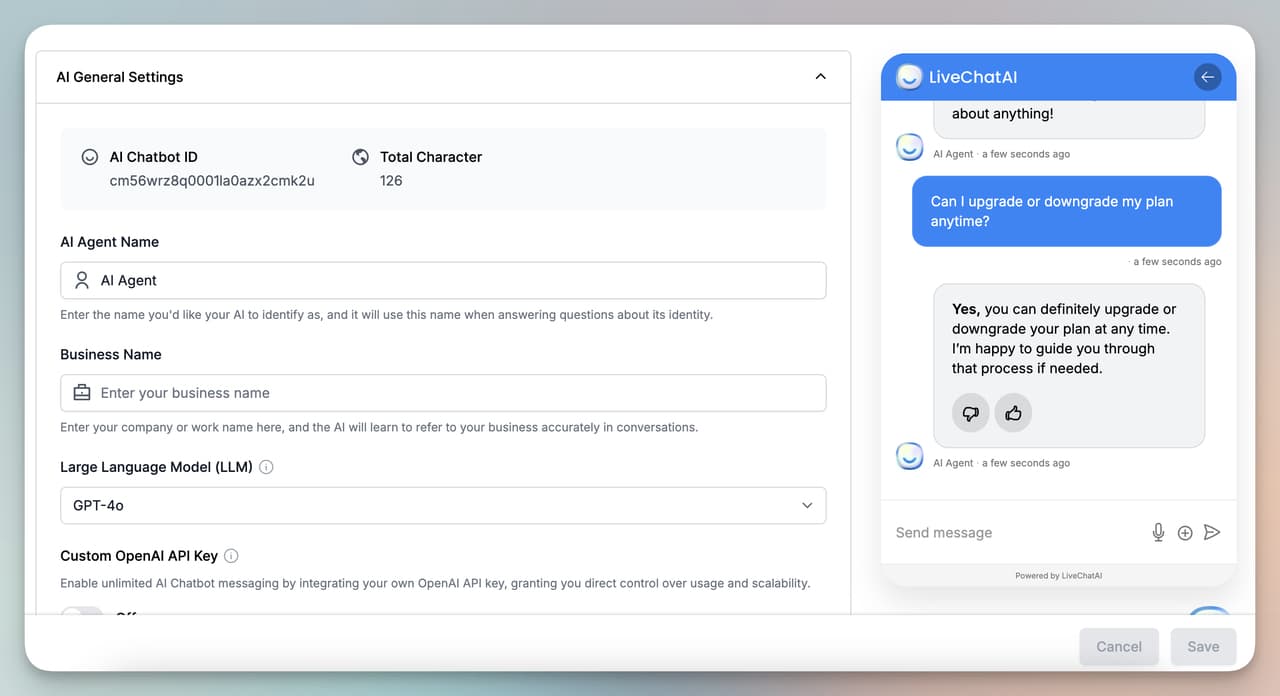
Customers ask the same questions about pricing, billing, and product usage over and over. Pre-written FAQ scripts let your agents (or AI chatbot) respond instantly and consistently.
31. "Great question! For our basic plan, you get [XYZ features]. If you need advanced functionality, our premium plan might be a better fit."
32. "I appreciate you asking. Typically, you can reset your password by clicking 'Forgot Password' on our login page. If that doesn't work, let me know, and I'll assist."
33. "Thanks for your query! Our shipping times range from 3-5 business days domestically and up to 10 days internationally, depending on customs."
34. "That's a common concern. To troubleshoot quickly, just head to your account settings and look under 'Billing.' You'll see all recent invoices there."
35. "I'm glad you brought this up. To change your subscription level, navigate to 'Manage Subscription' in your profile. Let me know if you hit a snag."
36. "If you're wondering about refunds, we do offer a 30-day money-back guarantee on all annual plans. Let me know if you need more details."
37. "Good question! For integrations with third-party apps, visit our 'Integrations' page. Each section has a step-by-step setup guide."
38. "Our privacy policy states we never share your data without your consent. Does that address your concern, or is there more you'd like to know?"
39. "For product compatibility issues, we typically recommend checking the system requirements listed on our product page. Any specifics you'd like me to confirm?"
40. "Yes, you can definitely upgrade or downgrade your plan at any time. I'm happy to guide you through that process if needed."
A step-by-step approach helps customers solve problems faster and improves first-contact resolution rates. These scripts pair well with a solid customer success metrics strategy.
41. "Let's go through this together. First, please [Step 1]. If you see the following results, we'll proceed to [Step 2]."
42. "Thank you for your patience. Next, I recommend checking [possible cause]. Let me know what you find, and we'll move to the final step."
43. "Let's tackle this step by step. First, please restart the app and see if the issue persists. We'll escalate further if it does."
44. "Thank you for your patience. I recommend clearing your browser cache next — sometimes stored data conflicts with updated features."
45. "Let's do a quick environment check. Are you using a Mac, PC, or mobile device? That can change how we proceed."
46. "I suggest uninstalling and reinstalling the application. This often resolves minor glitches, and we can move on if it doesn't."
47. "Let me guide you through checking your internet connection. A weak or spotty network can cause timeouts or loading errors."
48. "If the basic steps don't help, I can connect you with our technical team. They can run deeper diagnostics."
49. "After completing these actions, please log out and log back in to refresh your session. Let me know if the issue persists."
50. "Thanks for working through the troubleshooting with me. If none of these steps solve it, we'll escalate it immediately to our specialist."
Sometimes you need extra time or input from another department. These scripts keep customers informed and reduce frustration during wait times.
51. "I appreciate you letting me look into this more thoroughly. I'll need around 5 minutes to check with our technical department — hang tight, please."
52. "It's taking a moment to load the information I need. Thank you for waiting; I'll be right back with an update."
53. "We're experiencing high chat volumes, so I may be a bit slower than usual to respond. I promise I won't forget about you!"
54. "I'd like to confirm the solution with my supervisor. Could you please hold on for a short while?"
55. "Thanks for your patience, [Name]. I'm verifying your account details now and should have an answer momentarily."
56. "There's a slight delay in our internal system. I'm refreshing my dashboard to get accurate info — thanks for bearing with me."
57. "Let me transfer your chat logs to the relevant team. I'll update you as soon as I get a response from them."
58. "I'm going to do a quick check on your order status in our warehouse system. This usually takes a few minutes."
59. "I appreciate your understanding. Our system's taking a while to process your request, but I'll stay with you until we get it sorted."
60. "It looks like I need further confirmation on this request. I promise to return with a definite answer in just a few minutes."
III. Sales and Conversion
Live chat isn't only for support. It's one of the highest-converting sales channels when you use the right scripts. These templates cover upselling, promotions, cart recovery, and booking demos through your chatbot funnel.
Upselling and cross-selling work best when they feel helpful, not pushy. These scripts position upgrades as genuine solutions to a customer's stated needs.
61. "Based on what you've shared, [Name], the [Premium/Product Upgrade] might boost your results significantly. Want more details on what it includes?"
62. "I see you're making great use of our [Basic Plan]. Would you like to learn how advanced features in our [Premium Plan] could streamline your workflow even more?"
63. "If you're enjoying [Feature A], the upgraded version also offers [Feature B and C]. Interested in exploring the benefits?"
64. "Our [Add-On] integrates perfectly with your current setup. Should we take a peek at how it could simplify your process?"
65. "I hear that you're looking for faster analytics. Our [Advanced Module] might be exactly what you need — ready for a quick overview?"
66. "Have you considered adding [Extra Service]? Many of our customers find it saves them a ton of time each month."
67. "I recall you mentioning a desire to scale up. Our [Growth Bundle] might fit right in with those plans — shall I walk you through it?"
68. "You're currently on our standard plan, but if you're handling higher volumes, an upgrade could prevent overage costs. Care to discuss the options?"
69. "This feature is great on its own, but pairing it with [Add-On X] unlocks more customization. Shall we talk about how that works?"
70. "I noticed you're working on multiple projects. Our multi-project license might offer cost savings — want to check it out?"
A well-timed mention of a promotion can tip a hesitant customer toward completing their purchase. These scripts present deals without feeling salesy.
71. "Good news! We're running a [X%] discount on [Product/Service] this week. Would you like me to apply it to your order?"
72. "I wanted to let you know about our current promotion — buy one subscription and get the second month free. Interested in the details?"
73. "Since you've been a loyal customer, I can offer you an exclusive [X%] off your next renewal. Want me to set that up?"
74. "Our seasonal sale ends in 48 hours. If you've been eyeing [Product], now would be a great time to grab it at a lower price."
75. "We're offering free shipping on orders over [Amount] this month. Your cart is close to qualifying — want suggestions for what to add?"
76. "Did you know we have a bundle deal right now? Pairing [Product A] with [Product B] saves you [X%] compared to buying them separately."
77. "I see you're comparing plans. If you go with the annual option today, you'll save [X%] versus the monthly billing. Want me to walk you through it?"
78. "We just launched an early-bird discount for [New Feature/Product]. If you sign up before [Date], you'll lock in the lower rate permanently."
79. "As a first-time customer, you're eligible for our welcome discount of [X%] off. Should I apply it before you check out?"
80. "Heads up — we have a limited-time offer on [Service]. I can share a promo code if you'd like to take advantage of it."
Cart abandonment is one of the biggest revenue leaks in e-commerce. A gentle, well-timed chat message can recover a sale that would otherwise be lost.
81. "Hey [Name], I noticed you left [Item X] behind. Let me know if you have questions or concerns before checking out — I'm here to help!"
82. "We saw you were close to completing your purchase. Anything I can clarify about pricing or shipping so you can finalize with confidence?"
83. "Looks like your cart still has some awesome items in it. Can I offer any assistance or perhaps a quick discount code to help you decide?"
84. "We hate to see those goodies go unclaimed. Need more info on the product specs before you complete your order?"
85. "Just a friendly nudge: your cart is still waiting for you. Would an overview of our return policy ease any worries?"
86. "I see you almost purchased [Item Y]. Let me know if it's a sizing or availability question — I'd love to assist."
87. "Hi [Name], sometimes all it takes is a little extra info to finalize. Any lingering doubts I can address for you?"
88. "We appreciate your interest in [Product A]. Need help with color options or shipping times? Let me know — I've got the details."
89. "Before you go, I wanted to share that we have free returns on that item. Does that help you move forward?"
90. "We saved your cart in case you want to pick up where you left off. If I can sweeten the deal or explain any features, just say the word!"
Inviting prospects to book a demo or consultation personalizes the sales process and moves them further down the funnel. Keep the ask low-pressure and flexible.
91. "Have a few minutes for a quick product demo? We can show you exactly how [Feature X] would benefit your business. Let me know your availability!"
92. "If you're free later this week, we can hop on a screen share and walk through the setup — sound good?"
93. "We're offering personalized demos to highlight our newest release. Interested in scheduling one at your convenience?"
94. "Let's set up a brief consultation call. I can tailor the conversation to your specific goals — just pick a time that suits you!"
95. "Would a 15-minute walkthrough help? We can set it up as early as tomorrow. I'll send you the calendar link!"
96. "I recommend trying our live product demo. It's a quick way to see how everything works in real time. Ready to book a slot?"
97. "If you're aiming to streamline your workflow, a guided session can show you tips and tricks in action. Up for it?"
98. "Shall I pencil you in for a one-on-one with our product specialist? They'll address all your technical questions."
99. "I see you're comparing solutions. Our sales team can give you a head-to-head comparison in a short video demo if you'd like."
100. "Let me know if you'd prefer an in-depth phone call or a quick Zoom chat. Either way, we'll tailor it to your schedule!"
IV. Order and Account Management
Order and account queries require precision. Customers expect accurate, real-time information about their purchases and subscriptions. These scripts help your team deliver that clarity.
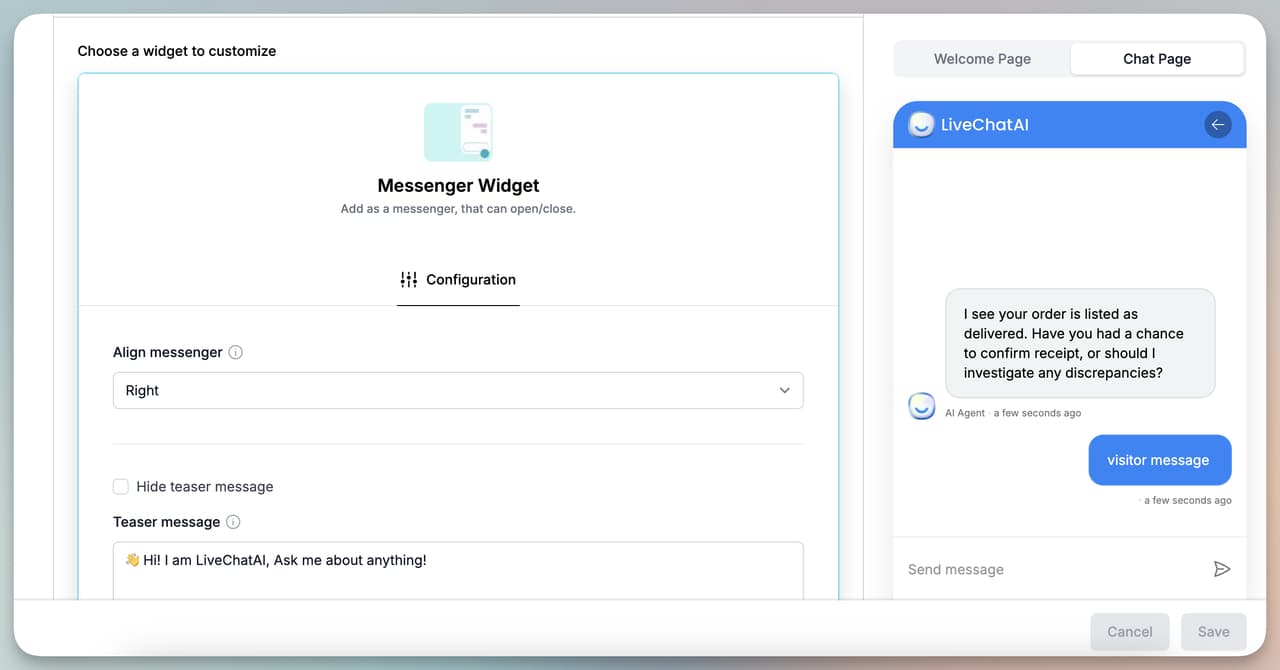
Real-time order updates reduce anxiety and demonstrate reliability. If you're running a Shopify store, check out how to build a Shopify chatbot for tracking orders.
101. "Your order is on its way! The current status is [In Transit]. Expect delivery by [Date]. Have any questions in the meantime?"
102. "Just checked your tracking info — your package should arrive by end of day tomorrow. Let me know if you need further details!"
103. "Good news: your order has shipped. You can follow its journey with this tracking link [Link]. Anything else I can assist you with?"
104. "It looks like your shipment might be delayed due to weather. Sorry about that! I can contact the courier for an update if you'd like."
105. "I see your order is listed as delivered. Have you had a chance to confirm receipt, or should I investigate any discrepancies?"
106. "Your order was successfully packed today and is set for dispatch tomorrow. Any special instructions you want me to add?"
107. "We're still processing your order in the warehouse — should be out soon. In the meantime, is there anything else you need?"
108. "Your tracking number is [XXXX]. If the status doesn't update as expected, just drop me a note, and I'll follow up."
109. "I see the package has been handed off to the local carrier. Usually, that means delivery is just around the corner!"
110. "There's a slight delay on your order due to high demand. I can keep an eye on it for you and provide regular updates. Sound good?"
Whether a customer wants to upgrade, downgrade, pause, or cancel, these scripts keep the conversation clear and trustworthy. Transparency here builds long-term loyalty.
111. "Interested in upgrading your plan? I can walk you through the differences between tiers so you can make the best choice."
112. "If you'd like to cancel, I'm sorry to see you go. Let me guide you through our quick cancellation process — any questions first?"
113. "We noticed you haven't used the premium features lately. Would you like to downgrade to a more affordable option?"
114. "You're approaching your subscription's renewal date. I'm here if you want to switch plans or need billing info updated."
115. "Forgot your login details? No worries. I can resend a secure password reset link right now — just confirm your email."
116. "If you have multiple users on your account, we can manage permissions for each. Need help setting roles and privileges?"
117. "Looking to pause your subscription instead of canceling? We offer a hold option. Shall I explain how that works?"
118. "I see you're on a monthly plan. Switching to yearly could save you [X%]. Would you like to explore that option?"
119. "Your account shows an overdue invoice. Could I help clarify your payment options or assist in settling the balance?"
120. "We just launched an exclusive tier for power users — loads of new features. Want a quick rundown on what's included?"
Loyalty program conversations are a retention opportunity. These scripts help agents celebrate milestones, explain perks, and encourage point redemption.
121. "Congratulations on reaching [X Points]! You're now eligible for a [Reward/Discount]. Shall I walk you through redemption?"
122. "Thanks for your loyalty! We have a new tier in our rewards program. Want to see what perks it offers?"
123. "You have enough points to redeem a [Free Product/Service]! Interested in using them or saving up for a bigger reward?"
124. "We just rolled out double points this month. Shop now, and you'll rack up rewards twice as fast! Any questions?"
125. "If you refer a friend, both of you earn bonus points. Would you like the unique referral link to share?"
126. "You've been part of our loyalty program for a while. We'd love to celebrate! Can I tell you about our new VIP perks?"
127. "Curious about your current points total? I can pull that up for you — let me just access your account details."
128. "We're offering limited-edition rewards for top-tier members. Ready for a quick rundown on what's available?"
129. "If you combine points with our current promo, you might get an even better deal! Want me to run the numbers?"
130. "I see you haven't redeemed anything in a while. Let's see how you can make the most of your existing points!"
V. Escalation and Problem Handling
Even the best scripts can't prevent every complex issue. These templates help agents manage emotional situations with care, and hand off to specialists without making customers repeat themselves.
When customers are frustrated, the goal is to acknowledge their feelings, take ownership, and move toward a resolution. Empathy isn't a script — but having the right words ready helps agents stay composed under pressure.
131. "I understand this is frustrating, [Name]. Let me take a moment to review all the details so we can find the best solution together."
132. "I'm sorry this experience hasn't met your expectations. I'm going to make it a priority to resolve this as quickly as possible."
133. "That sounds like a serious concern. Could you share any additional context so we can fully address it?"
134. "I'd like to personally oversee this issue. Let me gather the necessary info and circle back to you within [Timeframe]."
135. "Your satisfaction is incredibly important to us. I'm escalating this right now to our senior support team for a deeper look."
136. "I appreciate your patience. We're pulling in our product manager to ensure we don't miss any technical nuances."
137. "Let's figure out how we can make things right. Are there any immediate actions you'd like to see from us?"
138. "Would you prefer to speak to a supervisor directly? I can arrange that call and provide your ticket details so you won't need to repeat yourself."
139. "I understand that this might have caused inconvenience. We'll do our best to expedite a resolution or offer alternative options."
140. "We take these matters seriously, and I'm personally committed to seeing this through. Thank you for your understanding while we investigate."
Transferring a customer to another agent or department should feel like an upgrade, not a runaround. These scripts ensure continuity by passing along all context so the customer never has to repeat themselves.
141. "I'm going to bring in our [Department/Specialist], who has more in-depth knowledge of this issue. They're prepared to help you ASAP!"
142. "Let me transfer you to our technical guru, [Name]. They've resolved similar concerns successfully — this should be quick."
143. "Since this involves a complex billing question, our finance team will jump in. I'll loop them in and stay on until you're connected."
144. "I want to ensure consistency. I'll pass along all your chat transcripts, so you won't have to repeat any details."
145. "This case needs specialized knowledge. I'll bring in our advanced support rep. Could you hold for a moment while I connect you?"
146. "We have a designated specialist for your region who knows local policies better. Shall I transfer you now?"
147. "Our next step is to consult with our infrastructure team. They have the diagnostic tools to pinpoint what's happening. Ready for me to initiate?"
148. "I'm transferring you to someone who handles these scenarios daily. They'll have the best insight for a speedy resolution."
149. "Let me gather all your previous ticket IDs so the specialist has the full context before they join the chat."
150. "You're in good hands. I'll introduce you to [Name] from our expert team, and I'll remain available if you have any further needs."
VI. Post-Support and Relationship Building
The conversation doesn't end when the issue is resolved. Post-support interactions build loyalty, generate reviews, and open the door for future engagement. These scripts are often overlooked, yet they have a measurable impact on retention and collecting feedback with AI chatbots.
Asking for feedback right after a resolution catches customers at their most engaged. These scripts request reviews in a way that feels natural, not transactional. For more approaches, see our guide on live chat surveys.
151. "Thanks for chatting with me today! We'd l ove to hear your thoughts — do you mind filling out a quick survey? It helps us improve."
152. "I appreciate your time. If you can spare a moment, could you leave a review on [Platform]? We value your honest feedback."
153. "Glad we could resolve your concern! Your insight helps us grow. Any chance you'd share your experience on our testimonial page?"
154. "We strive to make each interaction top-notch. Please let us know how we did by rating your chat experience. Thanks in advance!"
155. "If you have any lingering thoughts or suggestions, feel free to add them in our feedback form. We truly listen!"
156. "Hearing from customers like you fuels our improvements. Would you be open to a quick follow-up email to gather more feedback?"
157. "You've been a pleasure to chat with! We'd be thrilled if you'd drop a short comment about your experience on our socials."
158. "Your happiness matters. Would you be comfortable sharing what went well and what we could do better next time?"
159. "Thank you for trusting us. If there's a specific employee who stood out, we'd love to pass along your praise — just let me know!"
160. "We appreciate your feedback in any form. Whether it's a star rating or a sentence or two, it all helps us serve you better."
How you end a conversation shapes the customer's lasting impression of your brand. A warm, clear closing encourages return visits and future engagement.
161. "I'm glad we could find a solution, [Name]! Thank you for your patience. If you need anything else, you know where to reach us."
162. "It was my pleasure helping you today. Have a wonderful day, and feel free to chat with us again anytime!"
163. "Thank you for choosing [Company Name]. I hope your issue is fully resolved. We're always here to support you moving forward."
164. "I'm happy we got this sorted out. If you'd like to share any additional feedback or thoughts, don't hesitate to let me know."
165. "Everything looks good on my end now. Let me know if there's anything else I can do to make your experience even better!"
166. "Thank you for working with me to troubleshoot. If you think of new questions, just pop back in or send us an email."
167. "Stay safe and have a fantastic day! Remember, you can access our Help Center 24/7 for quick tips if needed."
168. "I'm thrilled you're all set! Don't forget to check out our blog for updates and tips on making the most of your purchase."
169. "Your satisfaction is our priority, and I'm relieved we could meet your needs today. We look forward to serving you again."
170. "Thanks again for chatting with us. Wishing you a smooth experience ahead — feel free to reach out if you ever need assistance!"
VII. Special Scenarios
Not every customer reaches you during business hours, and not every user is familiar with your product. These scripts handle after-hours communication and new-user onboarding, two situations where the right message makes a huge difference.
Customers expect answers around the clock. When live agents aren't available, an AI chatbot or automated reply can capture the inquiry, set expectations, and keep the customer from leaving. Research shows 41% of people prefer live chat as a support channel, according to Nicereply, citing Kayako data — so being unavailable means losing a large share of potential conversations.
171. "Thanks for stopping by! Our live team isn't available right now, but leave your question, and we'll get back to you first thing in the morning."
172. "We're offline at the moment. Feel free to describe your issue, and I'll make sure it's the top priority when we open."
173. "We appreciate your patience, [Name]. Our chat hours are [X to Y]. Please provide details, and we'll respond during our next shift."
174. "It's currently outside our business hours. In the meantime, you can check our Help Center for immediate tips and solutions."
175. "I'm an automated assistant right now — our human agents are away. Could you share your contact info so we can reach out tomorrow?"
176. "We're unable to chat live just now, but leave a brief summary of what you need, and we'll follow up promptly."
177. "Good evening! Our live agents are off, but if it's urgent, you can email [Support Email]. Otherwise, we'll connect as soon as we're back."
178. "We're out of the office, but don't worry — I'll log your request. Expect a response from our support team within [Timeframe]."
179. "Our chat service is paused at the moment. Please share your concern, and someone will reply once we're online again."
180. "Thanks for reaching us outside regular hours. Our system has captured your query, and we'll get back to you ASAP."
The first few minutes with a new user can determine whether they become a loyal customer or churn within a week. These scripts guide first-time users through setup, feature discovery, and initial configuration. For a deeper look at AI-powered onboarding, we've covered the topic in detail.
181. "Welcome to [Platform]! I'd love to walk you through your first setup step by step. Ready to get started?"
182. "Congrats on signing up! Can I help you import your existing data into our system so everything's in one place?"
183. "Let's begin with customizing your profile. Head to [Section], and I'll guide you through the recommended settings."
184. "If you're new here, a quick tutorial goes a long way. Shall I show you the key features that most users find helpful?"
185. "To make the most of [Product], let's configure your dashboard. I can suggest which widgets to enable if you'd like."
186. "First-time user? No problem. Our onboarding wizard is a great start, but I can also provide some insider tips if you're interested."
187. "How about a quick video walkthrough? I can send you our official tutorial, or we can chat in real time while you explore."
188. "I see you're logged in for the first time. Any particular goals you're aiming for so we can set up relevant features right away?"
189. "Installing add-ons? I can show you the steps to integrate [Third-Party App] with just a few clicks. Let's do this together."
190. "Welcome aboard, [Name]! Remember, our Help Center has step-by-step articles if you get stuck. Want me to link you to a relevant page?"
Negative feedback is an opportunity to recover trust and turn a detractor into a promoter. These scripts acknowledge the complaint, apologize sincerely, and steer toward a resolution.
191. "I'm sorry to hear about your experience. Could you walk me through exactly what happened so I can make sure we fix it?"
192. "Thank you for sharing this with us. Feedback like yours helps us improve. Let me look into this right away."
193. "I completely understand your frustration. That's not the experience we want you to have. Let me see what I can do."
194. "We appreciate you being honest with us. I'm going to flag this with our team lead so we can prevent it from happening again."
195. "I hear you, and I want to make this right. Would a [refund/replacement/credit] work for you, or would you prefer another solution?"
196. "Your feedback matters a lot to us. I've documented the issue and our quality team will review it within 24 hours."
197. "I'm sorry we fell short on this one. Can I connect you with [Manager Name], who can offer more options to resolve this?"
198. "No one likes hearing they've let a customer down, and we take this seriously. Let me check what our options are and get back to you within the hour."
199. "Thank you for giving us the chance to address this. I want to make sure this doesn't happen to anyone else. Could you share a few more details?"
200. "We're not perfect, and your feedback proves exactly where we need to improve. Let me get this resolved for you before anything else."
Tips for Writing Effective Live Chat Scripts
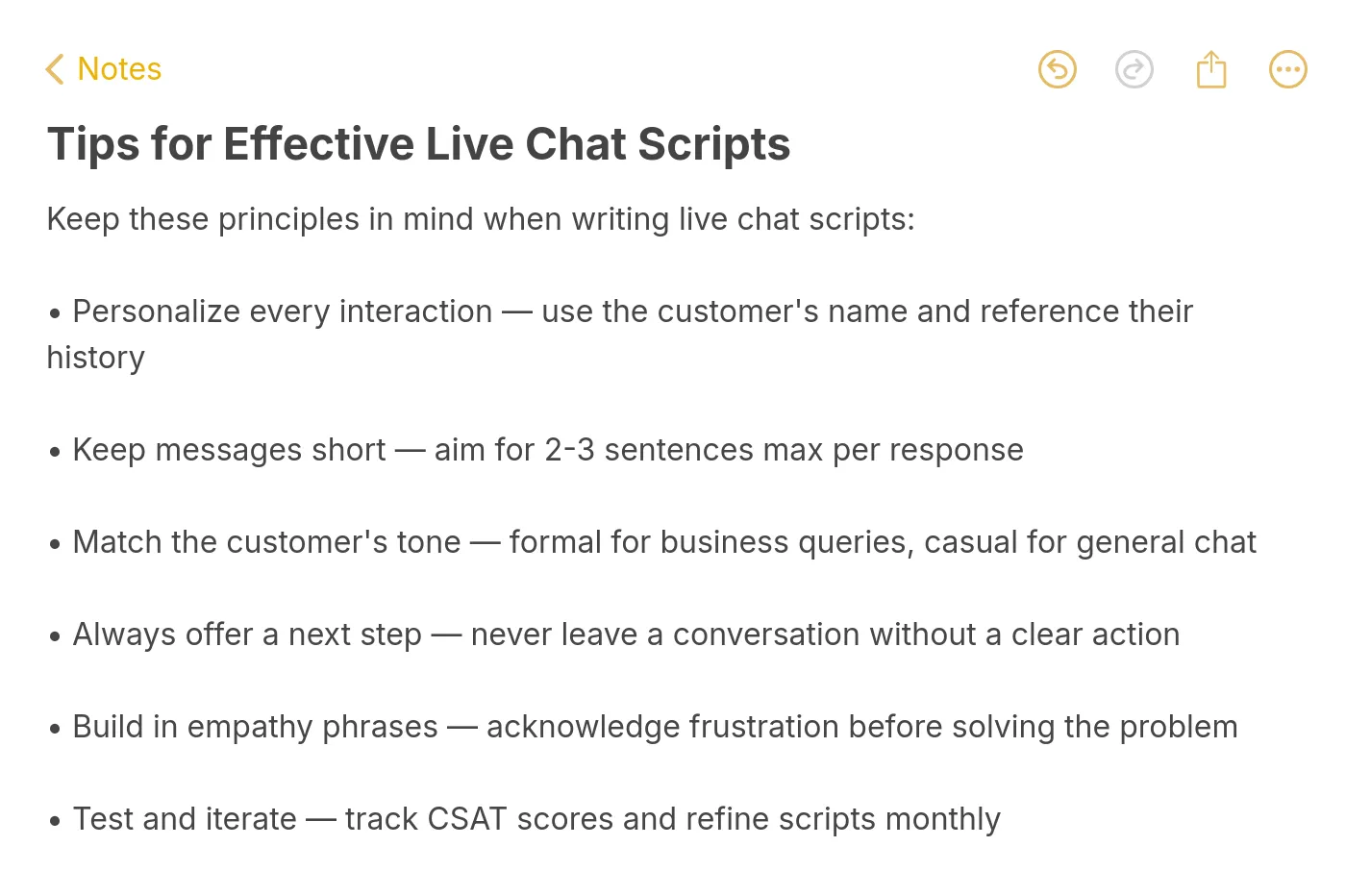
Having 200 script templates is a strong start, but the scripts that actually perform well are the ones you customize and iterate on. Here are practical tips to get more out of every template.
Personalize every message. Replace generic placeholders with the customer's actual name, their specific product, and their exact issue. According to Robylon AI, well-implemented chat scripts can slash response times by 60%. Personalization keeps that speed from feeling robotic.
Keep scripts short. Customers on live chat expect quick, scannable replies. If your script takes more than 15 seconds to read, break it into two messages. Nobody wants to scroll through a paragraph in a chat window.
Match your brand's tone. If your brand is casual, your scripts should be too. If you're a financial services company, keep the language professional. The goal is consistency. Your chatbot persona should feel like a natural extension of your brand voice.
Always include a next step. Every script should end with a clear action: a question, a suggestion, or a link. Dead-end responses kill conversations.
Use empathy phrases strategically. Phrases like "I understand how frustrating that must be" work because they validate the customer's feelings. But don't overuse them. One empathy statement per interaction is usually enough. For more on this, check our guide to positive scripting in customer service.
Test and iterate. Track which scripts get the best resolution rates and customer satisfaction scores. Swap underperformers out regularly. A script that worked six months ago might not work today. Building strong chat support skills means treating scripts as living documents, not static templates.
Conclusion
These 200 live chat script examples cover every stage of the customer journey, from the first greeting to post-support follow-ups and everything in between. The scripts are organized into 7 categories and 20 subcategories, so you can find the right template for any conversation in seconds.
The next step is to pick 10-15 scripts that match your most frequent customer interactions, customize them with your brand details, and load them into your live chat platform. If you're using an AI chatbot, these scripts become the foundation your AI builds on, adapting each response to the customer's specific context while maintaining the tone and accuracy you've defined.
If you want to see how AI-powered scripts work in practice, improving your chatbot's response quality is a strong place to start.
Frequently Asked Questions
What are positive scripts for customer service?
Positive scripts use encouraging, empathetic language to make customers feel supported during interactions. Instead of "I can't do that," a positive script would say, "Here's what I can do for you." The goal is to keep the conversation constructive and focused on solutions, even when delivering bad news. Example: "I'm sorry to hear about the issue, [Name], but let's work together to resolve it right away. I'll guide you step-by-step to make this as easy as possible."
How do live chat scripts improve customer service?
Scripts provide a consistent baseline that every agent can follow. They reduce response times, minimize errors, and ensure your brand voice stays uniform across thousands of conversations. New hires can handle customer queries confidently from day one, and experienced agents can work faster because they don't have to compose every reply from scratch.
Can live chat scripts be customized for different scenarios?
Yes, and they should be. The 200 examples above are organized by scenario for exactly this reason. A greeting script needs a different tone than an escalation script. A cart recovery message has a different goal than a feedback request. Customizing scripts to match the specific context of each conversation improves engagement and resolution rates.
What are the benefits of proactive customer engagement?
Proactive engagement means reaching out to visitors before they ask for help. It increases conversions, reduces cart abandonment, and addresses customer concerns before they escalate into complaints. Example: "I noticed you're exploring our pricing plans. Can I assist with any details to help you decide?" This approach has a direct impact on both sales and satisfaction metrics.
How can AI chatbots use live chat scripts?
AI chatbots use scripts as response templates that they adapt based on context. When a customer asks about order tracking, the chatbot pulls from the relevant script category and personalizes the response using real-time data like order number and shipping status. This combination of scripted consistency and AI flexibility is what makes modern chat support effective at scale. To see how this works in practice, explore how to write AI chatbot scripts.
How do I write my own live chat scripts?
Start with the 200 templates in this article and customize them for your brand, products, and common customer scenarios. Write in your brand's voice, keep messages under 3 sentences, and always end with a clear next step. Test each script with real conversations, track which ones get the best results, and replace the ones that underperform. Scripts are meant to evolve with your support operation.
For further reading:
• How to Write AI Chatbot Scripts with Examples and Tips
• 45+ Live Chat Canned Response Examples for Customer Support
• 15 Chat Etiquette Rules for Improving Customer Service