



You can make money with AI chatbots by selling chatbot services to businesses, automating lead generation, running affiliate marketing through conversational AI, or offering customer support as a service. The global chatbot market hit $11.8 billion in 2026, and freelancers charge $40 to $100 per hour for chatbot development work. Here are 10 strategies that work right now.
What Is Chatbot Monetization?
Chatbot monetization means generating revenue by building, deploying, or reselling AI-powered chatbots. Instead of treating chatbots as a cost center for customer support alone, you turn them into profit engines through affiliate commissions, lead generation fees, subscription services, or direct sales automation.
The business model varies based on your skills and starting capital. Some people build chatbots for clients as a service. Others deploy chatbots on their own properties to capture leads or drive e-commerce sales. A few create chatbot templates or courses and sell those at scale.
What separates profitable chatbot businesses from failed experiments is specificity. Generic "chat with AI" products don't sell. Chatbots trained on industry-specific data, connected to real business workflows, and solving a measurable problem do.
Why AI Chatbots Are a Profitable Business?
Three market forces make AI chatbots unusually profitable right now.
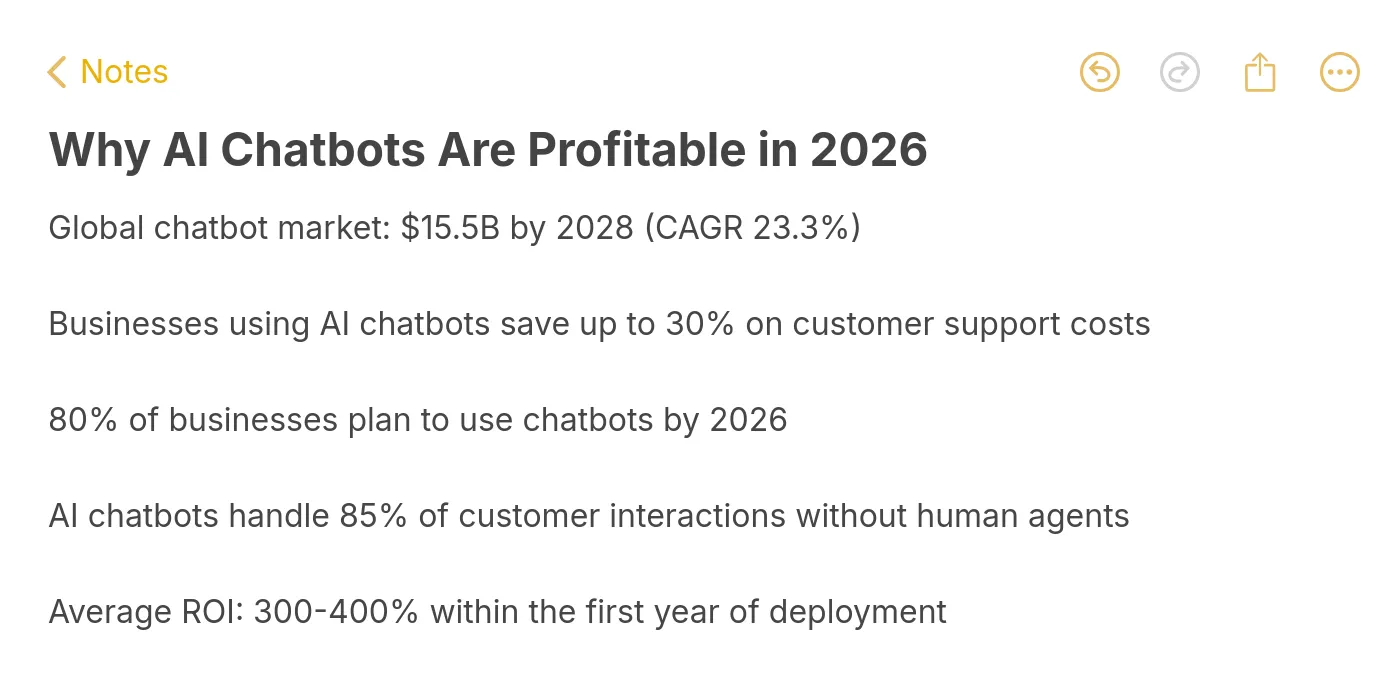
First, the market is massive and growing fast. According to AIMultiple, the global chatbot market is estimated at approximately $15.6 billion in 2026 and projected to reach $46.6 billion by 2029. That kind of growth rate means demand for chatbot builders, consultants, and agencies is outpacing supply.
Second, the barrier to entry has dropped. No-code platforms let you build and deploy a functional AI chatbot in hours, not months. You don't need a computer science degree. You need domain knowledge about a specific industry and the willingness to learn one platform well.
Third, businesses are actively looking to buy. According to Business of Apps, ChatGPT is likely to pass one billion active users in 2026. That mainstream adoption has pushed every business owner to ask: "Should we have an AI chatbot?" Most of them can't build one themselves. That's where you come in.
10 Strategies for Making Money with AI Chatbots
Overview of all 10 strategies:
1. Affiliate Marketing Chatbots — Embed affiliate links into conversational product recommendations for passive commissions
2. Lead Generation Automation — Qualify and capture leads 24/7, then sell them or use them for your own sales pipeline
3. Customer Support as a Service — Sell AI-powered support solutions to businesses that can't afford large support teams
4. E-commerce Sales Chatbots — Guide shoppers through purchasing decisions and increase average order value
5. Survey and Feedback Automation — Replace low-response email surveys with conversational data collection
6. AI Content Services — Use chatbot-powered workflows to produce content at scale for clients
7. Chatbot Consulting — Advise businesses on chatbot strategy, selection, and implementation
8. Online Courses and Training — Teach chatbot development and monetization to beginners
9. Industry-Specific Chatbot Apps — Build vertical SaaS chatbot products for underserved niches
10. SEO and Content Automation — Use chatbots to streamline keyword research, content briefs, and outreach
1. Affiliate Marketing Chatbots: Earn Commissions Through Conversations
Affiliate marketing chatbots recommend products during natural conversations and earn you a commission on every sale. Unlike banner ads that users ignore, a chatbot asks what someone needs and suggests a specific product. The recommendation feels personal, not promotional. This works particularly well on review sites, niche blogs, and comparison pages where visitors already have buying intent.
How to implement:
1. Pick a niche with strong affiliate programs (SaaS tools pay 20-40% recurring commissions; physical products on Amazon pay 1-10% per sale)
2. Build a chatbot trained on product specs, use cases, and pricing for your chosen niche. Use a platform like LiveChatAI to train the bot on your website content and product data
3. Program decision-tree logic: "What's your budget?" → "What features matter most?" → "Based on that, I'd recommend [Product] because [reason]" with your affiliate link
4. Deploy the chatbot on high-intent pages (comparison posts, "best of" lists, product review pages) where visitors are already evaluating options
5. Track conversion rates per product recommendation and adjust the chatbot's suggestion logic monthly based on what actually sells
Affiliate chatbots tend to outperform static affiliate content because they create a dialogue. A visitor who tells the chatbot they need "a CRM for a 5-person team under $50/month" gets a tailored recommendation, not a generic top-10 list. According to Master of Code, 87.2% of consumers rate their interactions with bots as neutral or positive, which means the format doesn't alienate users the way aggressive pop-up ads do. Expect 2-5% conversion rates on affiliate chatbot interactions if your niche targeting is tight.
2. Lead Generation Automation: Capture and Qualify Leads Around the Clock
Lead generation chatbots engage website visitors with qualifying questions and collect contact information without a human sales rep. They work 24/7, don't take lunch breaks, and can handle hundreds of simultaneous conversations. The output is a list of pre-qualified leads your sales team can close, or that you can sell to businesses on a per-lead basis.
How to implement:
1. Define your ideal customer profile: industry, company size, budget range, specific pain point
2. Build a 4-6 question qualifying flow: "What's your biggest challenge with [topic]?" → "How many people are on your team?" → "What's your timeline for solving this?" → "Can I grab your email to send you a custom recommendation?"
3. Connect the chatbot to a CRM (HubSpot, Pipedrive, or even a Google Sheet) via webhook so leads flow directly into your pipeline
4. Set up automated follow-up emails triggered when a lead is captured. The first email should arrive within 5 minutes while the visitor still remembers the conversation
5. Score leads based on their answers. A 50-person company with a $10K budget and a 30-day timeline is worth more than a solo freelancer "just exploring options"
Lead generation is one of the most reliable ways to make money with AI chatbots because the value is directly measurable. B2B leads in competitive verticals sell for $50-$200 each. If your chatbot captures 10 qualified leads per day, that's $500-$2,000 in daily value before you've done any manual work. Companies using AI in customer-facing roles consistently report reduced response times and higher capture rates compared to static contact forms.
3. Customer Support as a Service: Sell AI-Powered Support to Other Businesses
Instead of using an AI chatbot for your own support, you build and manage chatbots for other businesses and charge a monthly fee. Small businesses with 5-20 person teams can't afford a full support department, but they can afford $300-$1,000/month for an AI chatbot that handles 70-80% of common questions. You're selling reduced ticket volume and faster response times.
How to implement:
1. Pick a vertical you understand (e-commerce, SaaS, real estate, healthcare). Domain knowledge matters more than technical skill here
2. Use a white-label chatbot platform that lets you train on the client's knowledge base. LiveChatAI's AI agent builder lets you train a bot on a client's website, help docs, and FAQs without writing code
3. Offer a tiered pricing model: Basic ($300/mo for FAQ automation), Pro ($700/mo with CRM integration and human handoff), Enterprise ($1,500/mo with custom training and analytics)
4. Set up a human escalation path for questions the bot can't answer. Route these to the client's existing team via Slack or email
5. Provide monthly reports showing tickets deflected, average response time, and customer satisfaction scores. Clients renew when they see the numbers
According to a 2026 analysis on Medium, freelancers charge $40 to $100 per hour for chatbot development, and full-scope AI audits fetch $5,000 to $20,000. But the real money is in recurring revenue. Five clients at $700/month is $3,500/month with minimal ongoing work after the initial setup. You can realistically manage 10-15 clients before needing to hire help.
4. E-commerce Sales Chatbots: Turn Browsers Into Buyers
E-commerce chatbots act as virtual sales assistants. They answer product questions, suggest complementary items, handle sizing or compatibility concerns, and guide shoppers through checkout. The goal isn't to replace the product page but to address the specific objection that's stopping someone from clicking "Buy Now."
How to implement:
1. Train the chatbot on your entire product catalog including prices, specs, availability, and shipping times. For Shopify stores, LiveChatAI's e-commerce integration can pull this data automatically
2. Build cross-sell logic: when someone asks about a laptop, the chatbot recommends a compatible case, mouse, or extended warranty. Set a cross-sell threshold (suggest add-ons only on orders above $100)
3. Create urgency triggers for cart abandonment: "I noticed you were looking at [product]. It's down to 3 units in stock. Want me to hold one for you?"
4. Connect order tracking so the chatbot can answer "Where's my package?" without involving a human agent
5. A/B test chatbot greetings. "Looking for something specific?" outperforms "How can I help you today?" because it's action-oriented
E-commerce chatbots work because they reduce friction at the exact moment someone has a question. A shopper who asks "Does this come in blue?" and gets an instant answer is more likely to buy than one who has to email support and wait 24 hours.
5. Survey and Feedback Chatbots: Sell Data Collection as a Service
Traditional email surveys get 5-15% response rates. Chatbot-powered surveys get 30-40% because they feel like a conversation, not homework. You can sell this as a service to businesses that need customer feedback, market research, or post-purchase reviews. The chatbot asks questions one at a time in a natural flow, adapting follow-up questions based on previous answers.
How to implement:
1. Build branching survey logic: if a customer rates satisfaction below 7, the chatbot asks "What would have made your experience better?" If they rate 9+, it asks for a public review
2. Deploy surveys at high-engagement moments: post-purchase, after a support interaction, or after a user completes a key action in the product
3. Connect responses to a dashboard (Google Sheets, Airtable, or a proper analytics tool) where the client can see real-time results
4. Offer analysis as an upsell: raw data for $200/month, data + monthly insights report for $500/month
5. Use the chatbot to collect customer feedback conversationally and feed it back into product improvement cycles
According to Harvard Business Review, generative AI is rapidly reshaping market research by enabling the creation of "synthetic personas" and "digital twins" for testing. Chatbot-driven surveys sit at the intersection of AI capability and market research demand. Companies that currently pay $5,000-$15,000 for traditional survey projects will pay $1,000-$3,000 for chatbot-based alternatives that deliver faster results with higher completion rates. That price point makes you attractive to mid-market businesses that can't afford big research firms.
6. AI Content Services: Productize Content Creation with Chatbot Workflows
You don't sell "AI writing." You sell a content production system powered by AI chatbots that handles research, drafting, and formatting. The chatbot becomes your production engine. You add the editorial judgment, brand voice, and quality control. This works as a freelance service, an agency model, or a productized offering with fixed pricing.
How to implement:
1. Build a chatbot workflow: Client submits a topic → chatbot researches competitors and generates an outline → chatbot produces a first draft → you edit for voice, accuracy, and SEO → deliver final content
2. Price by output, not by hour. A 2,000-word blog post for $300-$500 is competitive and profitable if your chatbot handles 70% of the work
3. Specialize in one content type (SaaS blog posts, e-commerce product descriptions, email sequences) to build expertise and command higher rates
4. Create templated prompts for recurring clients so the chatbot maintains consistent brand voice across all content
5. Use the chatbot to generate content briefs, meta descriptions, and social media snippets as add-on deliverables
The key to making this work is positioning. "AI writer" sounds cheap. "Content production system that delivers 10x the output at half the cost" sounds like a business advantage. According to GoDaddy's AI monetization guide, AI is making it easier than ever to turn ideas into profit through writing assistance, graphic design, and task automation. The content agencies pulling $10K-$30K/month use AI chatbots as their backbone but sell the human editorial layer on top. That's the model you want.
7. AI Chatbot Consulting: Charge Premium Rates for Strategic Advice
Many businesses know they need an AI chatbot but don't know which platform to choose, what to train it on, or how to measure success. Consulting fills that gap. You're not building the chatbot. You're telling them what to build, why, and how to measure whether it's working. This is the highest-margin way to make money with AI chatbots because you're selling knowledge, not labor.
How to implement:
1. Create a standardized audit framework: evaluate the client's current support stack, identify automation opportunities, estimate ROI, and recommend a platform. Use a chatbot ROI calculator to put hard numbers on potential savings
2. Offer three engagement types: one-time strategy session ($500-$2,000), implementation advisory ($3,000-$10,000 over 4-8 weeks), and ongoing optimization retainer ($1,000-$3,000/month)
3. Build case studies from your first 3-5 clients, even at discounted rates. Documented results ("We helped [Client] reduce support tickets by 45% in 90 days") are your best sales tool
4. Establish authority by writing about chatbot features that matter and publishing analysis of what works in specific industries
5. Network on LinkedIn and in B2B SaaS communities. Most consulting clients come from referrals and content, not cold outreach
Consulting scales differently than service delivery. You can't build chatbots for 100 clients simultaneously, but you can advise 100 companies on chatbot strategy if you productize your frameworks. Dan Martell, a B2B SaaS advisor, notes that AI is replacing low-skill digital work but amplifying high-value outcome-based services. Consulting sits squarely in the "amplified by AI" category. A consultant who uses AI to generate audit reports, competitive analyses, and ROI projections in hours instead of weeks can serve more clients at higher margins.
8. Online Courses and Training: Teach Others How to Build Chatbots
If you've built chatbots and gotten results, packaging that experience into a course creates passive income. The demand is real: "how to make money with AI chatbots" and related queries show strong search volume, which means people are actively looking for guidance. You're converting your operational knowledge into a teachable product.
How to implement:
1. Structure the course around a specific outcome, not general theory. "Build and Deploy Your First Revenue-Generating Chatbot in 7 Days" sells better than "Introduction to AI Chatbots"
2. Record screen-share tutorials walking through actual chatbot builds on specific platforms. Show the setup, the training process, the testing, and the deployment
3. Price strategically: $97-$297 for self-paced, $497-$997 with community access and weekly Q&A calls, $2,000-$5,000 for cohort-based with 1-on-1 coaching
4. Sell on your own website first (higher margins), then expand to Udemy or Skillshare for volume (lower margins but broader reach)
5. Update course content quarterly. AI platforms change fast, and outdated tutorials destroy your credibility
Course creation works because the knowledge gap is wide. Most people searching for ways to make money with AI have no experience and need step-by-step guidance. According to KDnuggets, people are turning AI tools into real income by building practical systems and selling outcomes. A course that documents exactly how you did it, with real screenshots and revenue numbers, is more valuable than any theoretical framework. Expect 60-70% margins on digital courses once you've covered the initial production cost.
9. Industry-Specific Chatbot Applications: Build Vertical SaaS Products
Generic chatbots compete on price. Industry-specific chatbots compete on value. A chatbot trained on healthcare compliance rules, real estate listing data, or restaurant reservation workflows solves problems that off-the-shelf tools can't. You're building a niche software product, not a one-off project.
How to implement:
1. Pick an industry where you have contacts or domain knowledge. Healthcare, legal, real estate, and financial services all have high willingness to pay for AI solutions
2. Interview 10-15 potential customers to identify their most painful, repetitive conversations. The chatbot should handle the questions they answer 50 times a week
3. Build an MVP using a chatbot platform with API access. Train it on industry-specific documentation, regulations, and terminology
4. Price as SaaS: $99-$499/month depending on usage volume and features. Recurring revenue beats one-time project fees
5. Integrate with industry-standard tools (EHR systems for healthcare, MLS feeds for real estate, POS systems for restaurants) to create switching costs
The vertical SaaS model works because industry-specific chatbots justify premium pricing. A banking chatbot that handles account inquiries, loan pre-qualification, and fraud alerts is worth $500/month to a regional bank. A generic chatbot isn't. According to data from Grand View Research (via Ringly), the global chatbot market is projected at $11.8 billion in 2026, with healthcare, banking, and retail leading adoption. Building where the money is already flowing gives you a tailwind.
10. SEO and Content Automation: Streamline Digital Marketing with Chatbots
SEO agencies and content teams spend hours on repetitive tasks: keyword research, competitor analysis, content briefs, meta description writing, and outreach emails. AI chatbots can automate 60-80% of this work. You can offer this as a productized service, an internal tool for your own agency, or a SaaS product other marketers pay for.
How to implement:
1. Build a chatbot workflow that accepts a target keyword and outputs a content brief: search intent, competitor analysis, recommended headings, word count targets, and internal linking suggestions
2. Create a separate chatbot for outreach: input a list of prospect URLs, and it generates personalized outreach emails based on each site's content and link profile
3. Offer tiered packages: Basic (content briefs only, $500/month for 20 briefs), Pro (briefs + first drafts, $1,500/month), Enterprise (full content production pipeline, $3,000-$5,000/month)
4. Use the chatbot to monitor rankings and alert clients when content needs updating. Automated freshness reports add perceived value and reduce churn
5. Target small businesses that need SEO but can't afford a full-time specialist. Your chatbot-powered service fills the gap between "do nothing" and "hire an agency at $5K/month"
The advantage here is speed and consistency. A chatbot can generate 20 content briefs in the time it takes a human to write one. The human adds strategic judgment. That combination means you deliver faster, charge more, and maintain quality. Conversational marketing with bots is already mainstream in sales and support. Applying the same principles to SEO workflows is a natural extension that most agencies haven't built yet.
How to Create a Money-Making AI Chatbot with LiveChatAI
If you want to try any of these strategies, you need a chatbot platform. Here's a quick walkthrough using LiveChatAI, which lets you build and deploy a trained AI chatbot without writing code.
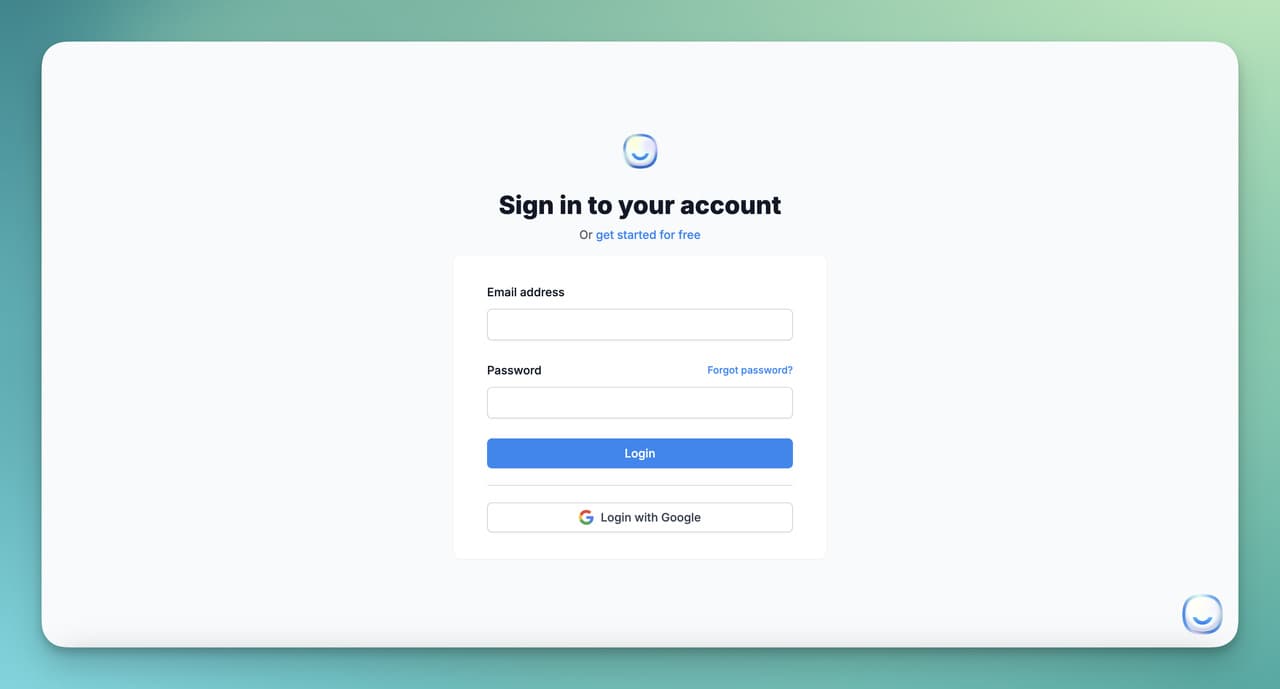
Step 1: Create your account
Sign up at livechatai.com. The free tier lets you test the platform before committing.
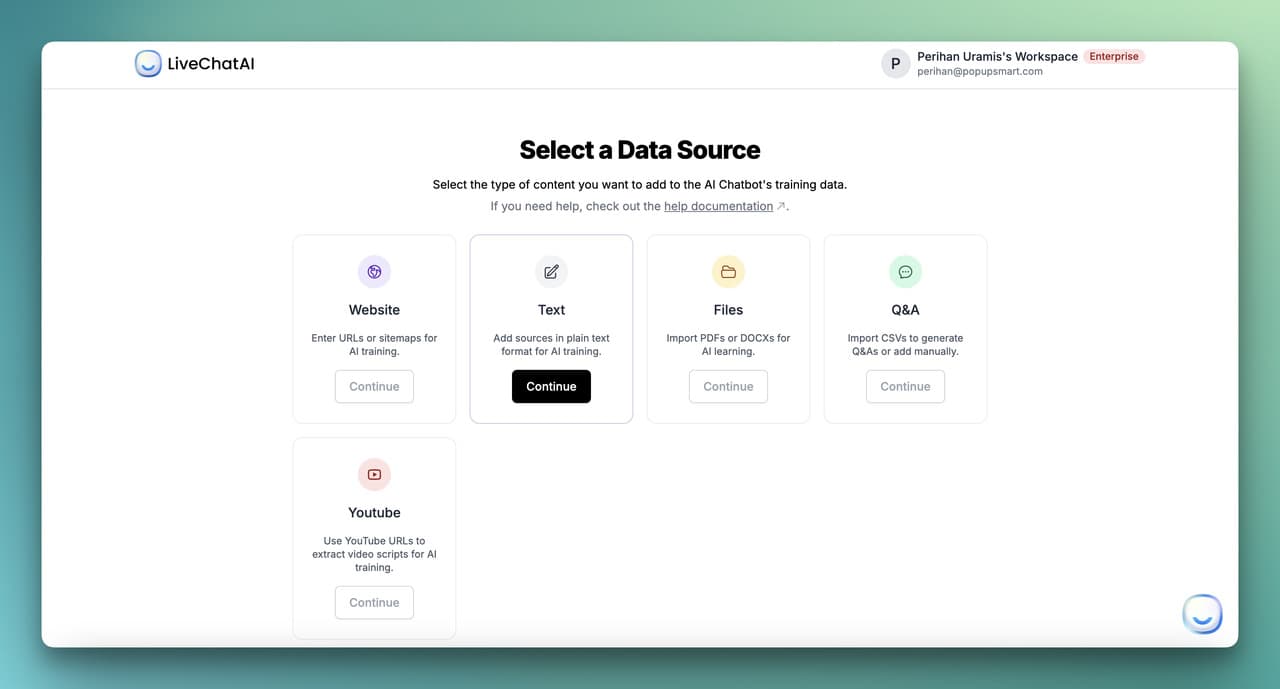
Step 2: Choose your data source
Select what the chatbot learns from: your website, uploaded documents, a help center, or a combination. The data source determines what the chatbot can answer and how accurately.
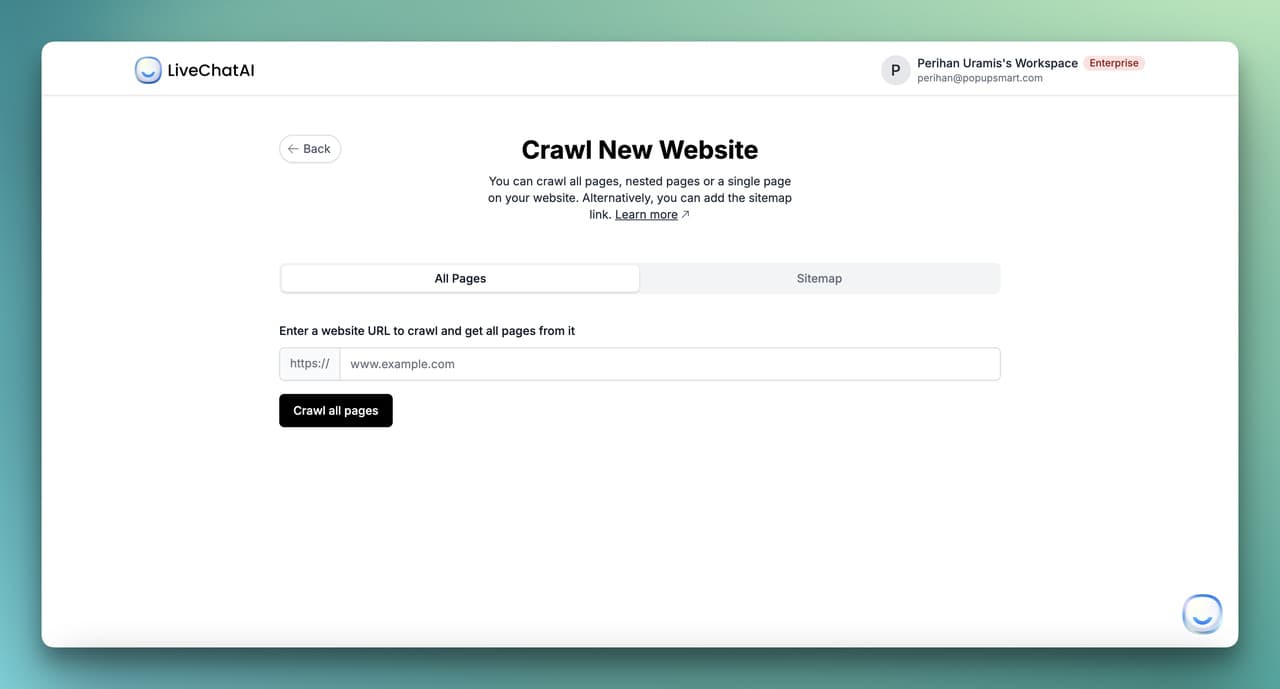
Step 3: Train the chatbot on your content
Point the crawler at your website or upload your knowledge base. Remove irrelevant pages so the bot stays focused on topics that drive conversions or sales.
Step 4: Customize Your AI Chatbot on the Dashboard

Once your chatbot is trained, the dashboard gives you full control over how it behaves and where it appears. Each tab handles a different part of the setup:
Preview: Test the chatbot's responses before going live. Make sure answers guide users toward your monetization goal, whether that's a purchase, a sign-up, or clicking an affiliate link.
Settings: Set the chatbot's name, adjust the AI prompt, and configure behavior. For lead generation, you can require email capture before the conversation continues. For upselling, adjust the AI's tone to recommend higher-tier products when relevant.
Customize: Match the chatbot's appearance to your brand — colors, avatar, initial greeting message. A strong opening message can highlight a current offer or direct visitors to high-margin products right away.
Embed & Integrate: Choose where the chatbot lives. Embed it on your website with a single script tag (loads asynchronously, no page speed impact), or connect it to WhatsApp, Slack, or Shopify through native integrations.
Chat Inbox: Monitor live and past conversations. Spot patterns in what customers ask, identify questions the bot handles well, and find gaps where it needs more training data.
AI Actions: Automate tasks beyond chat. Set up follow-up emails after a conversation, trigger discount codes after a set number of interactions, or fire custom webhooks that connect to your CRM or payment system.
Manage Data Sources: Add, remove, or update the content the chatbot learns from. Keep your knowledge base current so the bot stays accurate as your product or pricing changes.
AI Suggestions: Review AI-generated recommendations for improving response quality. These flag questions the bot struggled with and suggest training data updates to close the gaps.
Which AI Chatbot Money-Making Strategy Should You Start With?
Not every strategy fits every situation. Here's how they break down by effort level, expected impact, and who they're best for.
| Priority | Strategy | Effort | Impact | Best For |
|---|---|---|---|---|
| 1 | Customer Support as a Service | Medium | High | Freelancers with industry knowledge |
| 2 | Lead Generation Automation | Low | High | Marketers with existing traffic |
| 3 | E-commerce Sales Chatbots | Low | High | Shopify/e-commerce store owners |
| 4 | Chatbot Consulting | Low | High | Experienced professionals |
| 5 | Affiliate Marketing Chatbots | Medium | Medium | Niche site owners and bloggers |
| 6 | AI Content Services | Medium | Medium | Writers and content agencies |
| 7 | Online Courses and Training | High | High | Experts with proven results |
| 8 | Survey and Feedback Chatbots | Medium | Medium | Market researchers and UX teams |
| 9 | SEO and Content Automation | High | Medium | SEO agencies and freelancers |
| 10 | Industry-Specific Chatbot Apps | High | High | Builders targeting vertical SaaS |
If you're starting with no experience and no money, begin with Strategy #2 (lead generation) or Strategy #4 (e-commerce chatbots). Both have low setup costs, fast feedback loops, and you'll learn the fundamentals of chatbot design through hands-on building.
If you already have domain expertise, jump to Strategy #7 (consulting) or Strategy #3 (support as a service). Your industry knowledge is the moat. The chatbot is just the delivery mechanism.
Mistakes That Kill AI Chatbot Revenue and How to Fix Them
Building before researching. The most common mistake is picking a chatbot platform before understanding your target customer's actual problem. Talk to 10 potential customers before building anything. If nobody will pay for your solution, the technology doesn't matter.
Ignoring compliance. Healthcare, finance, and legal chatbots need to comply with industry regulations (HIPAA, SOC 2, GDPR). Skipping compliance review during the build phase creates expensive problems later. Budget 10-15% of your project cost for legal review on regulated-industry chatbots.
No human fallback. Chatbots that can't hand off to a human when they're stumped frustrate users. Every chatbot you deploy needs a clear escalation path. According to research on AI customer support adoption, the most effective deployments combine AI speed with human judgment for complex cases.
Underpricing your work. Many new chatbot builders charge $200 for a full setup that should cost $2,000. Research market rates. Check what customer support actually costs companies and price your chatbot solution as a fraction of that total spend, not as a commodity tech product.
Not tracking ROI. If you can't show a client that your chatbot saved them $X or generated $Y in new revenue, you'll lose them at renewal. Build reporting into every deployment from day one.
Your Next Move for Making Moneyw with AI Chatbots
Start with the strategy that matches your current situation. If you have industry expertise, consulting (Strategy #7) is the fastest path to revenue. If you have an existing website with traffic, lead generation (Strategy #2) can produce results within a week. If you want to build something scalable, an industry-specific chatbot app (Strategy #9) has the highest ceiling.
Whatever you pick, avoid the trap of spending three months "researching" chatbot platforms. Build something small, test it with a real user, and iterate based on what you learn. The people making money with AI chatbots in 2026 aren't the ones with the best technology. They're the ones who shipped first and improved along the way.
Frequently Asked Questions
Can people realistically make money by creating an AI chatbot?
Yes. The range is wide depending on your approach. Freelance chatbot developers charge $40-$100 per hour. Chatbot agencies serving 10-15 clients on recurring plans clear $5,000-$15,000 per month. Course creators and SaaS builders can reach $10,000+ monthly, though those models take longer to build. The key variable is whether you sell one-time projects (capped income) or recurring services (scalable income).
How can beginners make money with AI chatbots with no experience?
Start with a platform that doesn't require coding. Build a chatbot for a local business for free or at cost to get your first case study. Document the results. Then use that case study to sell to paying clients. Most beginners can go from zero to first paying client in 30-60 days if they focus on one niche and one platform. Lead generation chatbots for local service businesses (dentists, plumbers, real estate agents) are the easiest entry point because the ROI is simple to demonstrate.
What are the risks of monetizing AI chatbots?
Three main risks. First, platform dependency: if your chatbot platform changes pricing or shuts down, your business is disrupted. Mitigate this by keeping your training data portable. Second, client expectations: some clients expect the chatbot to be perfect from day one. Set realistic expectations during onboarding and commit to a 30-day optimization period. Third, market saturation in generic chatbot services. Differentiate through vertical expertise, not price.
How do you integrate AI chatbots for passive income?
True passive income from chatbots requires front-loaded work. Build a chatbot that runs affiliate marketing on an evergreen content site, or create a chatbot template marketplace where you sell pre-built bots for specific use cases ($50-$200 per template). The chatbot itself runs without daily intervention, but you'll spend 2-4 hours per week monitoring performance, updating training data, and optimizing conversion flows. It's "low-maintenance" income, not "zero-maintenance."
What is the best AI chatbot platform to start with?
It depends on your use case. For customer support and lead generation chatbots, platforms that let you train on your own content give the most accurate responses. For e-commerce, look for native Shopify or WooCommerce integrations. For course delivery, consider platforms with LMS connections. Don't overthink the platform choice. Pick one, build something, ship it, and iterate. You can always switch later.
For further reading, you might be interested in the following:
• How to Use AI Chatbots for Healthcare- 17 Best Practices
• Banking AI Chatbots: How to Use, Benefits, Use Cases