




Buyers search for Freshdesk alternatives in 2026 because per-agent pricing punishes growth, AI add-ons inflate invoices, and customization caps slow mid-market teams. LiveChatAI, Zoho Desk, and Help Scout lead this list — pick LiveChatAI if AI deflection matters most, Zoho Desk for tight CRM ties, Help Scout for shared-inbox simplicity.
Why Consider Freshdesk Alternatives in 2026?
Freshdesk still powers help desks at thousands of mid-market companies, and Freddy AI has matured into a usable answer bot. But the buying conversation in 2026 has shifted. Customer support leaders aren't asking "Which ticketing tool is best?" anymore — they're asking which platform handles AI deflection, omnichannel routing, and unpredictable seat counts without billing surprises every quarter.
Two data points frame the urgency. According to IBM research, mature AI adopters in customer service report 17% higher customer satisfaction than peers stuck on legacy ticketing-only stacks. At the same time, SurveyMonkey found that 79% of Americans still strongly prefer a human over an AI agent. The takeaway isn't "automate everything." It's "automate the right things, then route fast." Freshdesk buyers shopping alternatives want that balance — and they want it priced fairly.
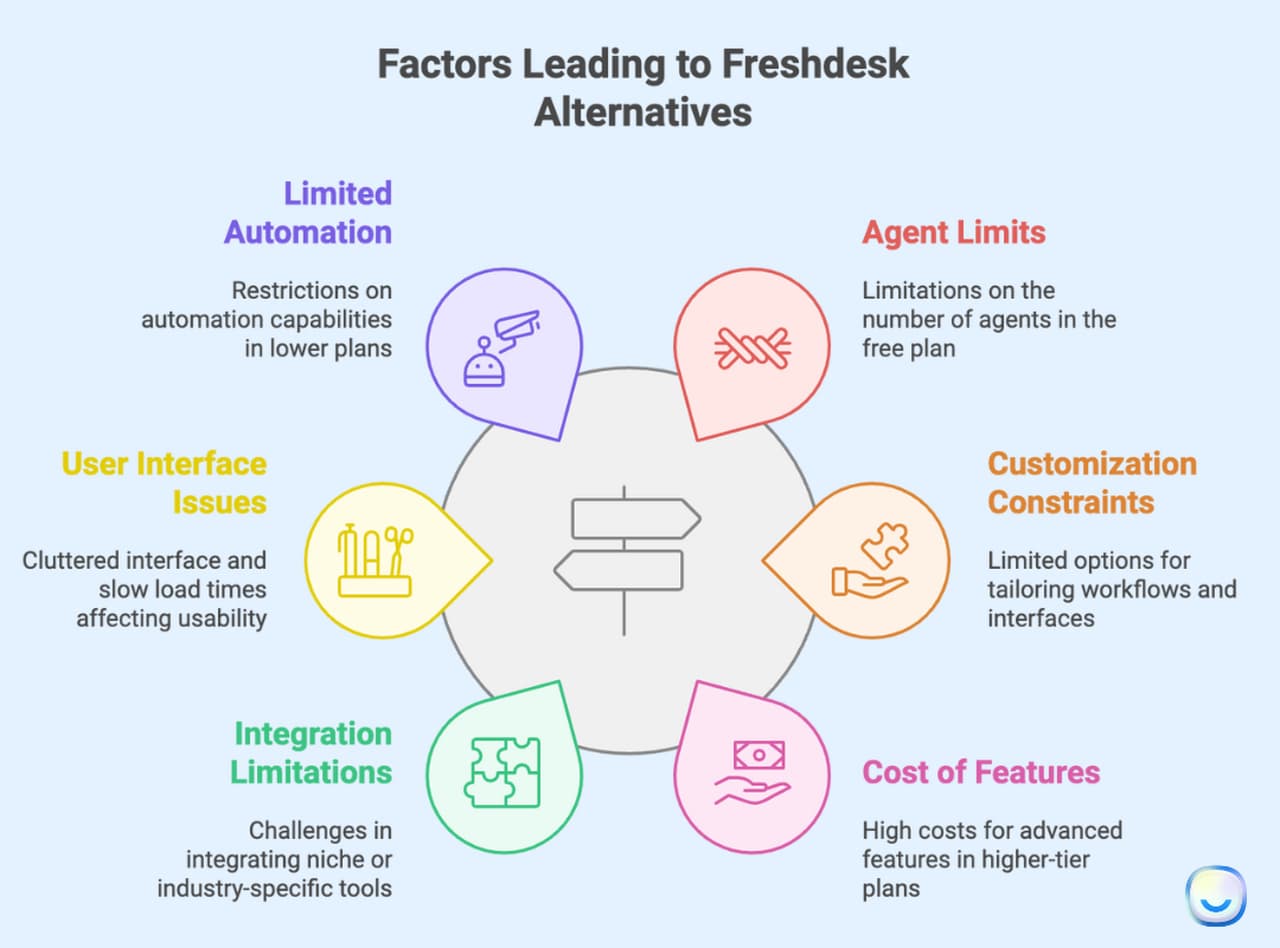
G2 reviews and Reddit threads from the last 18 months cluster around four pain points. These show up in nearly every "we left Freshdesk" post we read while researching this piece:
• Agent limits on the free plan: Freshdesk's free tier caps at 2 agents. The minute a startup hires a third support rep, the upgrade conversation starts — and the next tier carries a per-seat jump that mid-market buyers call out as steep.
• AI features sit behind premium add-ons: Freddy AI Copilot and Freddy AI Agent are sold separately on top of the base seat price. G2 reviewers repeatedly note that the per-resolution and per-seat AI fees stack quickly once volume scales.
• Pricing complexity for growing teams: Different SKUs (Freshdesk Omni, Freshdesk Support Desk, Freddy AI) make annual budgeting painful. Buyers report quote spreadsheets that span 6+ line items per agent.
• Integration gaps in niche stacks: The marketplace covers obvious tools, but teams running custom CRMs, vertical SaaS apps, or in-house data warehouses often need middleware to bridge gaps that competitors like Zoho Desk and HubSpot solve natively.
None of this means Freshdesk is broken. It means the field has caught up. AI-native platforms now ship deflection out of the box, flat-rate vendors compete on predictable billing, and shared-inbox tools like Help Scout and Front strip away the ticket-system overhead small teams never needed in the first place.
Freshdesk Alternatives by Use Case in 2026
Before scrolling the full list, it helps to scope your search by use case. Most Freshdesk buyers fall into one of four buckets. The map below pairs each bucket with the two or three alternatives best suited to it.
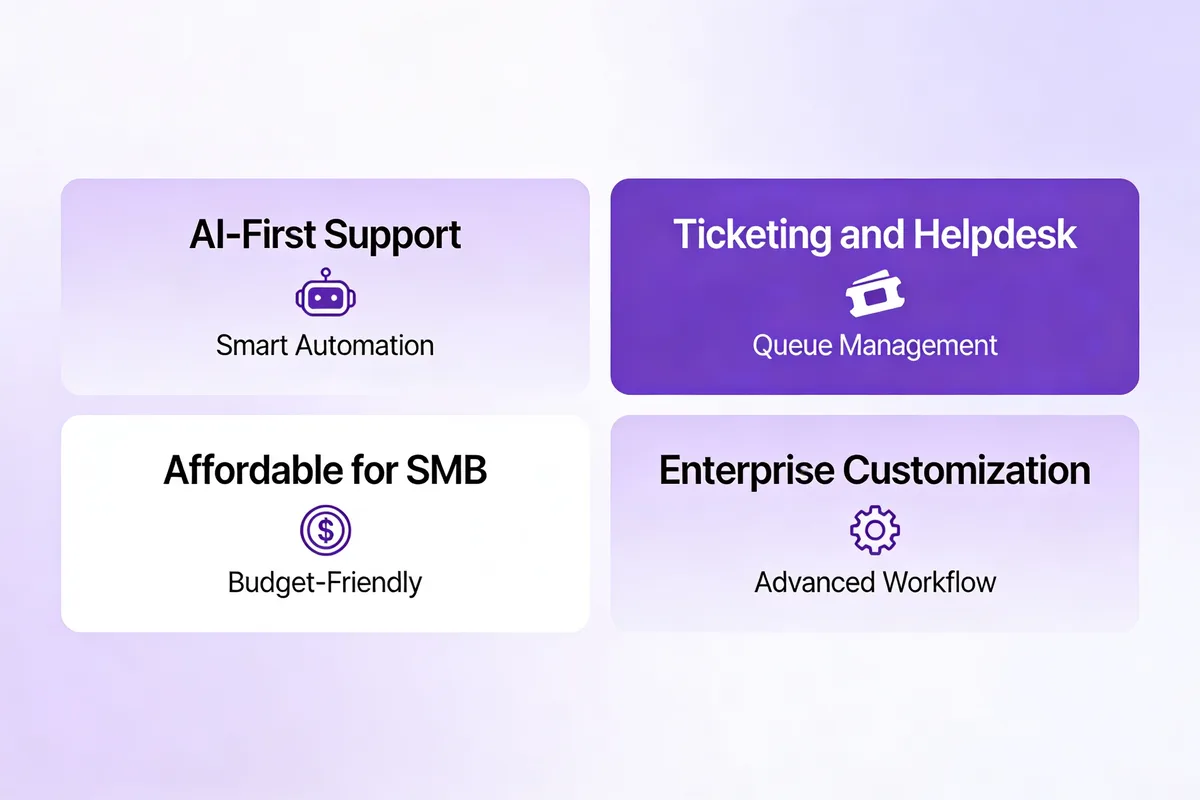
• AI-first customer support: LiveChatAI, Intercom, and Zoho Desk lead here. These tools deflect repetitive questions, hand complex cases to humans, and learn from your knowledge base without weeks of bot scripting.
• Traditional ticketing and helpdesk: Zendesk, HappyFox, and ProProfs Help Desk are the safe picks if your team is already ticket-fluent and wants SLAs, queues, and macros without re-training.
• Affordable SMB and free tools: Spiceworks Cloud Help Desk, Groove, and HubSpot Service Hub's free tier let small teams ship support without committing to four-figure annual contracts.
• Enterprise customization and dev-ops alignment: Kustomer, DevRev, and Front shine when support has to align with engineering, product, or a custom data model — and when "no-code" stops being enough.
Use this as a shortcut: identify which quadrant fits, then read those entries first. Our customer service model breakdown goes deeper if you're still scoping the operating model behind the tool choice.
14 Best Freshdesk Alternatives in 2026
Each entry below follows the same shape: positioning, screenshot, key features, pricing snapshot, pros and cons, and the buyer profile it suits best. Prices are vendor-published as of June 2026 — always check the live pricing page before signing.
1. LiveChatAI
Best for: Customer support and growth teams that want an AI agent trained on their own help docs, PDFs, and website content — deployed in minutes, not weeks. Disclosure: LiveChatAI is our product, so treat this entry as a deep-dive rather than an arms-length review.
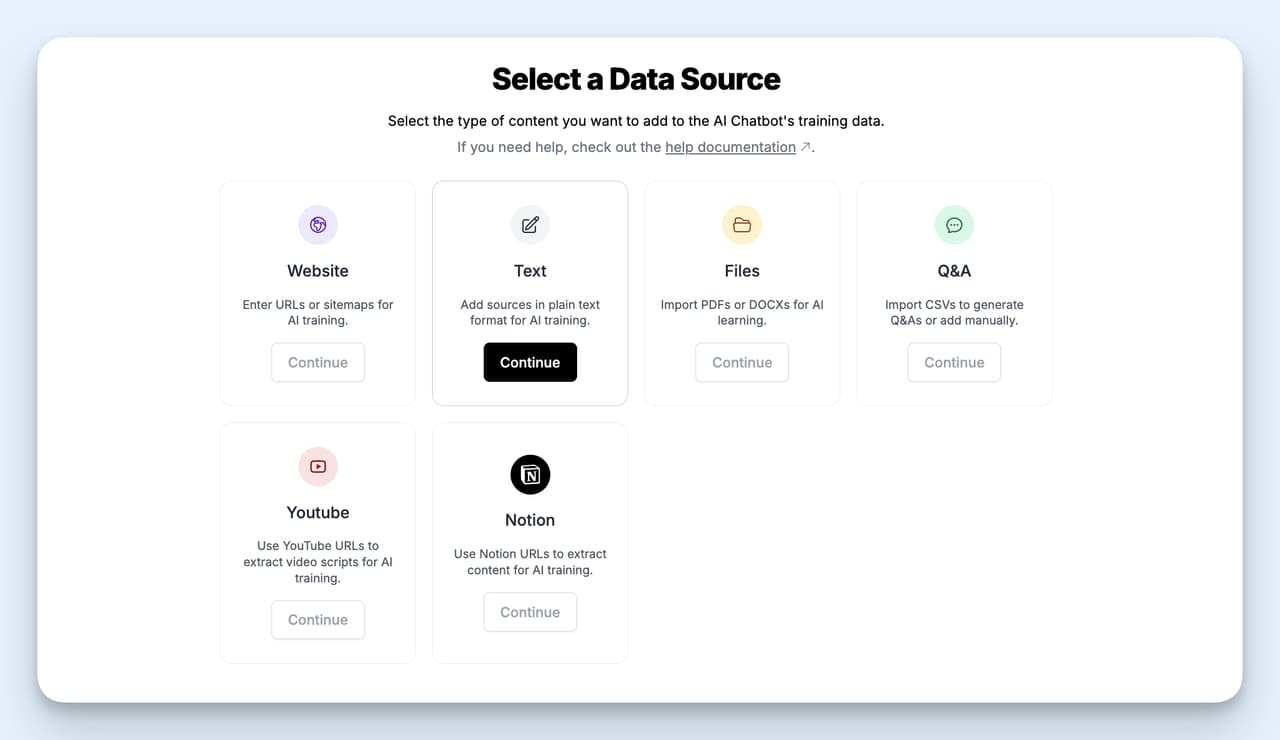
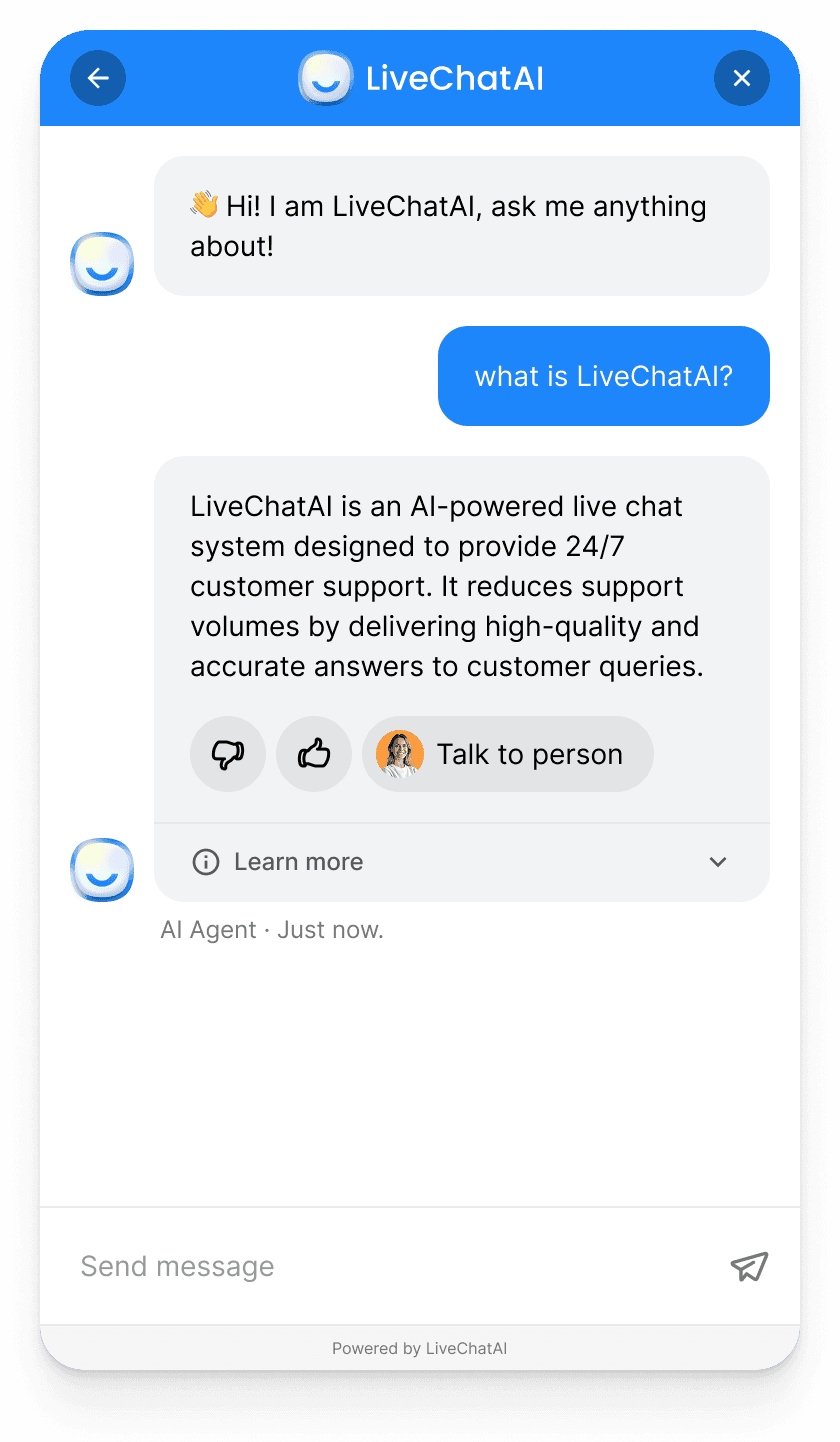
LiveChatAI is built around one idea: most Freshdesk tickets are repeats of questions already answered in your help docs. The AI ingests your URLs, PDFs, and Q&A pairs, then answers customer questions in 95+ languages. When confidence drops or the case needs a human, it hands the conversation to a live agent with full context attached. Our team at LiveChatAI ships AI Actions so the bot can do more than answer — it can fetch order status, escalate to billing, or open a Slack thread.
The case for trusting AI deflection isn't theoretical. Superhuman documented deployments where 70% of customer questions get answered without human help, and customers who use the chatbot end up buying 25% more on average. Buyers evaluating LiveChatAI tend to be Freshdesk customers tired of paying for Freddy AI separately while still scripting flows manually.
Key features:
• Custom AI training on your data: Point LiveChatAI at any URL, upload PDFs, or paste Q&A pairs. The bot answers using your content, not generic LLM output. Deeper walkthrough in our AI agent setup guide.
• Live chat handoff with context: When the AI flags low confidence or a customer asks for a human, the full transcript and detected intent transfer to your agent — no re-asking.
• Multilingual support out of the box: 95+ languages without separate models. Useful for global SaaS or e-commerce brands.
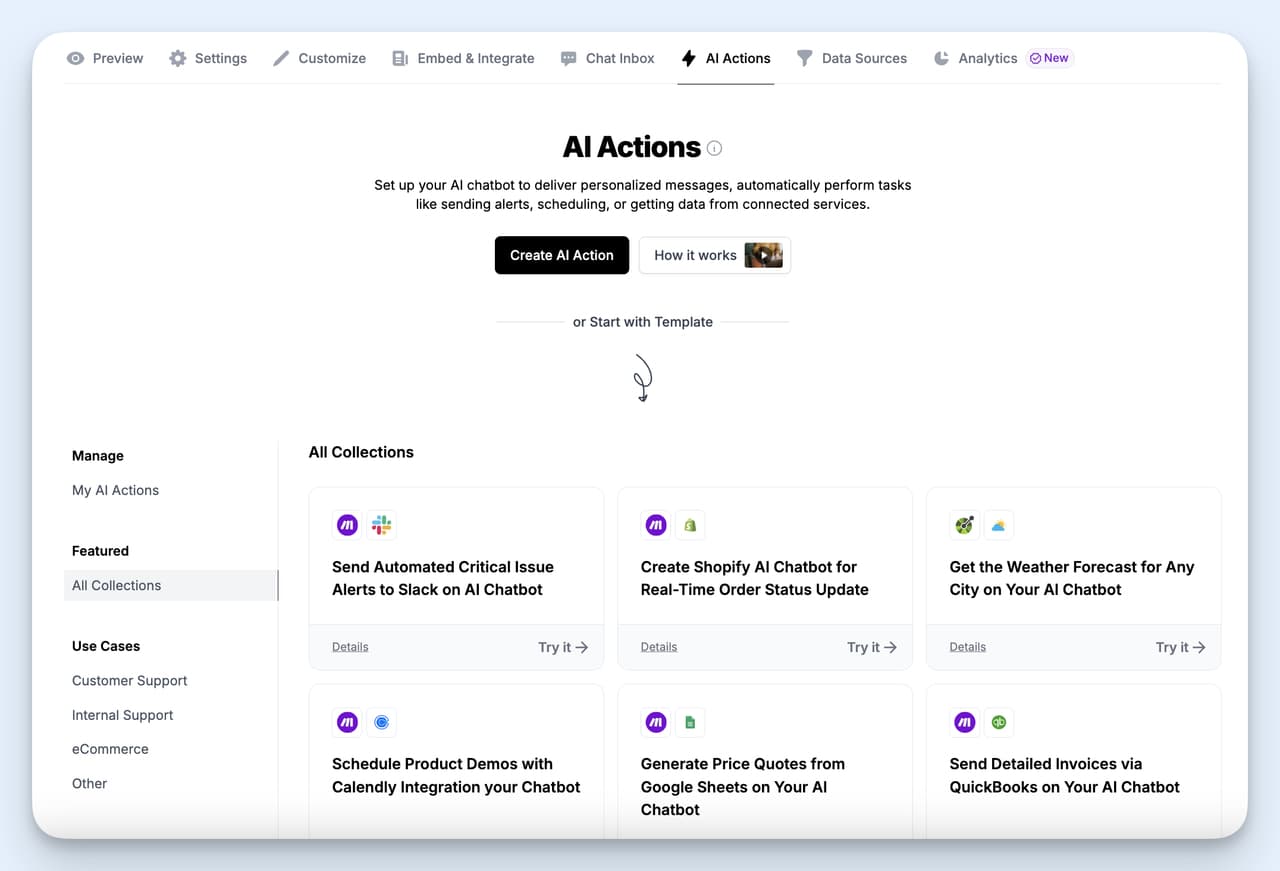
• AI Actions: Trigger workflows from the chat — query an order DB, post to Slack, open a ticket — without leaving the customer conversation.
• Slack, WhatsApp, and API integrations: Drop the bot into the channels your customers already use.
Pricing snapshot (2026): Free plan for testing; Basic $39/mo (4,000 messages, 1 chatbot); Pro $89/mo (10,000 messages, 2 chatbots); Advanced $189/mo (unlimited messages, 5 chatbots); Expert $389/mo (10 chatbots, API access, priority support). Flat monthly fees — no per-agent surcharge.
Pros: Predictable flat pricing, fast setup (most teams ship a working bot in under an hour), strong multilingual quality, no separate AI add-on fee.
Cons: Not a full ticketing system — best paired with a help desk if you need SLAs and queues; advanced workflow logic still developing compared to Zendesk's macros; reporting is functional but lighter than enterprise tools.
Best for: SaaS and e-commerce teams replacing Freddy AI or layering AI on top of an existing help desk to cut deflection costs.
2. Zendesk
Best for: Mid-market and enterprise teams that need mature ticketing, omnichannel routing, and a deep app marketplace — and have the budget to match. Note: Zendesk is a direct LiveChatAI competitor, so we're keeping this entry analytical.
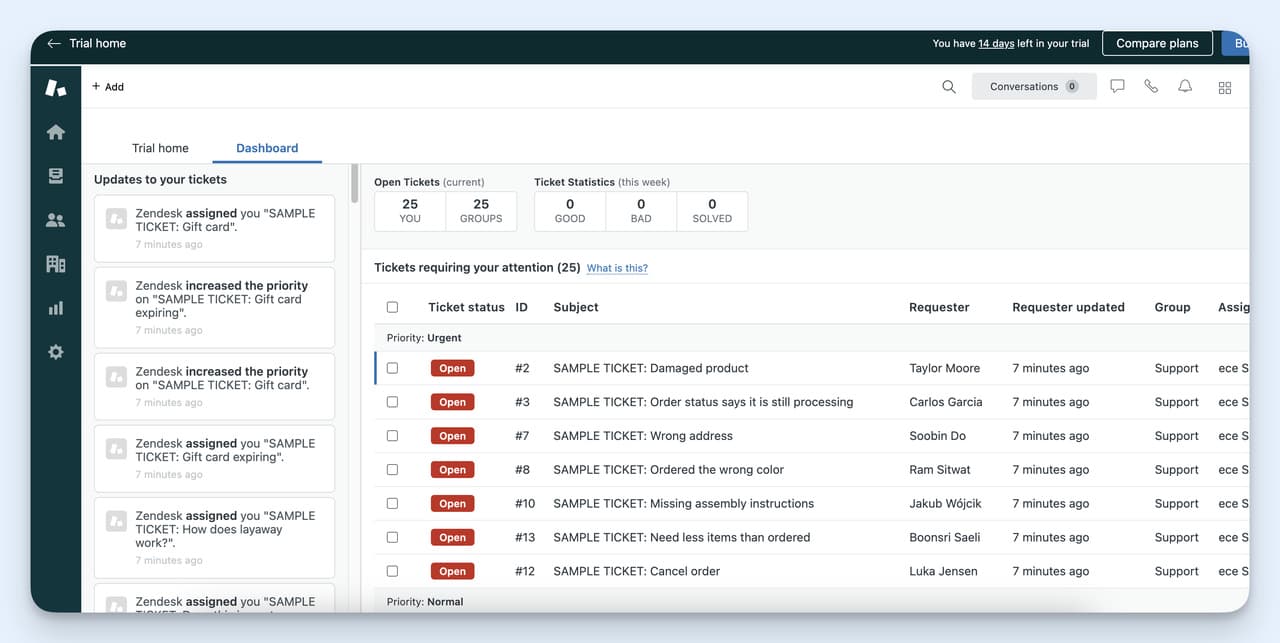
Zendesk is the obvious Freshdesk alternative for buyers who want a like-for-like swap with more depth. G2 reviews consistently highlight the unified agent workspace, mature SLA tooling, and a marketplace that covers nearly every CRM and BI tool you can name. Vendor documentation describes the AI agent (formerly Ultimate) as production-ready, though G2 reviewers note that getting it to behave well takes a structured taxonomy of intents.
The trade-off is cost and complexity. Zendesk's pricing climbs quickly once you add the Suite, then AI, then advanced analytics. Buyers shopping out of Freshdesk because of pricing complexity often find Zendesk lands at a similar place — just with more features per dollar at the top tier.
Key features:
• Unified agent workspace: Email, chat, social, voice, and self-service all surface in one screen with shared context.
• AI agent and copilot: Deflection bot plus an in-agent assistant that drafts responses and summarizes long threads.
• Macros, triggers, and automations: Deep workflow customization, including conditional logic across ticket fields.
• Customizable analytics: Explore dashboards out of the box, with the option to build custom reports on raw event data.
• 1,500+ apps in the marketplace: Native integrations for Shopify, Salesforce, Jira, Slack, Stripe, and most SaaS tools.
Pricing snapshot (2026): Support Team from $19/agent/mo; Suite Team from $55/agent/mo; Suite Professional from $115/agent/mo; Suite Enterprise custom (typically $169+/agent/mo). AI Agents and advanced analytics priced separately.
Pros: Mature feature depth, strong marketplace, reliable reporting, scales well past 100 agents.
Cons: Total cost of ownership often exceeds Freshdesk once AI and analytics are layered in; setup complexity high; reviewers cite a steep learning curve for new admins.
Best for: Mid-market and enterprise support orgs that need depth and can absorb a higher invoice for a single-vendor stack.
3. Zoho Desk
Best for: Companies already in the Zoho ecosystem or buyers who want strong CRM integration without enterprise-tier pricing. Link: Zoho Desk.
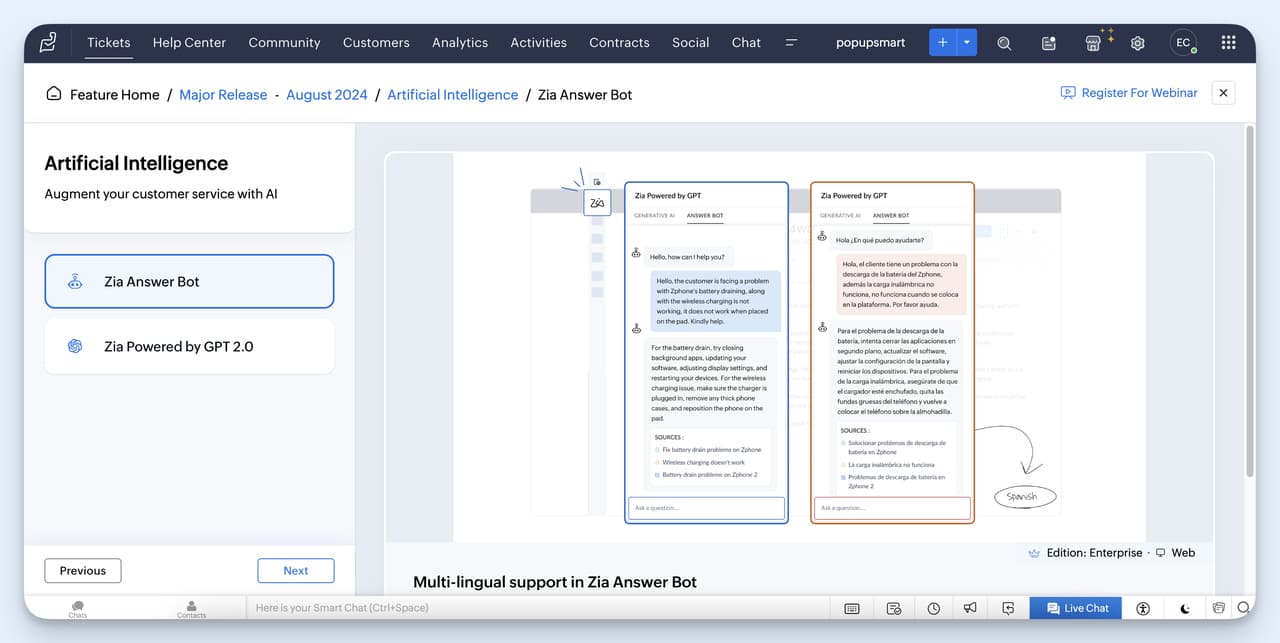
Zoho Desk is the most direct apples-to-apples Freshdesk competitor on price and feature parity. Where it pulls ahead is the Zia AI assistant, which handles sentiment analysis, anomaly detection on ticket volume, and auto-tagging — capabilities Freshdesk reserves for higher Freddy AI tiers. G2 reviews praise the multi-brand support (one help desk handling separate brand portals) and the deep ties to Zoho CRM, Zoho Books, and the broader Zoho One suite.
The catch is the broader Zoho UX. Buyers who only need a help desk often find the constant cross-sell to other Zoho apps distracting. If you're already a Zoho One customer, that's a feature. If you're not, it's noise.
Key features:
• Zia AI assistant: Sentiment scoring, anomaly detection, reply suggestions, and auto-tagging built in.
• Multi-brand help centers: Run separate branded portals for each product line from one back end.
• Workflow blueprints: Visual workflow builder for ticket lifecycle states, escalations, and approvals.
• Omnichannel inbox: Email, chat, social, voice, WhatsApp, and self-service in one queue.
• Native Zoho CRM sync: Two-way data flow between support and sales without middleware.
Pricing snapshot (2026): Free for 3 agents; Standard €14/user/mo; Professional €23/user/mo; Enterprise €40/user/mo (billed annually). Zia AI included from Professional up.
Pros: Strong free tier, AI included at mid-tier, multi-brand built in, predictable pricing.
Cons: UX feels dense to first-time users; best ROI requires committing to the broader Zoho ecosystem; mobile app reviews are mixed.
Best for: SMB and mid-market teams who want AI features without Freshdesk's premium add-on tax — especially if they're already using Zoho CRM.
4. Help Scout
Best for: Small-to-mid teams that want a customer-friendly shared inbox without the ticketing-system feel. Link: Help Scout.
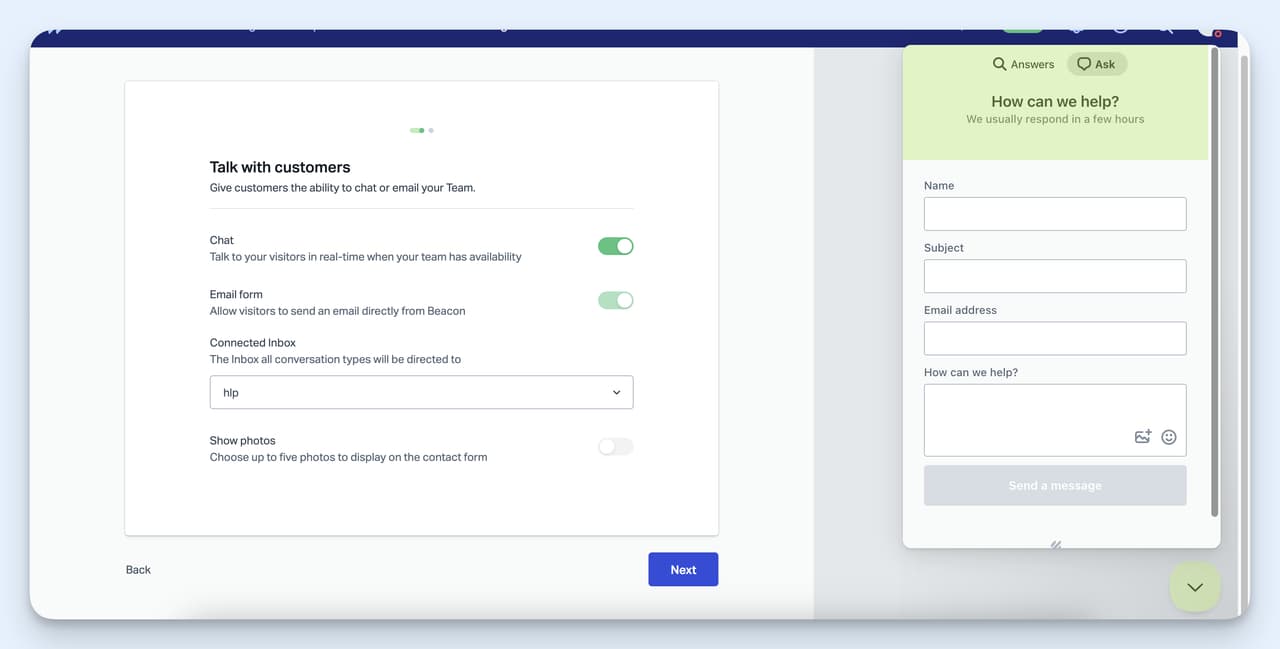
Help Scout has spent a decade arguing that ticket numbers feel transactional and impersonal. The product reflects that: emails look like emails, the customer never sees a "Ticket #38291" subject prefix, and the Beacon widget pulls knowledge base articles into your site so customers self-serve before opening a thread. G2 reviewers consistently note that onboarding takes hours, not weeks. If you're comparing options, our Help Scout alternatives roundup goes deep on the trade-offs.
Help Scout's recent AI additions (AI Summarize, AI Drafts, AI Answers) put it in the same conversation as Freshdesk Freddy without the surcharge structure. The platform is intentionally lighter on enterprise customization — that's a feature for teams under 50 agents and a constraint above.
Key features:
• Shared inbox with conversation view: Emails, chats, and form submissions arrive in a unified thread, not a ticket queue.
• Beacon widget: Embeds knowledge base search and live chat in your site; customers self-serve before contacting support.
• Docs (knowledge base): Clean editor for help articles with built-in search analytics.
• AI Summarize and AI Drafts: Cut ramp time on long threads and speed up reply drafting.
• 50+ integrations: Slack, HubSpot, Jira, Shopify, Salesforce, and most SaaS tools.
Pricing snapshot (2026): Free for up to 50 contacts/mo; Standard $50/mo (100 contacts, multiple inboxes); Plus $75/mo (Salesforce integration, custom fields); Pro custom for larger contact volumes.
Pros: Excellent UX, fast onboarding, customer-friendly email experience, strong Docs product.
Cons: Light on advanced workflow automation; reporting depth trails Zendesk; AI features still maturing vs. Intercom or LiveChatAI.
Best for: SaaS and DTC teams under 50 agents who value email-style customer conversations over ticket-system feel.
5. Intercom
Best for: Product-led companies that want messaging, in-app chat, and AI deflection deeply integrated with user data. Note: Intercom is a LiveChatAI competitor, so we're keeping this analytical.
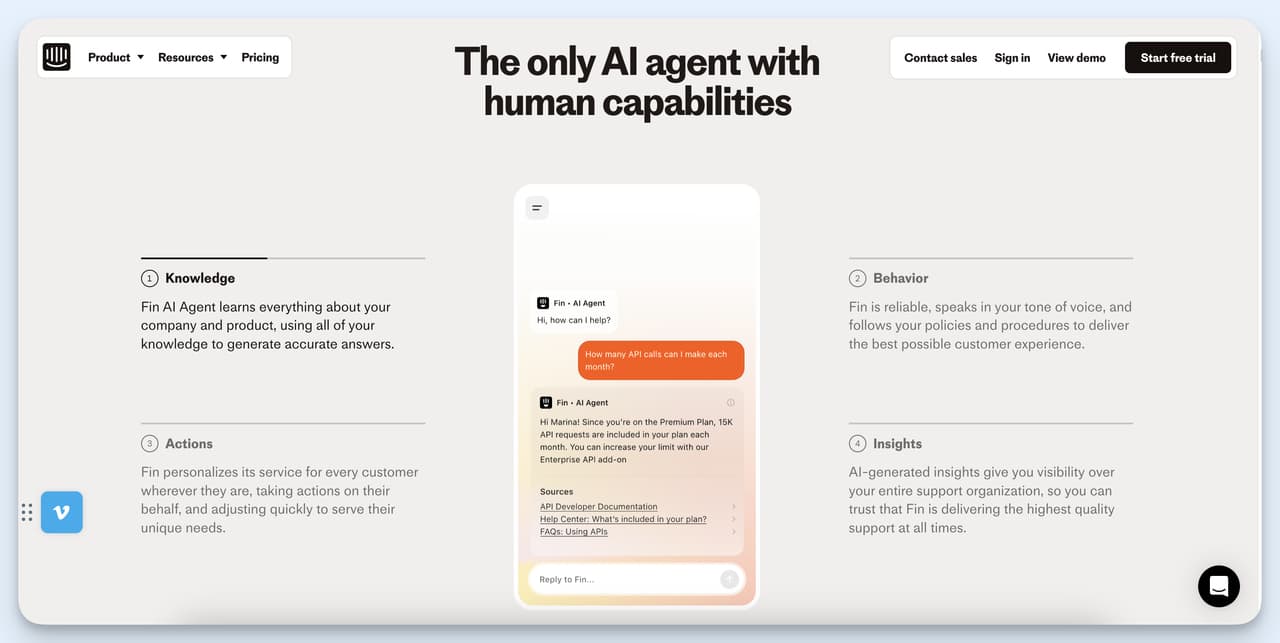
Intercom built its reputation on the Messenger — the in-app chat that lets SaaS products talk to users without leaving the app. The Fin AI agent has become the headline feature in 2026, with vendor documentation citing high deflection rates on documented questions. G2 reviewers describe Fin as one of the more reliable out-of-the-box bots on the market, especially for SaaS knowledge bases.
The friction point in 2026 is the resolution-based pricing model. Intercom charges per AI resolution on top of seat pricing, and several G2 reviewers note that scaling volumes can produce surprise invoices. Buyers comparing Intercom to Freshdesk often end up doing per-conversation cost math on a spreadsheet.
Key features:
• Fin AI agent: Answers customer questions from your help center and connected sources; flagged as one of the most accurate on-the-shelf bots.
• Messenger: In-app and web chat widget with rich messaging, video, and self-serve support.
• Workflows: Visual builder for routing, triage, and proactive outreach.
• Inbox with shared context: Agents see user attributes, event history, and prior conversations alongside the current thread.
• 300+ integrations: Stripe, Jira, HubSpot, Salesforce, and most SaaS stacks.
Pricing snapshot (2026): Essential $29/seat/mo; Advanced $85/seat/mo; Expert $132/seat/mo. Fin AI resolutions priced per resolution on top of seats.
Pros: Excellent Messenger UX, mature AI agent, strong user-data integration for SaaS.
Cons: Resolution-based billing produces unpredictable costs; total cost of ownership often higher than Freshdesk for similar volumes; reviewers cite long contract negotiations.
Best for: Product-led SaaS companies where in-app messaging and AI deflection justify a premium price point.
6. HubSpot Service Hub
Best for: Teams already running HubSpot CRM who want service in the same data model as sales and marketing. Link: HubSpot Service Hub.
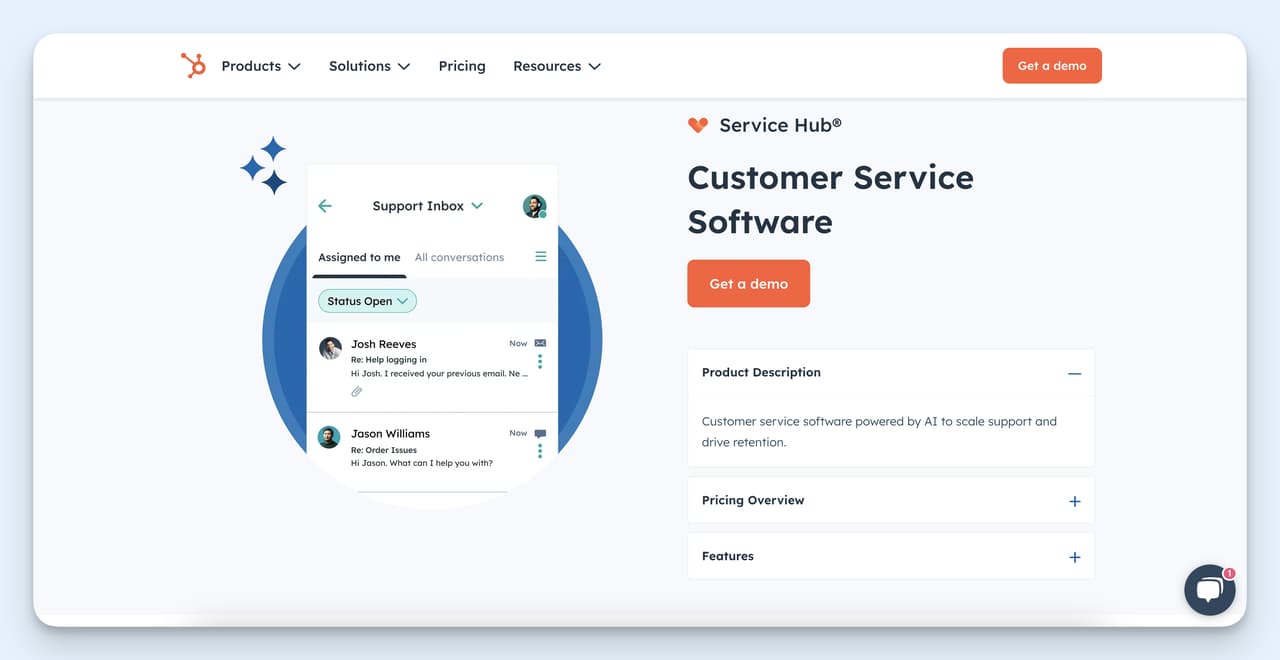
Service Hub's selling point is the unified CRM. Tickets, contacts, deals, and marketing touches all live in the same database, so a support agent can see every email a customer received and every form they filled out. G2 reviewers in 2026 consistently rank Service Hub high for SMB and mid-market teams that prioritize cross-functional visibility over support-specific depth.
The trade-off shows up in two places. Advanced support automation (custom workflows, complex SLAs) requires Professional or Enterprise tier, which gets expensive. And buyers who don't already use HubSpot CRM tend to feel they're paying for capabilities they won't use.
Key features:
• Integrated CRM: Service tickets and customer records share one database with marketing and sales.
• Omnichannel inbox: Email, chat, Facebook Messenger, and forms route to one queue.
• Customer portal and knowledge base: Branded self-service hub for ticket status and documentation.
• Breeze AI features: Conversation summaries, draft replies, and chatbot building blocks in higher tiers.
• Service analytics: Dashboards for CSAT, response time, and ticket volume, with cross-team reporting.
Pricing snapshot (2026): Free plan for basic tools; Starter from $15/seat/mo; Professional from $90/seat/mo; Enterprise from $150/seat/mo. CRM data shared across all hubs.
Pros: Best-in-class CRM integration, generous free tier, strong onboarding and education resources.
Cons: Advanced features require Professional or Enterprise; per-seat costs add up; underwhelming if you're not also using HubSpot for marketing or sales.
Best for: HubSpot CRM users adding a support layer or SMB teams that want service-and-sales context in one tool.
7. LiveAgent
Best for: SMB teams wanting omnichannel support (including built-in call center) at a price point that won't surprise the CFO. Link: LiveAgent.
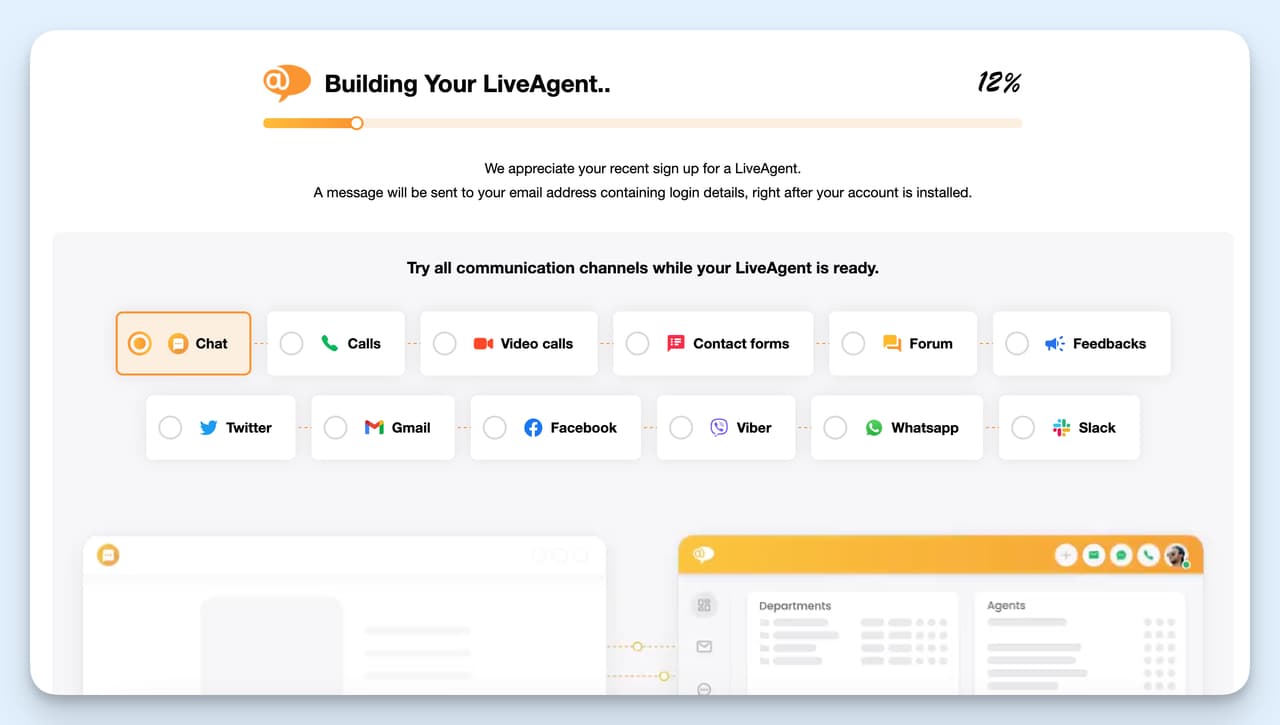
LiveAgent's competitive angle is omnichannel-without-the-tax. It bundles a built-in VoIP capabilities call center, live chat, social inboxes, and ticketing under one license — no third-party telephony integration required. Vendor docs describe one of the faster live chat widgets on the market in terms of load time, and G2 reviews back that up. Buyers comparing it to Freshdesk usually do so because they need voice without buying Freshcaller separately.
The AI Answer Assistant is newer and lighter than what Intercom or LiveChatAI ship, but it covers the basics — reply drafting and summary generation. The UI shows its age in places, and reviewers note that the analytics layer trails Zendesk and HubSpot in depth.
Key features:
• Built-in call center: VoIP-based voice channel included in the helpdesk license.
• Real-time live chat: Fast-loading widget with proactive triggers.
• Omnichannel ticketing: Email, chat, voice, social, and forum threads in one queue.
• AI Answer Assistant: Drafts replies and summarizes ticket threads.
• 200+ integrations: Major CRMs, e-commerce platforms, and SaaS tools.
Pricing snapshot (2026): Small $15/agent/mo (basic ticketing and chat); Medium $24/agent/mo (call center, reports, AI Assistant); Large $39/agent/mo (SSO, custom roles, advanced integrations); Enterprise $59/agent/mo (dedicated CSM).
Pros: All-in-one (chat plus voice plus ticketing), affordable, fast widget, strong omnichannel coverage.
Cons: UI feels dated to reviewers used to modern SaaS; AI features lag the frontier; analytics aren't enterprise-grade.
Best for: SMB and mid-market teams that need omnichannel (including phone) and want a single bill at a moderate price.
8. Kustomer
Best for: Mid-market and enterprise teams (especially DTC and retail) that want a unified customer timeline and deep workflow automation. Link: Kustomer.
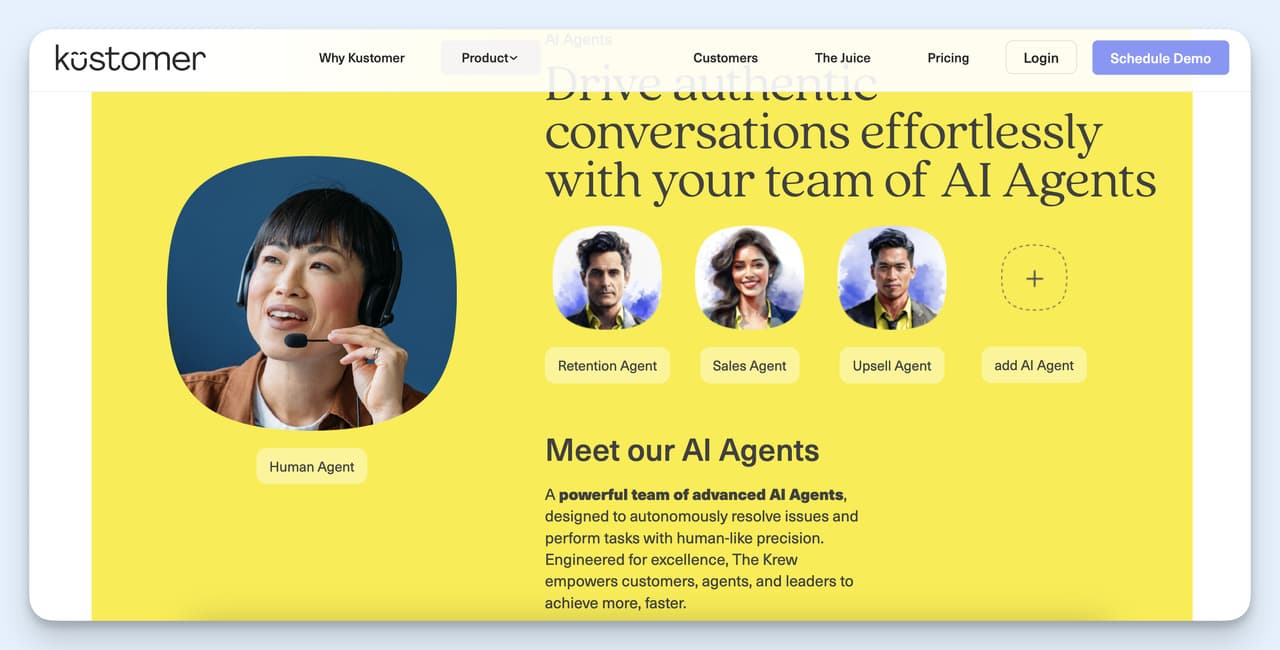
Kustomer (owned by Meta) replaces the traditional ticket queue with a customer timeline — every interaction, order, and event for one person appears as a single chronological story. G2 reviews from retail and DTC teams describe the timeline as one of the better fits for high-touch consumer support, especially when integrated with Shopify or a custom OMS. The platform's KIQ AI agents handle deflection and routing on top of the timeline view.
The trade-off is that Kustomer is heavier to implement than Freshdesk and aimed squarely at brands with the resources to invest in setup. Pricing is enterprise-shaped — not built for sub-10-agent teams.
Key features:
• Unified customer timeline: Every interaction, order, ticket, and event in one chronological view per customer.
• KIQ AI agents: Deflection, classification, and routing AI built into the platform.
• Custom objects: Model your own data (orders, shipments, subscriptions) as first-class records.
• Workflow automation: Conditional branching, external REST API calls, and callable sub-workflows.
• Multi-brand support: Run separate brand experiences from one back-end (2 brands on Pro, up to 300 on Ultimate).
Pricing snapshot (2026): Professional AI tier; Enterprise AI tier; Ultimate AI tier — all custom pricing, typically starting in the $89-$139/agent/mo range with AI add-ons.
Pros: Unified customer view, strong workflow engine, excellent for DTC and retail.
Cons: Enterprise-only pricing posture; long implementation; overkill for small support teams.
Best for: Mid-market and enterprise DTC, retail, and e-commerce brands replacing Freshdesk because of data-model limits.
Buyers comparing Kustomer to Freshdesk usually do so for one reason: their data model has outgrown the standard ticket schema. If your support team is constantly building custom fields to represent orders, subscriptions, or shipments, Kustomer's custom objects feature is the structural fix. If your data fits a normal ticket queue, you'll pay enterprise prices for capabilities you won't use.
9. HappyFox
Best for: Teams that want a structured ticketing system with custom workflows and strong asset-management options. Link: HappyFox.
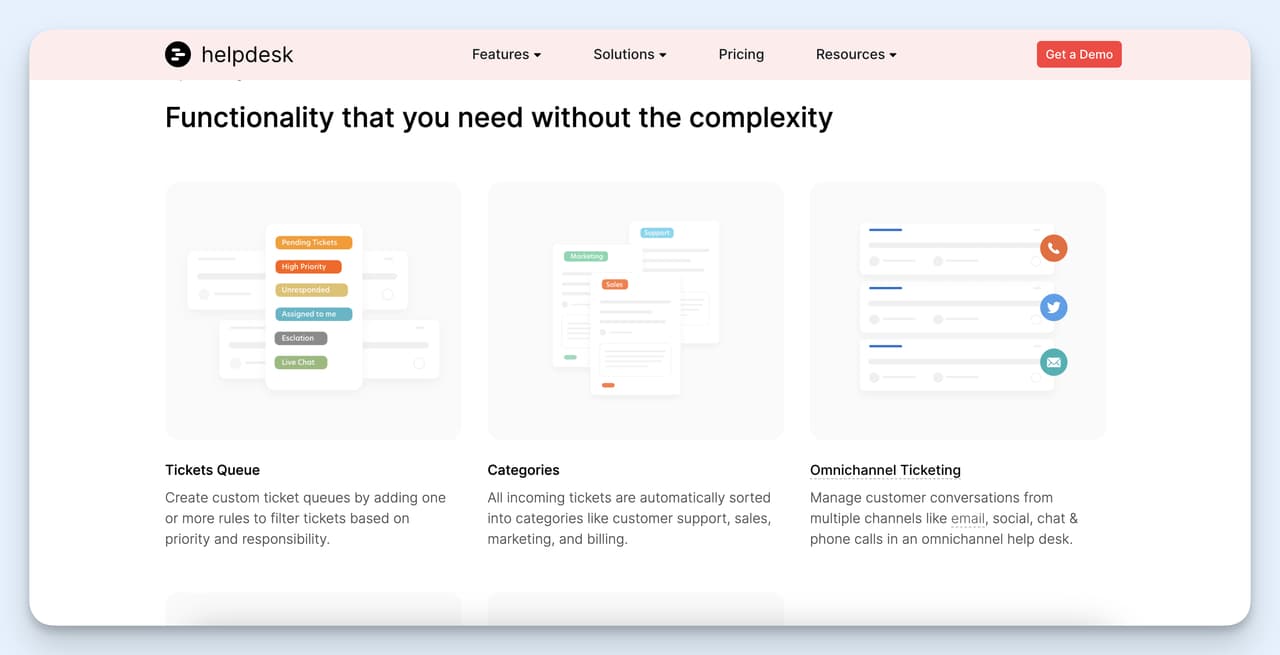
HappyFox sits in the same category as Freshdesk — a structured help desk with strong ticketing, automation, and SLA tooling. The difference is focus. HappyFox's smart automations and customizable workflows get high marks from G2 reviewers in IT services, where ticket structure and approval chains matter. The platform also bundles a knowledge base and self-service portal that reviewers describe as easy to brand. Our help desk practices guide covers the operational habits that get the most out of a tool like HappyFox.
HappyFox doesn't lead on AI yet — it's catching up rather than setting the pace. If AI deflection is a top-three buying criterion, look at LiveChatAI, Zoho Desk, or Intercom first.
Key features:
• Smart ticket automation: Rule-based assignment, status changes, and escalations across complex workflows.
• Customizable workflows: Build approval chains and conditional routing without engineering help.
• Multi-channel inbox: Email, chat, social, and voice (via integrations) in one queue.
• SLA management: Configurable response and resolution targets with breach alerts.
• Self-service portal: Branded knowledge base and ticket-status page for customers.
Pricing snapshot (2026): Small $29/agent/mo; Medium $49/agent/mo; Large $69/agent/mo; Enterprise custom. Annual billing typically required.
Pros: Strong workflow customization, clean UI, good for IT services and structured support orgs.
Cons: AI features behind the frontier; annual billing requirement turns off smaller buyers; integration list shorter than Zendesk's.
Best for: IT services, BPO, and structured support orgs that prioritize workflow over AI.
HappyFox's strongest fit pattern in 2026: mid-sized IT services companies running 15-50 agents who need approval chains and SLA enforcement more than they need AI deflection. The product trades AI sparkle for workflow rigor, and reviewers note that buyers who appreciate that trade tend to stick around.
10. Front
Best for: Operations and ops-heavy teams (logistics, finance, B2B services) that handle customer comms through shared email but need real collaboration tools. Link: Front.
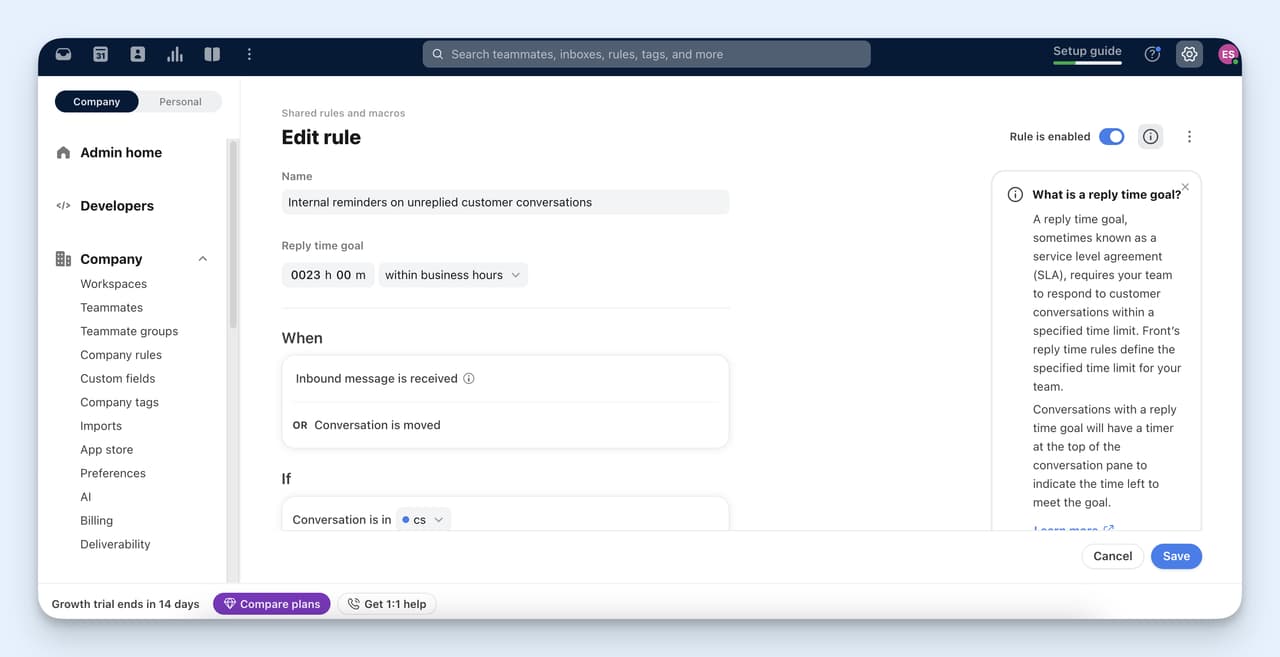
Front isn't a traditional help desk. It's a shared inbox that treats email as a collaborative workspace — internal comments live alongside customer threads, assignments work like in a project tool, and rules route messages by sender, subject, or content. G2 reviewers from logistics, freight, and B2B services describe Front as a better fit than Zendesk or Freshdesk when "tickets" don't really describe the work. Front Intelligence (AI Compose, AI Summarize) layers in 2026.
The constraint is structural. Front doesn't have native SLAs, ticketing taxonomies, or queue logic that helpdesk veterans expect. For email-heavy operations work, that's a feature. For traditional consumer support, it's a gap.
Key features:
• Shared inboxes: Email, chat, SMS, and social in one collaborative inbox with internal comments.
• Rules engine: Up to 1,000 rules on higher plans to auto-route, tag, and assign.
• Front Intelligence: AI Summarize, AI Compose, and AI Answer for faster drafting.
• Collaboration tools: @-mentions, internal threads, and shared drafts.
• Analytics: Response time, resolution rate, and team workload dashboards.
Pricing snapshot (2026): Starter $19/seat/mo (up to 10 seats); Growth $59/seat/mo; Scale $99/seat/mo; Premier custom. All billed annually.
Pros: Best-in-class shared inbox, real collaboration model, strong for ops-heavy workflows.
Cons: Not a true help desk; SLA tooling lighter than Zendesk; pricing climbs fast at scale.
Best for: Ops teams, B2B services, and logistics companies handling customer comms through shared email rather than ticket queues.
11. Groove
Best for: Small teams that want a clean, affordable shared-inbox tool without enterprise complexity. Link: Groove.
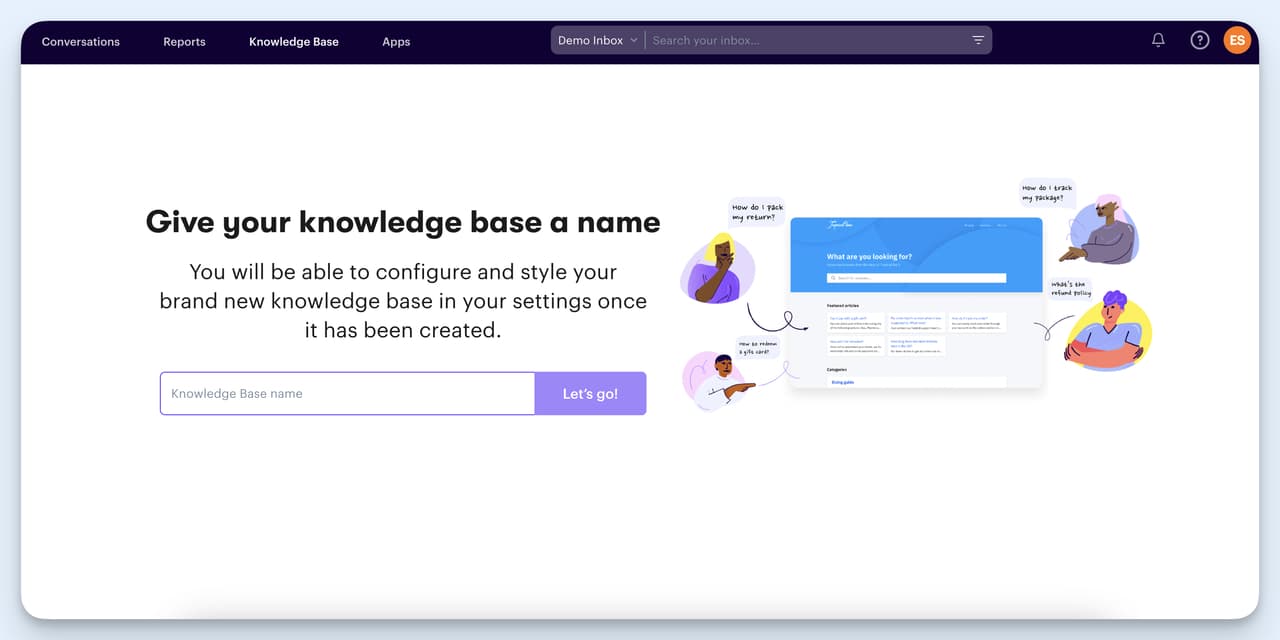
Groove is the quiet alternative — built for SMB support teams that don't want to pay Zendesk pricing and don't need Front's collaboration depth. G2 reviewers describe the onboarding as the fastest on this list, with most teams shipping a working inbox in under an hour. The Knowledge Base product is light but functional, and Groove AI (summarization plus drafting) covers the basics.
If your team is under 20 agents and the buying criteria are "fast setup, low cost, doesn't feel like a CRM," Groove is hard to beat. Above 30 agents, you'll hit ceilings on workflow depth and reporting that pricier tools handle better.
Key features:
• Omnichannel inbox: Email, chat, and social channels in a shared queue.
• Knowledge base: Branded self-help portal with article-level analytics.
• Groove AI: AI Summarize and AI Drafts speed up reply work.
• Workflow automation: Rule-based routing and assignment, tiered by plan.
• iOS and Android apps: Mobile inbox for on-the-go support.
Pricing snapshot (2026): Standard $16/user/mo; Plus $36/user/mo; Pro $56/user/mo. Annual billing typical.
Pros: Fast setup, clean UX, fair pricing for SMB.
Cons: Lighter workflow depth; ceiling kicks in above 30 agents; integration list shorter than competitors.
Best for: SMB support teams (under 30 agents) replacing Freshdesk because of complexity or cost.
One pattern worth flagging: Groove customers who came from Freshdesk tend to cite the same reason in G2 reviews — they wanted email-style customer conversations without the helpdesk overhead. If that sounds familiar, Help Scout and Groove should both make your shortlist; the choice between them often comes down to UI taste rather than feature gaps.
12. Spiceworks Cloud Help Desk
Best for: Internal IT teams that want a free, IT-flavored ticketing system with built-in asset tracking. Link: Spiceworks Cloud Help Desk.
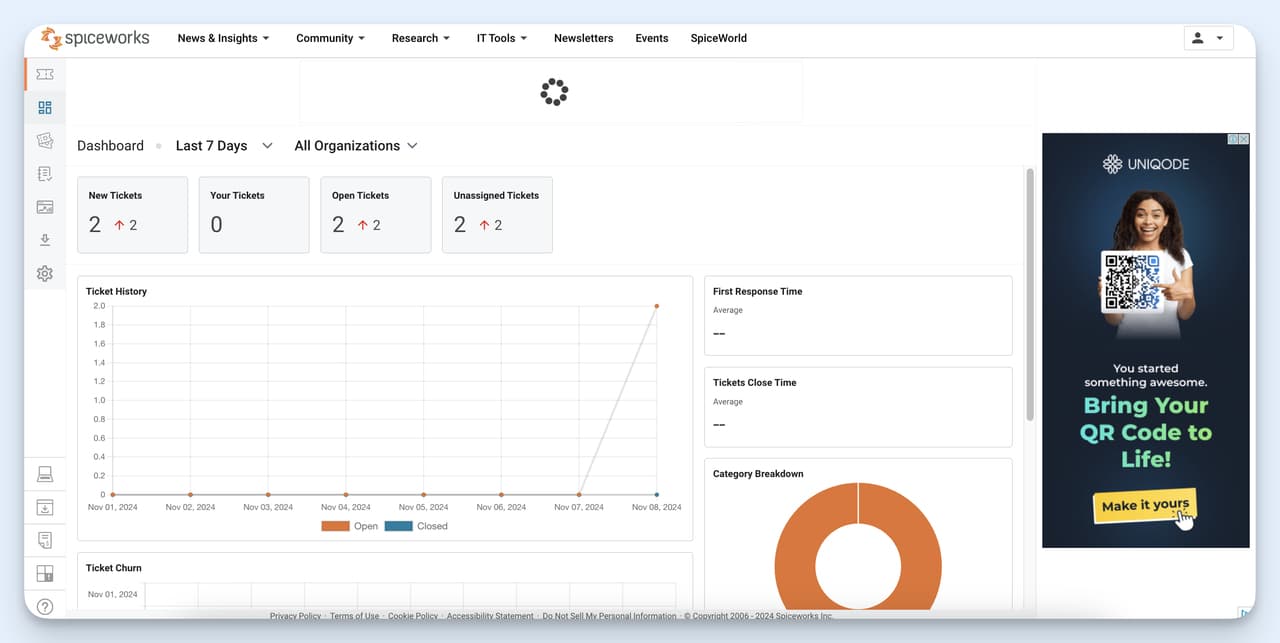
Spiceworks Cloud Help Desk is the rare genuinely-free option. It's funded by ads in the IT community platform around it, which means unlimited agents, unlimited tickets, and unlimited users — no upsell tier waiting. G2 reviewers in internal IT consistently cite it as a viable Freshdesk replacement for smaller IT shops that don't need enterprise reporting or AI.
The trade-offs are real. The UI feels dated, ads appear in the admin interface, AI features are minimal, and customer support is community-based rather than vendor-staffed. For internal IT teams who'd rather spend zero dollars than negotiate a contract, it's a strong fit. For external customer support, look elsewhere.
Key features:
• Unlimited everything: Tickets, agents, users, and devices — no caps.
• IT asset management: Native asset tracking integrated into the help desk.
• Custom ticket views and rules: Filter and automate ticket handling.
• Community knowledge base: Tap into the broader Spiceworks IT community for advice.
• Email and portal ticket creation: Standard intake methods for end users.
Pricing snapshot (2026): $0/user/mo across all plans. Funded by display ads and sponsored placements in the Spiceworks platform.
Pros: Genuinely free; unlimited usage; integrated asset management; active IT community.
Cons: Dated UI; in-app ads; minimal AI; not designed for external customer support.
Best for: Small-to-mid internal IT teams that want a free helpdesk and don't mind ad-supported software.
One realistic limitation: Spiceworks is built around the assumption that you're supporting your own employees, not paying customers. Branding options are limited, the customer-facing portal is basic, and there's no SLA layer to satisfy external service contracts. Internal IT works; external customer support does not.
13. DevRev
Best for: Product-led companies that want to merge support tickets with engineering work, all in one tool. Link: DevRev.
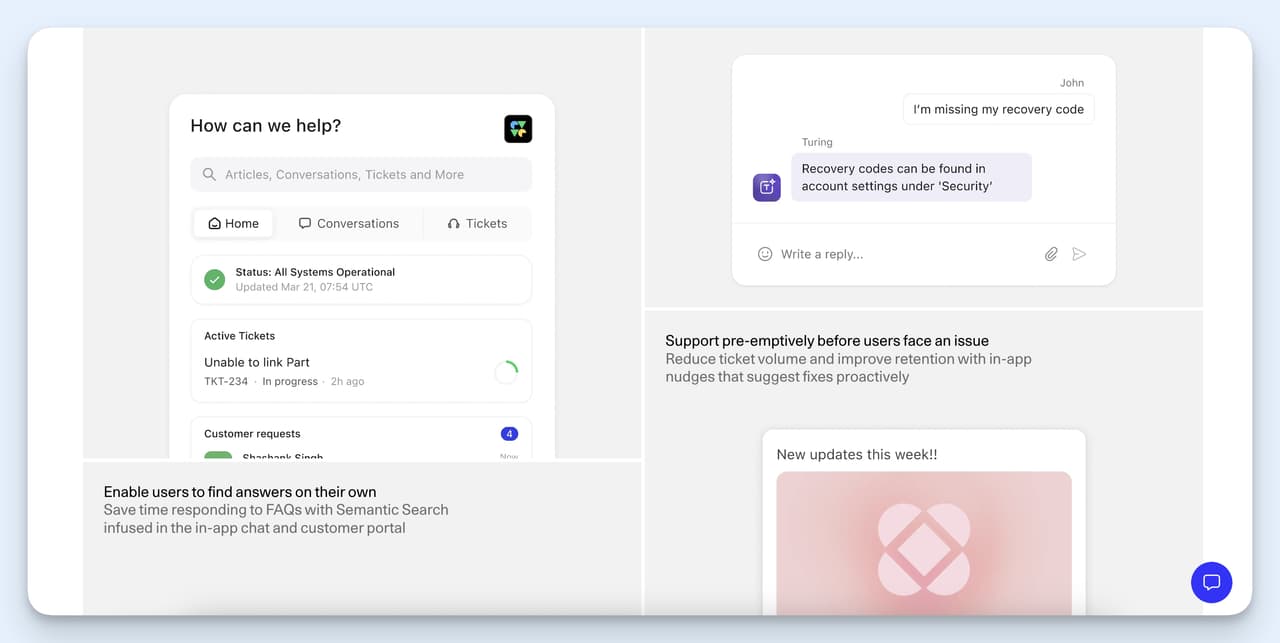
DevRev's pitch is unique: one platform for customer support and engineering work, so a customer-reported bug can flow from chat → ticket → engineering backlog → release notes without leaving the tool. G2 reviewers from B2B SaaS and developer-tools companies describe it as the closest thing to a Jira-plus-Zendesk hybrid. The AI agents focus on ticket deflection, classification, and routing.
One pattern in DevRev case studies worth knowing: implementing AI-augmented support tends to produce real, measurable CSAT lift. Nextiva documented a 10% CSAT improvement after AI implementation as customers got faster, more consistent replies. DevRev sits squarely in that pattern, especially for SaaS companies whose support work is deeply technical.
Key features:
• Unified support and engineering: Tickets, bugs, feature requests, and engineering work in one data model.
• AI agents: Deflection bot, classification AI, and triage automation.
• Customer 360 view: Account, contact, and product-usage data attached to every conversation.
• Omnichannel ticketing: Email, chat, in-app, and Slack channels supported.
• Custom analytics: Reports that span support metrics and product-engineering throughput.
Pricing snapshot (2026): Starter $19.99/user/mo; Pro $59.99/user/mo; Ultimate custom. Free tier available for small teams.
Pros: Best-in-class for product-engineering alignment; modern UI; strong AI for ticket triage.
Cons: Overkill for support orgs disconnected from engineering; learning curve for non-technical agents; ecosystem still smaller than Zendesk.
Best for: B2B SaaS, developer-tools, and product-led companies aligning support and engineering on one platform.
14. ProProfs Help Desk
Best for: Small businesses that want a simple, all-in-one help desk with a free single-user tier. Link: ProProfs Help Desk.
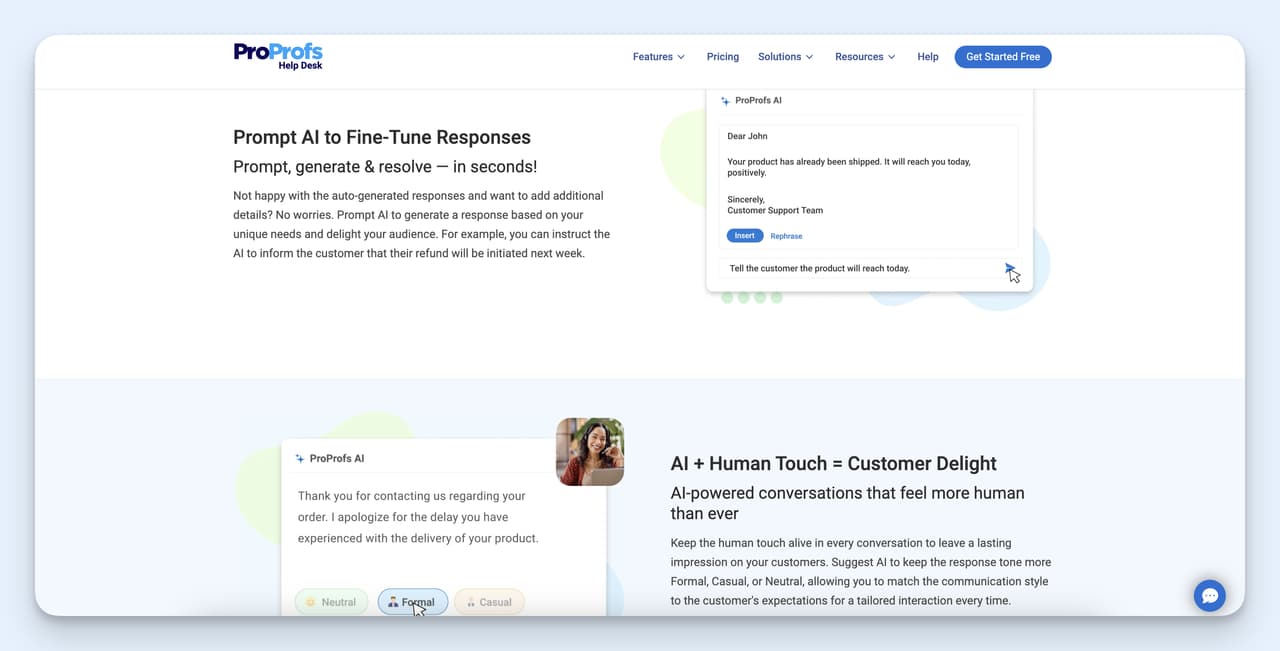
ProProfs Help Desk is built for small businesses that want one tool to handle email, chat, and a knowledge base without paying enterprise prices. G2 reviewers consistently call out the simplicity — most teams ship a working setup in a day. The AI writing assistant covers reply drafting, and the broader ProProfs suite (Quiz Maker, Survey Maker, Knowledge Base) gives buyers room to expand without switching vendors.
This isn't a tool for complex routing or large support orgs. The reporting is functional but light, integrations are narrower than Zendesk's, and the UI feels SMB-shaped throughout. For under 10 agents, it works. Above 20, the ceilings show.
Key features:
• Unified ticket management: Multi-inbox ticketing for email, chat, and forms.
• Custom fields and reports: Configurable ticket data and basic performance reporting.
• 24/7 support: Live chat, phone, and email support from the vendor.
• AI writing assistance: Draft and improve replies inline.
• Knowledge base tie-in: Connects to the broader ProProfs Knowledge Base product.
Pricing snapshot (2026): Free for single users with essential features; Paid plans from $19.99/user/mo with team-collaboration features.
Pros: Simple onboarding; free single-user tier; broader ProProfs suite for cross-tool expansion.
Cons: Light reporting; narrow integration list; ceilings appear above 20 agents.
Best for: Small businesses and solo founders looking for a no-friction Freshdesk replacement.
ProProfs Help Desk often appears on shortlists when a small business already uses another ProProfs product (Knowledge Base, Quiz Maker, Survey Maker) and wants vendor consolidation. If that's not your situation, Help Scout or Groove tend to be stronger standalone picks at similar price points.
How to Choose the Right Freshdesk Alternative
The shortlist is the easy part. The hard part is matching tool to team without burning three months on a wrong-fit migration. Work through these six steps in order — skipping any of them tends to produce buyer's remorse.
1. Define your support volume and shape. Pull last quarter's ticket count, average handle time, and channel mix (email, chat, voice, social). Tools like LiveAgent and Front handle voice-heavy work better than Help Scout. AI-first deflection only pays off if you're answering enough repeatable questions to justify the bot training time.
2. Audit the pricing model, not just the headline price. Per-agent pricing punishes growing teams. Per-resolution AI pricing produces unpredictable invoices. Flat-rate pricing (LiveChatAI, Spiceworks) trades AI scope for budget certainty. Build a 12-month cost projection at your expected agent count and ticket volume — not just today's numbers.
3. Evaluate AI maturity against your reality. Fastbots research notes that AI is automating 80% of routine support interactions in 2026. That's the theoretical ceiling. Your actual ceiling depends on how well-documented your support content is. If your help center is sparse, even the best AI agent will struggle. Audit your knowledge base before assuming AI will solve volume problems.
4. Run the integration check. List every tool support touches — CRM, billing, order management, internal Slack/Teams, BI. Match the list against each vendor's native integrations. Anything missing means custom middleware or manual workarounds. This single step is where most Freshdesk migrations go sideways.
5. Plan for scale and customization headroom. Where will your team be in 18 months? Creatio research projects that by 2028, 95% of all customer interactions will be powered by AI. That doesn't mean every team is ready today, but it does mean the tool you pick should still fit when AI handles most of your tier-one work. Look for platforms with custom objects, workflow APIs, and clear AI roadmaps.
6. Pilot before you sign. Run a 14-30 day trial with your top 2 shortlisted tools. Load real tickets, train the bot on your real docs, route to real agents. Measure deflection rate, time-to-resolve, and CSAT. Vendors that resist a real pilot are vendors with something to hide. For deeper guidance on running a structured support evaluation, our customer service challenges breakdown covers common pitfalls.
Pricing Comparison Across Freshdesk Alternatives
Pricing transparency varies wildly across this list. The numbers below are vendor-published starting prices as of June 2026 — most tools charge more for annual contracts at higher tiers, AI add-ons, or premium support.
The market context matters here. The global AI customer service market is projected to reach $15.12 billion in 2026, up from $12.06 billion in 2024. That growth is what's funding the AI add-on tier on Freshdesk, Intercom, Zendesk, and Kustomer. It's also why flat-rate AI vendors like LiveChatAI exist — there's pricing pressure on premium AI surcharges as the market matures.
Here's the starting-price snapshot:
• Free or $0 tier available: LiveChatAI (Free), Spiceworks Cloud Help Desk ($0 across all plans), Zoho Desk (free for 3 agents), HubSpot Service Hub (free tier), Help Scout (free for 50 contacts/mo), ProProfs Help Desk (free single-user).
• Under $25/seat/mo entry: HubSpot Service Hub ($15), Zoho Desk (€14, ~$15), LiveAgent ($15), Groove ($16), Front ($19), Zendesk Support Team ($19), DevRev ($19.99), ProProfs Help Desk ($19.99).
• Mid-tier ($25-$60/seat/mo): Intercom Essential ($29), HappyFox Small ($29), LiveAgent Large ($39), Help Scout Standard ($50), Zendesk Suite Team ($55), Front Growth ($59), DevRev Pro ($59.99).
• Premium tier ($60-$150/seat/mo): HappyFox Large ($69), Help Scout Plus ($75), Intercom Advanced ($85), HubSpot Service Professional ($90), Front Scale ($99), Zendesk Suite Professional ($115), Intercom Expert ($132), HubSpot Service Enterprise ($150).
• Enterprise / custom-quoted: Zendesk Suite Enterprise, Kustomer (all tiers), HappyFox Enterprise, LiveAgent Enterprise ($59), DevRev Ultimate, Front Premier.
Flat-rate vendors warrant a special note. LiveChatAI's $39-$389/mo flat fees and Spiceworks' $0 plan don't scale with agent headcount. For teams adding agents quickly, these structures save real money — sometimes 40-60% versus per-seat pricing once the org hits 20+ agents.
Frequently Asked Questions
What is similar to Freshdesk?
The tools most often shortlisted alongside Freshdesk are Zendesk, Zoho Desk, Help Scout, HubSpot Service Hub, and Intercom. Zendesk is the closest direct competitor on feature depth. Zoho Desk matches Freshdesk on price while including AI in mid-tier. Help Scout offers a cleaner customer-facing experience for SMB teams. LiveChatAI is the AI-native option for teams that want flat-rate deflection instead of per-resolution billing.
What are the best Freshdesk alternatives in 2026?
For most buyers in 2026: LiveChatAI if AI deflection is the top priority, Zoho Desk if you want Freshdesk-like depth with included AI, Help Scout if shared-inbox simplicity matters more than ticket complexity, Zendesk for enterprise depth and marketplace coverage, and Spiceworks Cloud Help Desk for internal IT teams who want a free option. Match the tool to your support shape, not the other way around.
How does Freshdesk compare to Zendesk and Help Scout?
Freshdesk and Zendesk overlap heavily — both are mature, ticket-based help desks with AI add-ons and big marketplaces. Zendesk wins on feature depth and ecosystem; Freshdesk often wins on lower entry pricing. Help Scout differs structurally. It treats customer conversations as emails, not tickets, hides queue numbers from customers, and is faster to onboard. Choose Zendesk for enterprise scale, Freshdesk for mid-market value, and Help Scout for SMB and SaaS teams that want a human-feeling inbox.
Which Freshdesk alternatives offer free plans with more than 2 agents?
Zoho Desk's free tier supports 3 agents. Spiceworks Cloud Help Desk offers unlimited agents at $0 across all plans, funded by ads in the platform. HubSpot Service Hub's free tier includes basic service tools with seat caps that vary by feature. LiveChatAI's free plan is per-workspace, not per-agent, so multiple users can collaborate. Help Scout's free plan caps at 50 contacts per month with unlimited users — useful for very small teams.
What is the most affordable Freshdesk alternative?
Spiceworks Cloud Help Desk is the most affordable in absolute terms because it's free for unlimited agents, funded by display ads. Among paid tools, HubSpot Service Hub Starter ($15/seat/mo), Zoho Desk Standard (€14/user/mo), LiveAgent Small ($15/agent/mo), and Groove Standard ($16/user/mo) cluster at the bottom of the per-seat pricing range. For AI-first buyers, LiveChatAI's $39/mo flat fee usually beats per-seat AI add-ons once a team exceeds 5 agents.
Which Freshdesk alternative is best for startups?
Startups want fast setup, low cost, and room to grow. LiveChatAI fits if AI deflection is a priority — flat pricing and fast bot training keep things predictable. HubSpot Service Hub Starter ($15/seat/mo) is strong if the startup is already using HubSpot for marketing or sales. Help Scout's clean UX gets startups live quickly. Avoid enterprise-shaped tools like Kustomer or DevRev until headcount and revenue justify them.
What are the best Freshdesk alternatives for enterprises?
Enterprises need depth, integrations, and AI maturity. Zendesk is the safest pick on ecosystem and scale. Kustomer fits DTC and retail enterprises that benefit from the unified timeline view. DevRev shines for B2B SaaS aligning support with engineering. HubSpot Service Hub Enterprise works if the company is committed to HubSpot CRM. Help Scout's Pro tier and Front Premier suit enterprises that want lighter-feel tools with custom scope.
Pick Your Freshdesk Replacement Today
The shortlist that matters: LiveChatAI for AI-native deflection at flat pricing, Zoho Desk for Freshdesk-style depth with included AI, Help Scout for SMB and SaaS teams who want a human-feeling inbox, Zendesk for enterprise ecosystem coverage, and Spiceworks Cloud Help Desk for internal IT teams who'd rather pay zero than negotiate. Every other tool on this list earns its place in a specific use case — match the tool to your support shape, not the other way around.
Start with two pilots. Pick the tool that best fits your top buying criterion, plus one wildcard — usually an AI-first option if you're coming from Freshdesk Freddy. Load 100 real tickets, train the bot on real docs, and measure deflection, response time, and CSAT over two weeks. The numbers tell you which one to sign.
If you want to start with the AI piece before swapping the full help desk, LiveChatAI connects to your existing knowledge base and starts deflecting tickets in minutes. Pair it with whichever ticketing tool you land on, and you've got a 2026-ready support stack.