



WhatsApp Business is a free messaging app that lets small and mid-sized businesses create a professional profile, set up auto-replies, organize chats with labels, and showcase products through a built-in catalog. With over 3 billion active users on the platform, it turns WhatsApp into a direct sales and support channel that customers already use daily.
What you'll need for this guide:
• A smartphone (Android or iOS) with WhatsApp Business installed
• A dedicated phone number (or your existing personal number)
• A Meta for Developers account (for API or chatbot integration)
• Time estimate: 20-45 minutes for basic setup, 1-2 hours with chatbot integration
• Skill level: Beginner-friendly
Quick overview of the process:
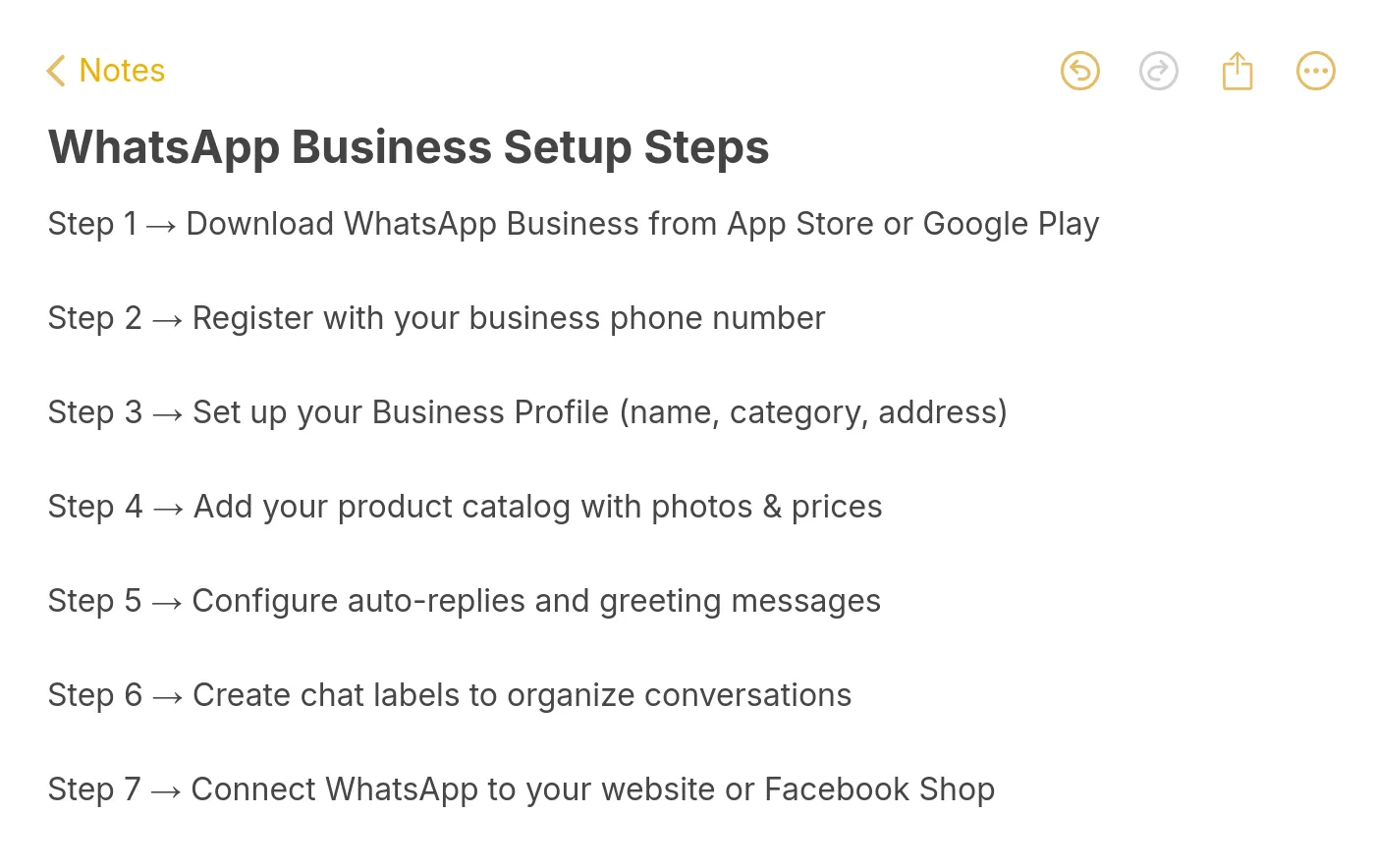
1. Download and register — Install WhatsApp Business and verify your phone number
2. Build your business profile — Add your company name, address, description, and business hours
3. Set up messaging tools — Configure auto-replies, quick responses, and chat labels
4. Create your product catalog — Add items with photos, prices, and descriptions
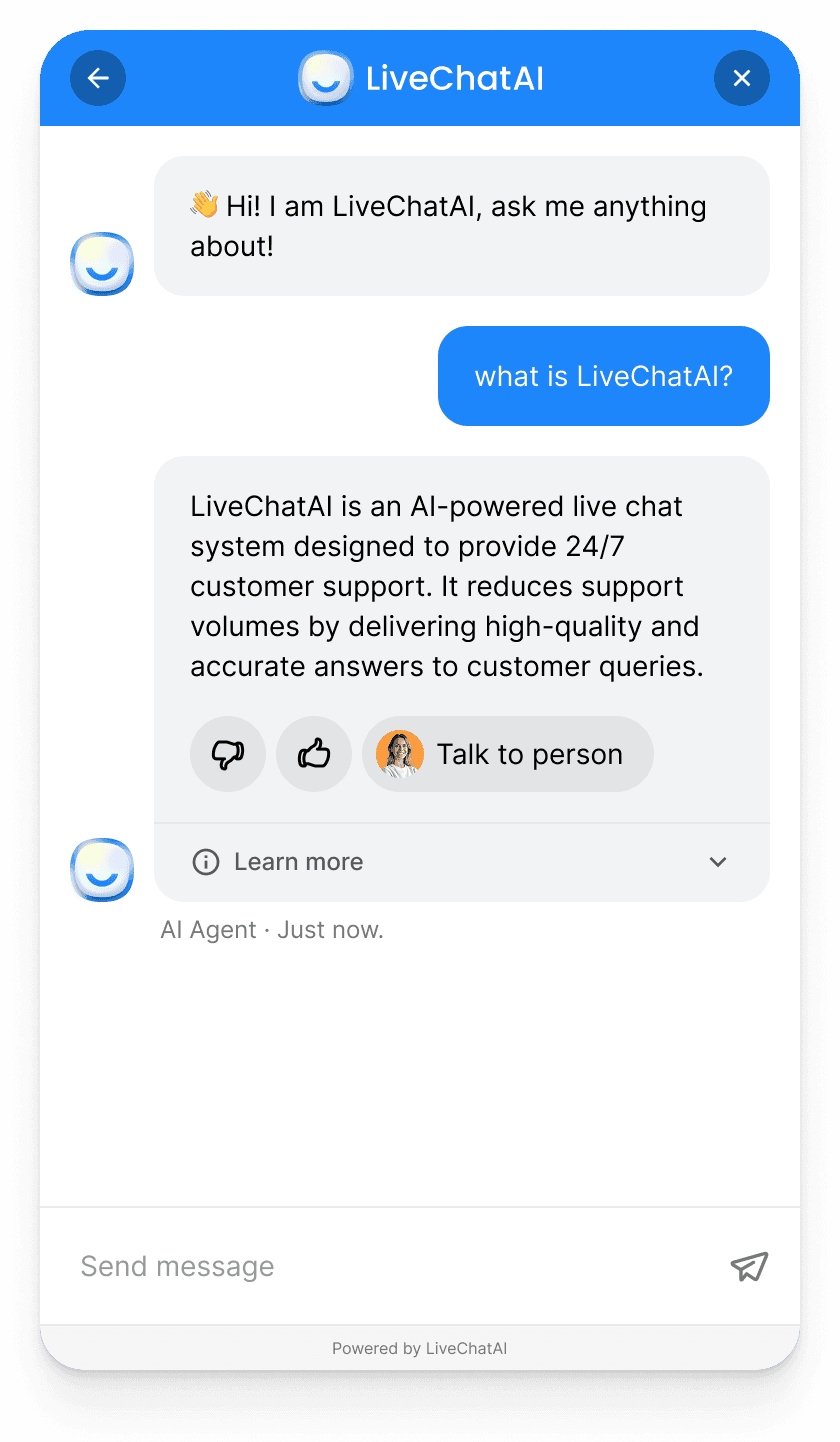
5. Connect a WhatsApp AI chatbot — Automate customer conversations with LiveChatAI
6. Launch marketing campaigns — Use broadcast messages and measure engagement metrics
What Is WhatsApp Business and How Does It Work?
WhatsApp Business is a separate app built specifically for companies that want to communicate with customers through WhatsApp. It's free to download and runs alongside (or instead of) the standard WhatsApp app on your phone.
The app works by giving businesses tools that regular WhatsApp doesn't offer: a verified business profile, automated greeting and away messages, chat organization through labels, and a product catalog that customers can browse without leaving the conversation. According to WhatsApp's own research, 73.3% of consumers across 22 global markets prefer messaging when communicating with a business.
There are two versions worth knowing about. The WhatsApp Business App is the free option designed for small businesses handling conversations manually. The WhatsApp Business Platform (formerly the API) is the paid option for medium and large companies that need automated messaging at scale, CRM integrations, and multi-agent access. According to Business of Apps, WhatsApp reached 2.9 billion active users in 2025, making it the most widely-used messaging platform worldwide.
WhatsApp vs. WhatsApp Business: What's Different?
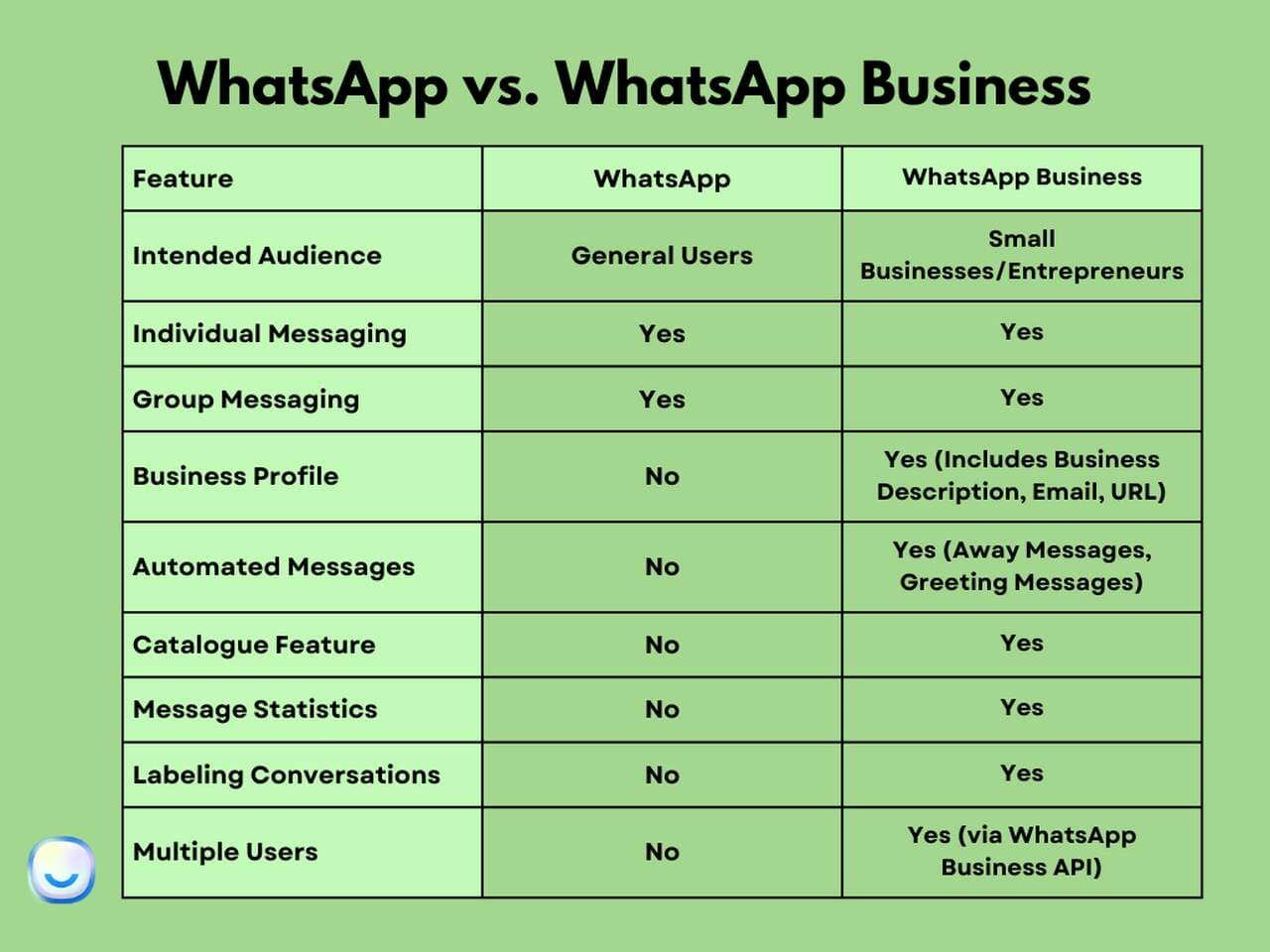
Regular WhatsApp is built for personal conversations. WhatsApp Business adds a layer of professional tools on top of the same messaging infrastructure. Here's what changes:
| Feature | WhatsApp (Personal) | WhatsApp Business |
|---|---|---|
| Business profile | No | Yes (name, address, hours, website) |
| Product catalog | No | Yes (up to 500 items) |
| Auto-replies | No | Yes (greeting + away messages) |
| Quick replies | No | Yes (saved response templates) |
| Chat labels | No | Yes (color-coded organization) |
| Messaging statistics | No | Yes (sent, delivered, read counts) |
| Short link generator | No | Yes (wa.me links for marketing) |
| End-to-end encryption | Yes | Yes |
| Price | Free | Free (App) / Paid (Platform API) |
The biggest practical difference: WhatsApp Business lets you separate your work and personal conversations. You can run both apps on the same phone, each on a different number. Or you can convert your personal number to a business account, though you can't use the same number on both apps simultaneously.
What Are the Key WhatsApp Business Features?
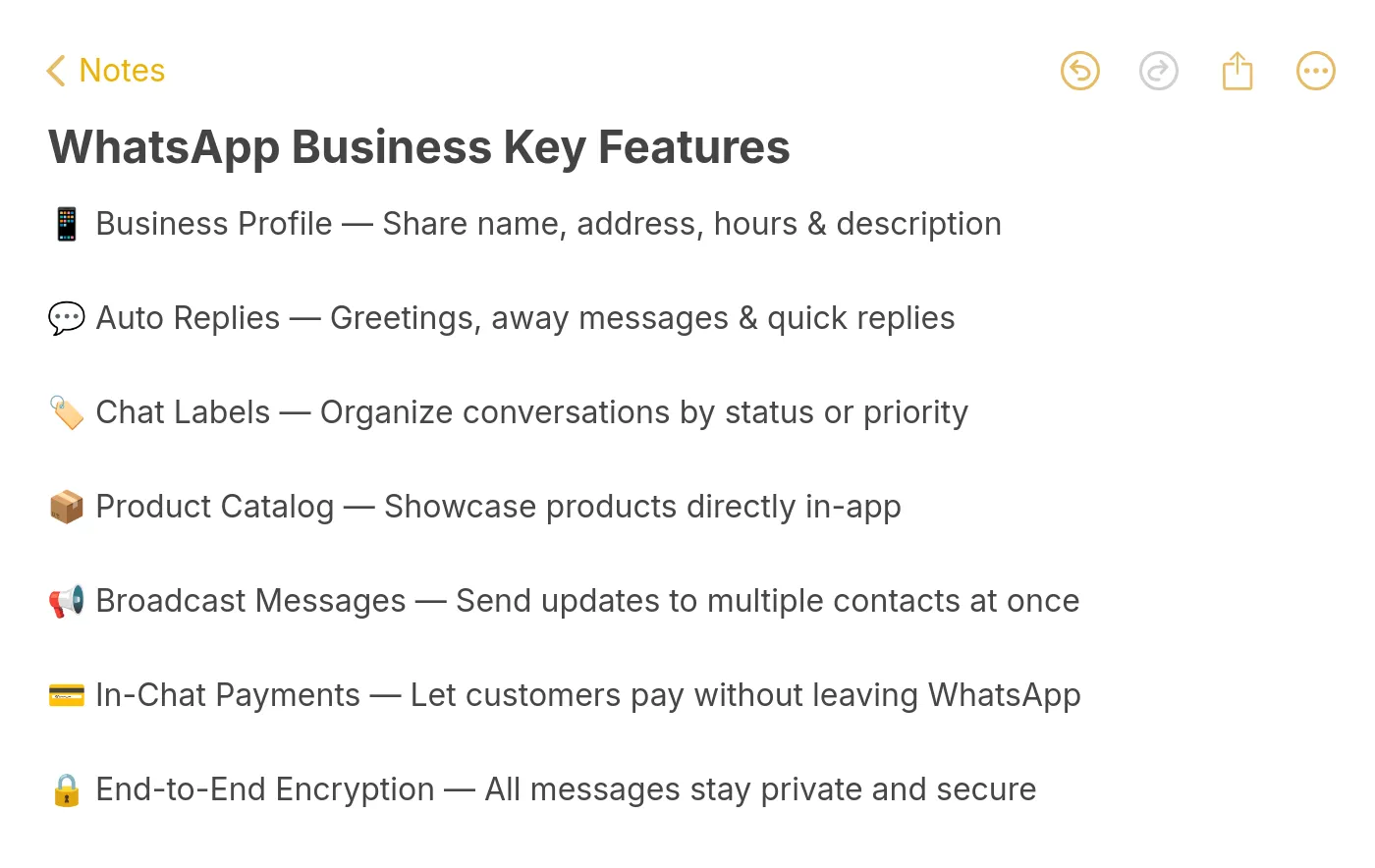
WhatsApp Business packs several tools that turn a simple messaging app into a customer engagement platform. Here's what each one actually does and why it matters:
Business Profile
Your business profile acts as a mini landing page inside WhatsApp. Customers see your company name, description, physical address, email, website URL, and business hours before they even send a message. Fill every field. A complete profile signals legitimacy and reduces the "who is this?" friction that kills first conversations.
Automated Replies
You can set up three types of automated messages: a greeting message that fires when someone messages you for the first time (or after 14 days of inactivity), an away message that responds outside your business hours, and quick replies that let you type a shortcut like "/thanks" to send a pre-written response. According to Jesty CRM's research, WhatsApp messages are read within 5 minutes by around 80% of users, so fast replies directly affect conversion rates.
Chat Labels
Labels let you tag conversations with color-coded categories: "New Customer," "Pending Payment," "Order Complete," or whatever fits your workflow. You can filter your entire chat list by label, which becomes essential once you're handling more than 20-30 conversations per day.
Product Catalog
The catalog feature lets you upload up to 500 products with photos, descriptions, prices, and links. Customers browse your catalog directly inside WhatsApp and tap to ask questions about specific items. It's not a full e-commerce store, but it removes the friction of sending customers to an external website just to see what you sell. If you run a Shopify store, you can connect it to WhatsApp for a more integrated experience. Learn how in our guide on creating a Shopify WhatsApp support chatbot.
Broadcast Messages
Broadcast lists let you send the same message to up to 256 contacts at once. Each recipient gets it as a normal individual message, not a group chat. The catch: your broadcast only reaches contacts who've saved your number. This limits reach but keeps engagement high. According to ActiveCampaign, WhatsApp campaigns see click-through rates above 50%, compared to 25% for SMS.
WhatsApp Payments
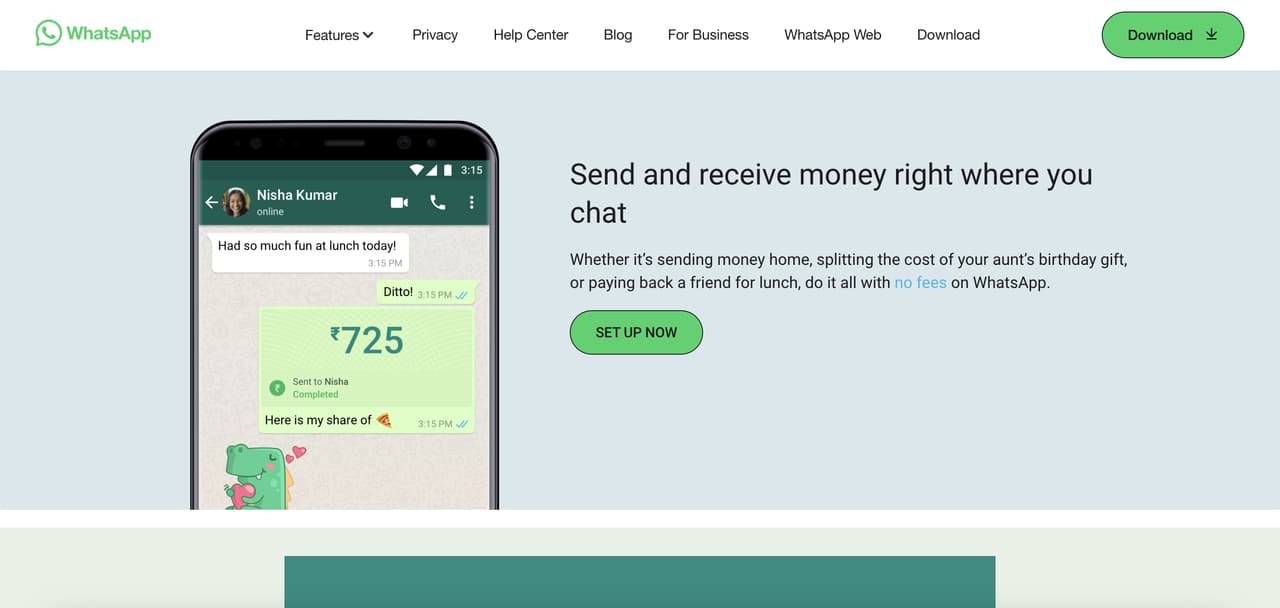
In supported countries (India, Brazil, and select others), WhatsApp Payments lets customers pay you directly inside the chat. The feature uses UPI in India and local payment rails elsewhere. It's not available globally yet, but where it works, it eliminates the step of redirecting customers to a separate payment page.
Interactive Messages and Reply Buttons
Through the Business Platform (API), you can send messages with up to three quick-reply buttons or a list of up to ten options. Customers tap instead of typing, which increases response rates and reduces misunderstandings. This feature is especially powerful for automating WhatsApp messages at scale.
Step 1: Download WhatsApp Business and Register Your Number
This step gets you from zero to a verified WhatsApp Business account in under 10 minutes. Without it, none of the business features are available.
1. Go to the Google Play Store or Apple App Store and search for "WhatsApp Business"
2. Download the app (it's free, around 120 MB)
3. Open the app and accept the Terms of Service
4. Enter the phone number you want to use for your business
5. Verify the number via the 6-digit SMS code WhatsApp sends
6. If you're migrating from regular WhatsApp on the same number, the app will prompt you to transfer your chat history. Tap Continue to migrate
You'll know it's working when: You see the WhatsApp Business home screen with a "B" icon in the app, and your phone number appears as verified in Settings > Business tools.
Watch out for:
• Using a landline number: WhatsApp Business supports landlines, but you'll need to select "Call me" instead of SMS for verification. The automated call reads the 6-digit code aloud. If the call doesn't come through within 60 seconds, check that your landline isn't blocking unknown numbers.
• Trying to run both apps on the same number: You can't use regular WhatsApp and WhatsApp Business with the same phone number. If you want both, you need two separate numbers. Many business owners use a dual-SIM phone or a virtual number service to handle this.
Pro tip: Use a dedicated business number from day one, even if it feels easier to just convert your personal account. Mixing personal and business contacts creates a mess once you start using labels and broadcast lists. I've seen businesses waste hours re-sorting contacts after making this mistake.
Step 2: Build Your Business Profile
Your profile is the first thing customers see when they open your chat. A complete profile builds trust before the conversation even starts.
1. Open WhatsApp Business and go to Settings > Business tools > Business profile
2. Tap your profile photo area and upload a high-resolution version of your logo (recommended: 640x640 pixels minimum)
3. Fill in your Business name (this can't be changed later without contacting WhatsApp support, so double-check it)
4. Select your Business category from the dropdown (e.g., "Shopping & Retail," "Professional Services," "Health")
5. Add your description (512 characters max) — write what your business does and what customers can expect from messaging you
6. Enter your address, business hours, email, and website URL
You'll know it's working when: You tap "View profile" from a customer's perspective and see all fields populated with your business information, including the correct category badge.
Watch out for:
• Leaving the description blank: An empty description screams "I set this up in 30 seconds and forgot about it." Write a clear two-sentence description of what you do and what customers can message you about. Customers who understand your business before chatting send higher-quality inquiries.
• Using a personal photo instead of a logo: Unless you're a solo consultant where your face IS the brand, use your company logo. Customers scanning their chat list need to instantly recognize your business.
Pro tip: Include your business hours even if you're available 24/7. Setting specific hours triggers the away message feature outside those windows, so customers always get an immediate response even when you're not at your desk. I've found this reduces "are you there?" follow-up messages by roughly half.
Step 3: Configure Your Messaging Tools
Automated messages handle the conversations you can't get to immediately. They're the difference between a customer waiting in silence and a customer who knows you received their message.
1. Go to Settings > Business tools > Greeting message
2. Toggle it on and write your greeting (e.g., "Hi! Thanks for reaching out to [Your Business]. We typically respond within 15 minutes during business hours. How can we help?")
3. Under Recipients, select Everyone or choose specific contacts/groups
4. Go to Settings > Business tools > Away message
5. Toggle it on, write your away message, and set the schedule (options: Always send, Custom schedule, or Outside of business hours)
6. Go to Settings > Business tools > Quick replies
7. Tap the + icon, type a message template, and assign a keyboard shortcut (e.g., "/hours" for your business hours response)
You'll know it's working when: You message your business number from a different phone and receive the greeting message within a few seconds. Test the away message by setting it to "Always send" temporarily.
Watch out for:
• Writing robotic greeting messages: "Thank you for contacting ABC Corp. Your message has been received and will be processed shortly." That sounds like a phone menu. Write it the way you'd actually greet someone walking into your store.
• Setting away messages too aggressively: If your away message fires every time you take 5 minutes to respond, customers get confused. Set it to trigger only outside business hours or during a custom schedule. The 14-day inactivity window for greeting messages is automatic and can't be shortened.
Pro tip: Create quick replies for your 10 most common questions and label them with obvious shortcuts. "/price," "/shipping," "/return" — keep them short. After a week of tracking which quick replies you use most, you'll know exactly where customers get stuck, which tells you what to fix on your website or in your product descriptions.
Step 4: Create Your Product Catalog
A product catalog inside WhatsApp saves you from sending individual photos and prices in every conversation. Customers browse and ask about specific items without leaving the chat.
1. Go to Settings > Business tools > Catalog
2. Tap Add new item
3. Upload up to 10 photos per product (minimum 480x480 pixels; square aspect ratio works best)
4. Enter the product name, price, and description
5. Add a link to the product page on your website (optional but recommended for tracking)
6. Add a product code if you use SKUs for inventory management
7. Tap Save and repeat for each product (up to 500 items)
You'll know it's working when: You see a shopping bag icon on your business profile, and tapping it shows your full catalog with images, prices, and descriptions loading correctly.
Watch out for:
• Uploading low-resolution photos: Blurry product images kill trust. Use photos that are at least 480x480 pixels. Natural lighting and a clean background work better than heavily edited studio shots for most small businesses.
• Skipping the product description: A name and price aren't enough. Include dimensions, materials, color options, or whatever details customers typically ask about. Every question you answer in the catalog is one fewer message you have to type manually.
Pro tip: Share individual catalog items directly in chat conversations when customers ask "what do you have in stock?" Instead of typing out a list, tap the attachment icon > Catalog > select the specific item. It sends a rich card with the photo, price, and description. This cuts average response time significantly and looks far more professional than a wall of text.
Step 5: Connect a WhatsApp AI Chatbot with LiveChatAI
Manual replies don't scale. Once you're handling more than 50 messages per day, response times suffer and customers drop off. A WhatsApp AI chatbot handles the repetitive questions automatically while routing complex issues to your team.
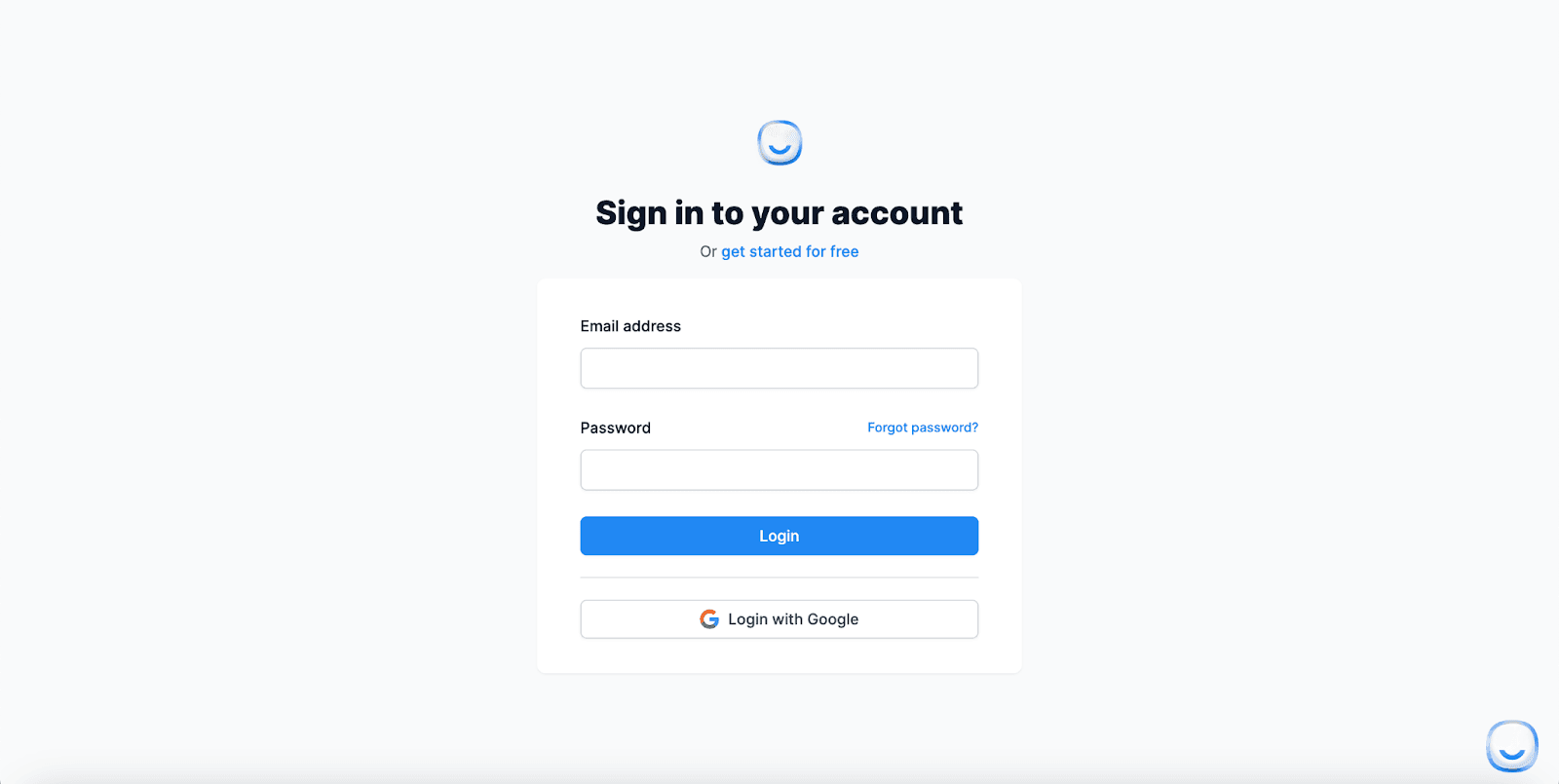
Register or Sign In to LiveChatAI
1. Go to app.livechatai.com and create a free account (or sign in if you already have one)
2. You'll land on the dashboard where you can manage all your AI chatbots
Create and Train Your AI Chatbot
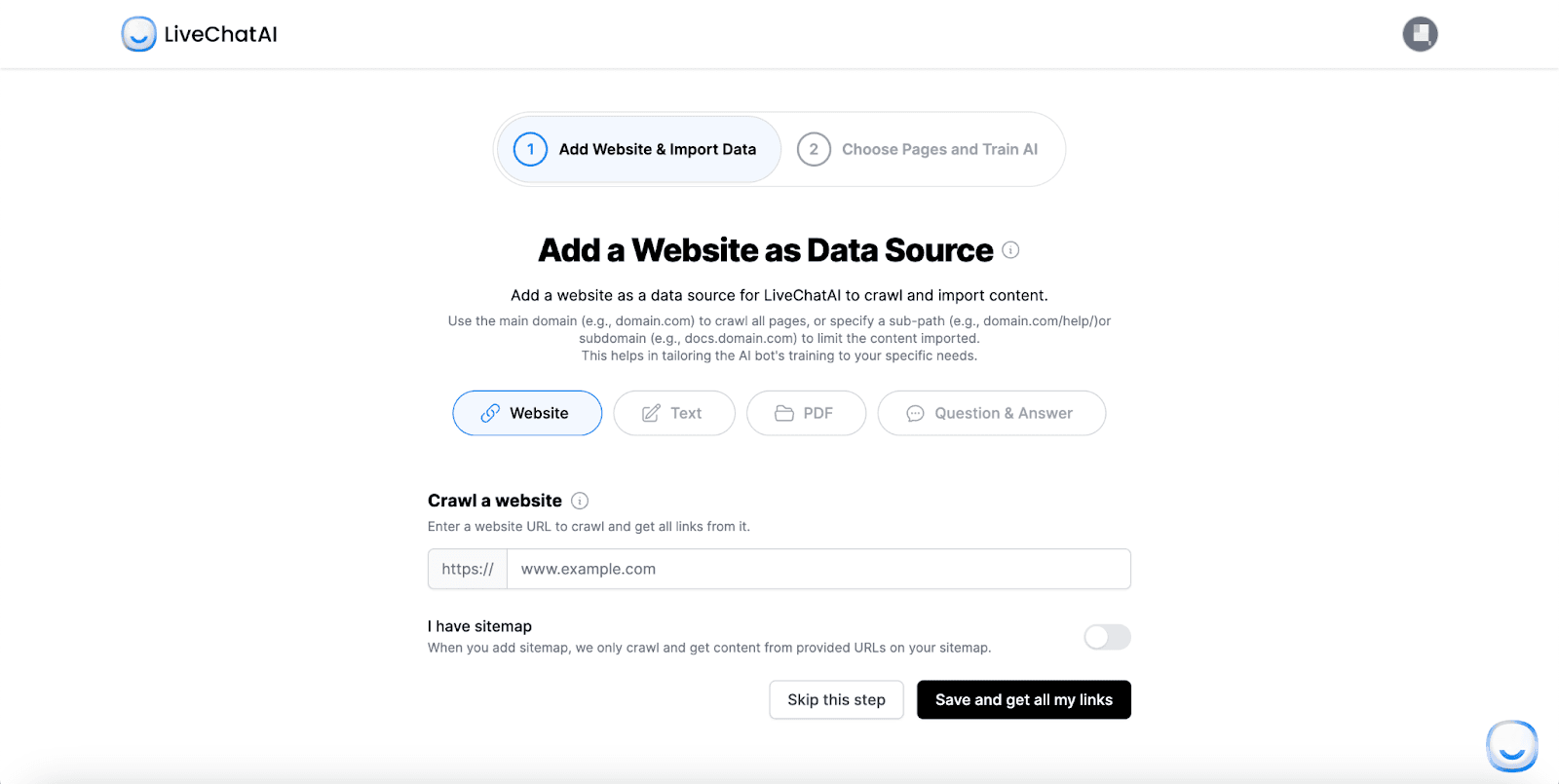
1. Click Create New AI Chatbot on your dashboard
2. Enter your website URL as the primary data source — LiveChatAI will crawl your site and learn from your existing content (FAQs, product pages, help docs)
3. You can also upload PDFs, paste text, or connect to your knowledge base for additional training data
4. Wait for the training to complete (usually 2-5 minutes depending on site size)
Configure the WhatsApp Integration
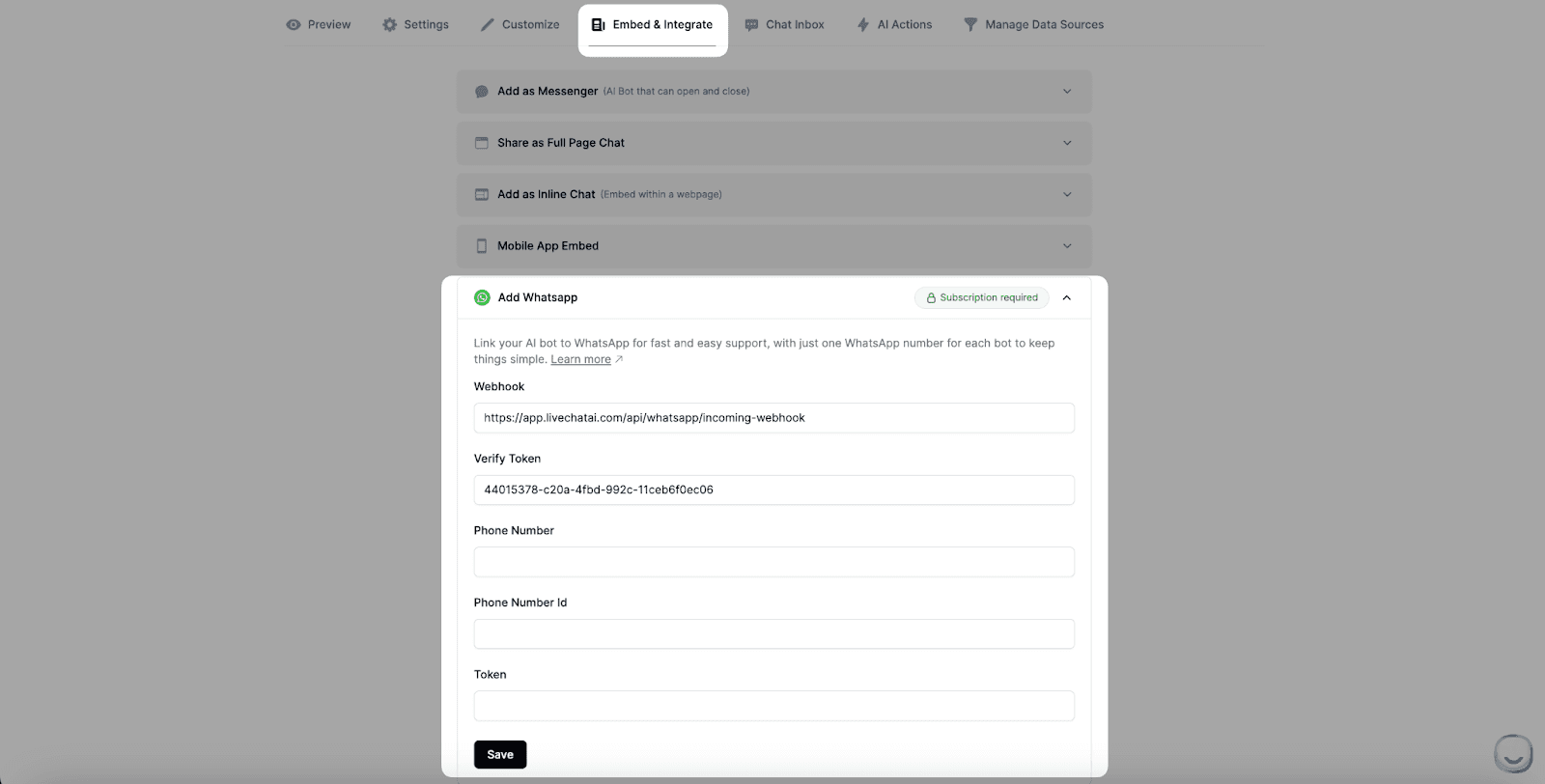
1. In your LiveChatAI dashboard, navigate to Embed & Integrate
2. Click Add WhatsApp from the integration options
3. Copy the Callback URL (webhook) that LiveChatAI provides
4. Open Meta for Developers and go to your WhatsApp app settings
5. Paste the Callback URL in the Webhook > Callback URL field
6. Copy the Verify Token from LiveChatAI and paste it into the Verify Token field in Meta
7. Back in LiveChatAI, enter your Phone Number, Phone Number ID, and Access Token from Meta for Developers
8. Click Save
You'll know it's working when: You send a test message to your WhatsApp Business number from a different phone, and your AI chatbot responds with an answer pulled from your training data within a few seconds.
Watch out for:
• Using the wrong Access Token: Meta for Developers generates temporary tokens that expire after 24 hours. Make sure you're using a permanent System User Access Token from your Business Manager. Temporary tokens will cause your chatbot to stop responding without warning.
• Forgetting to subscribe to webhook events: In Meta's dashboard, after setting the callback URL, you need to subscribe to the "messages" webhook field. Without this subscription, Meta won't forward incoming messages to LiveChatAI, so your bot sits silent.
Pro tip: Start with your FAQ page as the primary training source. It covers the questions customers actually ask, which means your chatbot handles the highest-volume queries from day one. You can expand training data later as you spot gaps in the bot's answers. For more examples of what a WhatsApp chatbot can do, check out these 10 WhatsApp chatbot examples.
For detailed integration instructions, refer to the LiveChatAI and WhatsApp integration guide.
Step 6: Launch and Measure Your WhatsApp Marketing Campaigns
Setting up WhatsApp Business is only half the job. Getting results from it requires a deliberate approach to campaigns and measurement.
Use Broadcast Messages Strategically
1. Go to Chats > Menu (three dots) > New broadcast
2. Select the contacts you want to reach (remember: they must have your number saved)
3. Write your message — keep it under 160 characters for maximum readability
4. Include one clear call-to-action (a question, a link, or a reply prompt)
Don't blast daily promotions. Two to three broadcasts per week is the sweet spot for most businesses. More than that and you'll see opt-outs climb. According to Sprout Social's 2026 Social Media Content Strategy Report, 46% of marketers are increasing their investment in WhatsApp this year — competition for attention in WhatsApp inboxes is growing fast.
Set Up Customer Support Chats
Create a system for incoming support messages. Use labels to sort conversations by status: "New," "In Progress," "Waiting on Customer," "Resolved." This prevents conversations from falling through the cracks. You can also use canned response templates to maintain consistency across your support team.

Track Your Metrics
WhatsApp Business gives you basic analytics under Settings > Business tools > Statistics. Track these numbers weekly:
MetricWhat It Tells YouTargetMessages sentYour outbound activity volumeConsistent week over weekMessages deliveredHow many actually reached recipients95%+ of sentMessages readCustomer engagement level70%+ of deliveredMessages receivedInbound interest and conversation startsGrowing month over month
You'll know it's working when: Your read rate stays above 70% and your response volume grows steadily without a proportional increase in support team workload (because the chatbot handles repetitive queries).
Watch out for:
• Sending broadcasts without value: "Check out our new collection!" is not value. "We just restocked the 3 items that sold out last week — here's the list" is. Every broadcast should give the recipient a reason to read beyond the first line.
• Ignoring read receipts: If your messages are delivered but not read, your content isn't compelling enough, or you're sending at the wrong time. Test different days and times for broadcasts until you find what works for your audience.
Pro tip: Create a simple spreadsheet tracking your weekly WhatsApp metrics alongside your sales numbers. After a month, you'll start seeing which types of broadcasts actually drive revenue versus which ones just get read and forgotten. This data tells you exactly what to send more of.
What Results to Expect from WhatsApp Business
Setting up WhatsApp Business won't transform your revenue overnight. Here's a realistic timeline based on what most businesses experience:
Week 1-2: You'll get the basics running — profile, auto-replies, catalog. Customer conversations will start trickling in, mostly from people who already know your business. Response times should drop immediately thanks to quick replies.
Month 1: Regular customers start using WhatsApp as their preferred contact method over phone calls and email. You'll notice your support email volume dropping. If you've set up a chatbot, it should be handling 40-60% of incoming questions without human intervention.
Month 2-3: Broadcast campaigns start showing patterns. You'll know which message types get clicks and which get ignored. According to WhatsApp's State of Business Messaging report, 72.4% of consumers are more likely to purchase from a brand that offers messaging, so conversion rates through WhatsApp tend to outperform email.
Month 3-6: WhatsApp becomes a significant support and sales channel. Businesses that stick with it typically see a measurable reduction in support ticket volume because the chatbot and quick replies handle the repetitive work. Your team spends more time on complex issues and less time answering "what are your hours?" for the hundredth time.
The Pros and Cons of Using WhatsApp Business
No tool is perfect. Here's an honest assessment:
| Pros | Cons |
|---|---|
| Free to use for small businesses | Broadcast messages only reach contacts who saved your number |
| 3+ billion users already on the platform | WhatsApp Business API costs money at scale (per-conversation pricing) |
| 80% message read rate within 5 minutes | No built-in CRM — you need third-party tools for contact management |
| End-to-end encryption builds customer trust | Both parties need an internet connection |
| Product catalog reduces friction in sales conversations | Payments only available in select countries |
| AI chatbot integration automates repetitive queries | Risk of account ban if you send too many unsolicited messages |
The free app works well for businesses handling under 100 conversations per day. Once you exceed that, you'll likely need the Business Platform (API) with a solution like WhatsApp Business chatbots to keep up without hiring additional support staff.
Conclusion
WhatsApp Business turns the world's most popular messaging app into a customer support and sales tool. The setup is straightforward: download the app, build your profile, configure auto-replies, add your product catalog, and connect a chatbot to handle the volume.
The biggest mistake businesses make is treating WhatsApp Business like a broadcast channel instead of a conversation channel. Start by responding to incoming messages quickly and well. Add broadcasts once you've built a contact list that actually wants to hear from you.
If you want to automate the repetitive parts without losing the personal touch, integrate WhatsApp with your website and let an AI chatbot handle the first response. Your team focuses on the conversations that actually need a human. To learn more about real-world chatbot use cases across industries, check out our detailed breakdown.
Frequently Asked Questions
What happens if I use my personal number for WhatsApp Business?
You can use your personal number, but it will convert your regular WhatsApp account to a Business account. Your chat history transfers over. You won't be able to use regular WhatsApp with that number anymore unless you switch back (which requires uninstalling WhatsApp Business). For most people, getting a separate business number is the better long-term option.
Can I use WhatsApp and WhatsApp Business on the same phone?
Yes, but not on the same number. You need two different phone numbers — one for each app. Dual-SIM phones or virtual number services (like Google Voice in the US) make this straightforward. Both apps run independently and don't interfere with each other.
Is WhatsApp Business free to use?
The WhatsApp Business app is completely free. There are no monthly fees, no per-message charges, and no premium tiers. The paid option is the WhatsApp Business Platform (API), which charges per conversation and is designed for businesses that need automated messaging, multi-agent access, or CRM integrations. According to Jesty CRM, businesses spend an average of $720 on WhatsApp APIs annually.
What's the difference between WhatsApp Business App and WhatsApp Business Platform?
The App is the free, phone-based tool for small businesses. You manage conversations manually from your phone. The Platform (API) is the paid option that connects WhatsApp to your existing business tools — CRMs, helpdesks, chatbot platforms like LiveChatAI. The Platform supports multiple team members, automated message flows, and handles thousands of conversations simultaneously. If you want to understand how AI chatbots fit into this picture, read AI agent vs chatbot differences.
How do I contact WhatsApp Business support?
Open the app, go to Settings > Help > Contact us. You can describe your issue and attach screenshots. WhatsApp support typically responds within 24-48 hours via email. For API-related issues, you'll need to go through your Business Solution Provider or submit a ticket through the Meta Business Help Center.
How long does it take to set up WhatsApp Business?
Basic setup (download, registration, profile) takes about 20 minutes. Adding a product catalog depends on how many items you have — budget 5 minutes per product for photos and descriptions. Connecting an AI chatbot through LiveChatAI takes another 30-60 minutes, including the Meta for Developers configuration. The whole process from zero to a fully functional WhatsApp Business account with chatbot can be done in a single afternoon.
For further reading, you might find these helpful:
• 15 Positive Reviews Response Examples