





AI Is No Longer Just “Support”
I’ve spent the last decade building products at the intersection of marketing, SaaS, and now AI. I’ve worked with hundreds of brands, scaled products from zero to traction, and watched entire categories evolve faster than anyone expected.
If there’s one thing I’m absolutely sure about today, it’s this: AI is no longer a nice-to-have support layer.
It’s becoming a core engine for revenue, experience, and operational leverage.
This belief didn’t come from trend reports or hype cycles. It came from building, shipping, breaking, and rebuilding real AI systems used by real customers—especially in eCommerce, where every conversation directly impacts sales, retention, and trust.
While working on AI-driven chatbots—particularly on WhatsApp—I started to notice a clear shift. The most effective AI systems weren’t the ones that talked better. They were the ones that did things: moving users forward, reducing friction, and turning conversations into outcomes.

This post is a practical reflection on what I’ve learned while designing AI products that go beyond answering questions—and start acting as part of the product itself.
Let’s start with the biggest realization behind all of this: why building AI products requires a completely different mindset than building traditional software.
Why I Started Thinking Differently About AI in Commerce
For years, “chatbots” meant one thing: a box in the corner of your website that tried to deflect support tickets.
I’ve built those. I’ve sold those.
They could answer FAQs, maybe route a ticket, but they never felt like part of the business itself. They were defensive tools—designed to reduce workload, not create value.
That mindset completely breaks down when you move to conversational commerce, especially on WhatsApp.
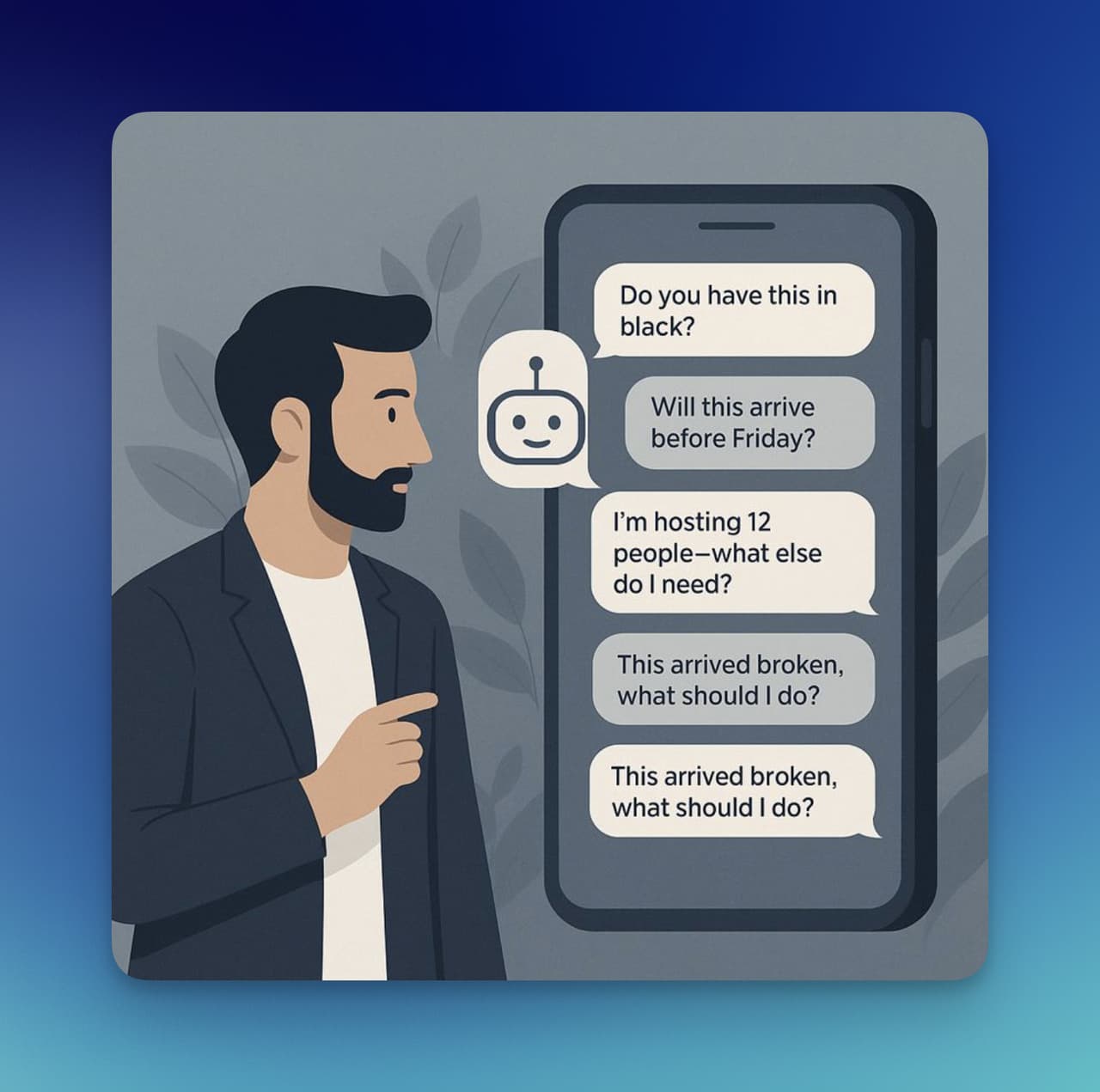
On WhatsApp, people don’t behave like “users.” They behave like customers talking to a store clerk.
They ask things like:
- “Do you have this in black?”
- “Will this arrive before Friday?”
- “I’m hosting 12 people—what else do I need?”
- “This arrived broken, what should I do?”
These aren’t support questions. These are decision-making moments.
And once I internalized that, everything about how I thought about AI had to change.
When Amazon Made the Shift Obvious
There’s a moment when a trend stops being theoretical.
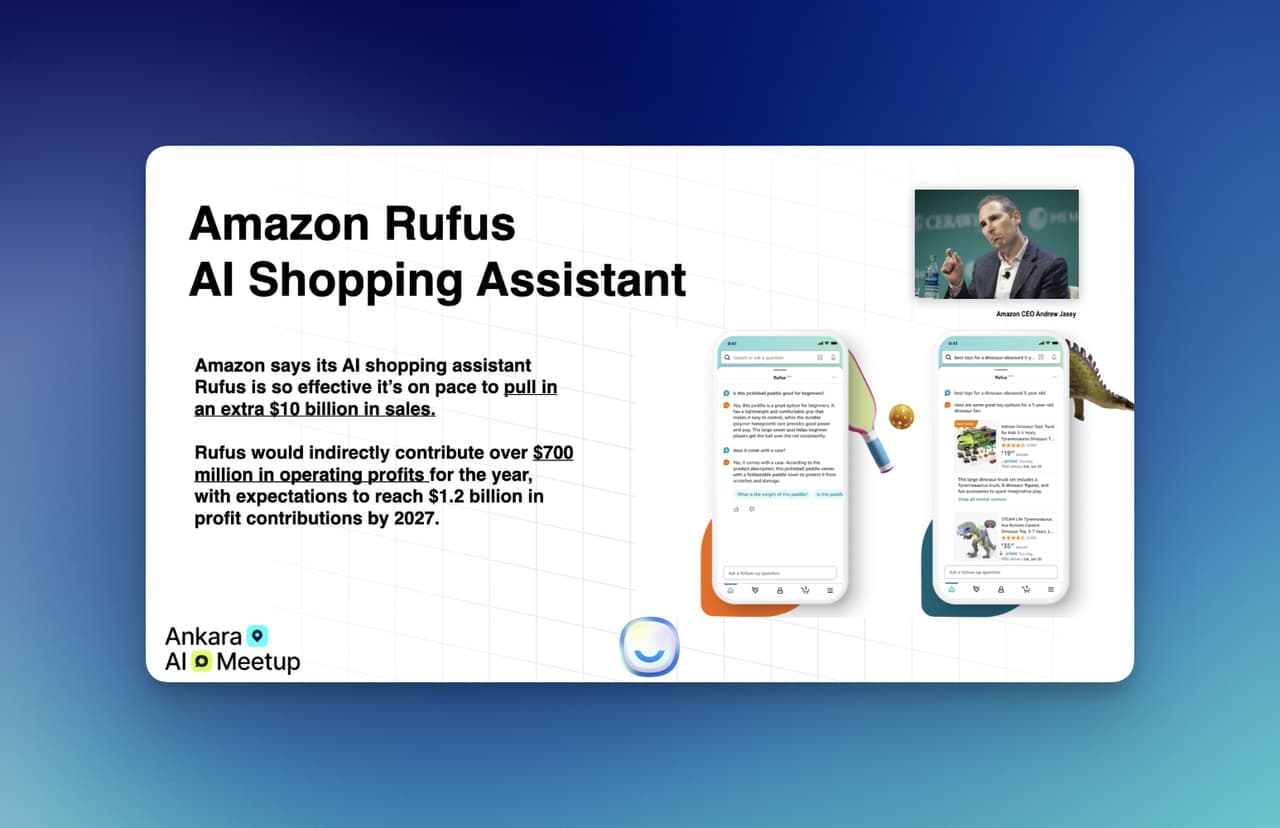
For me, that moment was Amazon Rufus.
Amazon publicly shared that their AI shopping assistant is on pace to generate $10 billion in additional sales. Not clicks. Not engagement. Sales.
Let that sink in.
This wasn’t a chatbot answering “Where is my order?” This was an AI system helping customers:
- Discover products
- Compare alternatives
- Make confident decisions faster
In other words, AI became a sales assistant, not a cost center.
When you look deeper, it gets even more interesting:
- Rufus is expected to indirectly contribute over $700M in operating profit
- With projections reaching $1.2B by 2027
At that scale, AI isn’t an experiment. It’s infrastructure.
And that’s when I realized: If Amazon is doing this at massive scale, smaller eCommerce brands need this even more.
I Decided to Build This Problem First-Hand
I didn’t want to analyze this trend from the outside.
I wanted to build it.
By the time we launched LiveChatAI, I had already spent years building Popupsmart and watching how personalization, timing, and context change conversion behavior. AI felt like the next inevitable layer—but only if it could move beyond scripted answers.
So we started with a simple but strict rule:
If AI can’t take action, it’s not good enough.
Answering questions is table stakes. Taking action is where real value is created.
What LiveChatAI Is
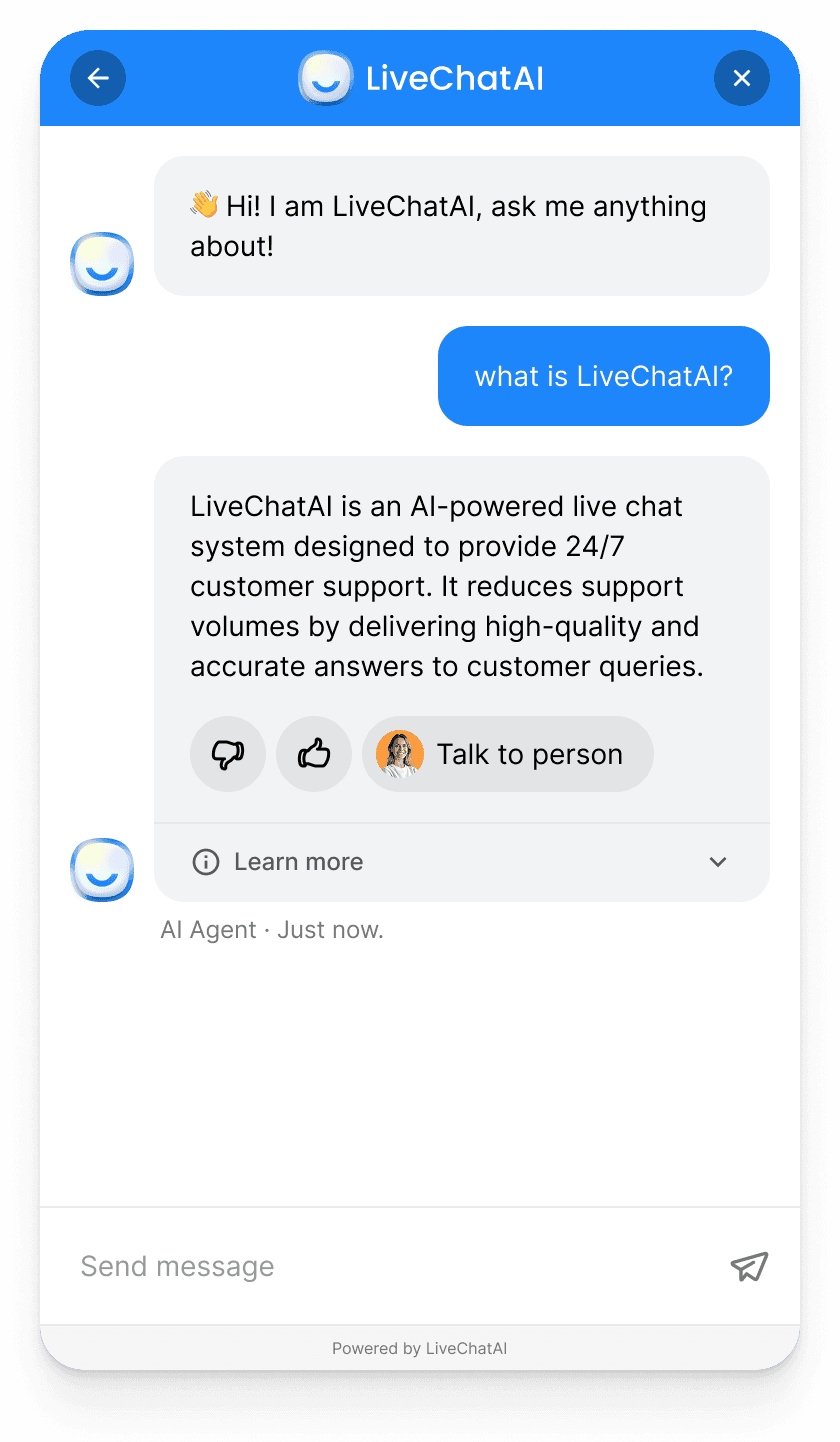
At its core, LiveChatAI is an AI chatbot for customer support.
But that description is intentionally incomplete.
Yes, it can:
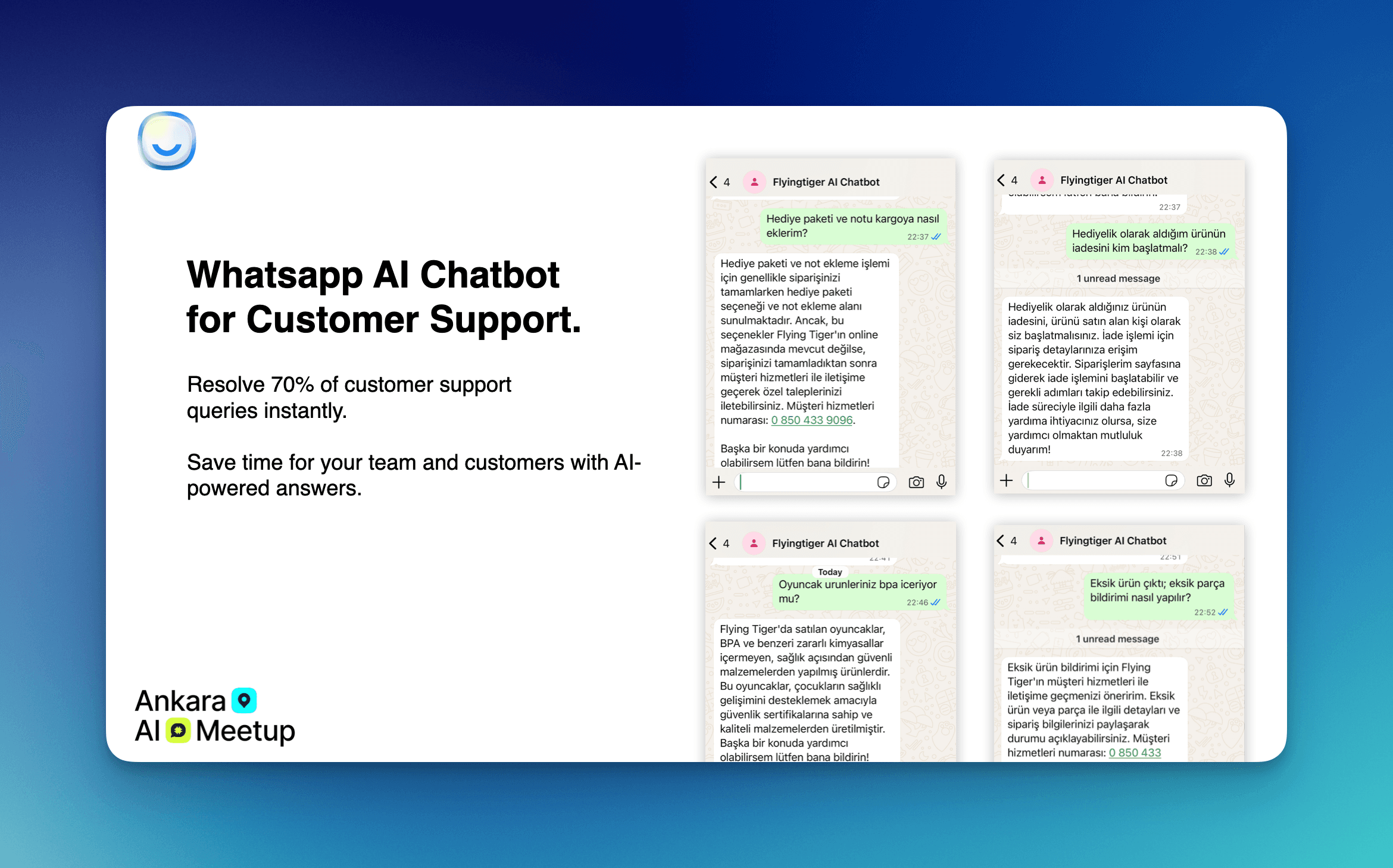
- Resolve up to 70% of customer support queries instantly
- Save time for both teams and customers
- Work across channels like WhatsApp
But I didn’t want to build “another chatbot.”
I wanted to build something that could:
- Understand context
- Act inside existing systems
- Move conversations forward instead of ending them
That’s a subtle difference—but it changes everything.
Why Most Chatbots Fail in Real Commerce
Before explaining what we built, it’s worth explaining what doesn’t work.
Most chatbots fail because they:
- Treat every message as an isolated question
- Ignore purchase intent
- Can’t connect to real data (orders, inventory, policies)
- Break the moment something unexpected happens
Commerce is messy. Returns happen. Packages break. Customers change their minds.
If AI can’t operate inside that mess, it becomes irrelevant the moment things go off-script.
The Four Principles I Built LiveChatAI Around
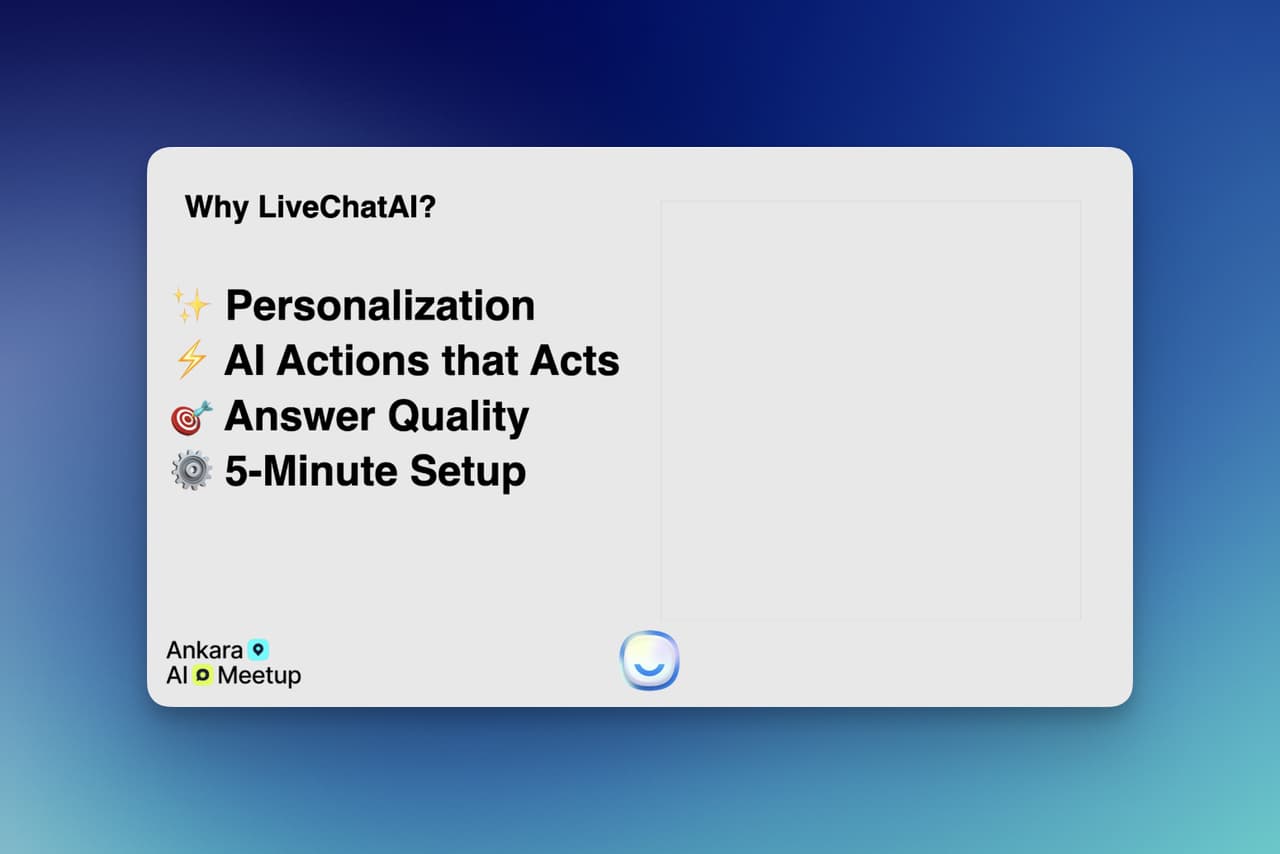
Everything we built maps back to four principles:
1. Personalization Is Not Optional
Every customer arrives with different intent, context, and urgency. AI needs to reflect that—not flatten it.
2. AI Must Take Action, Not Just Answer
Recommendation is good. Triggering workflows, fetching data, initiating processes—that’s where value lives.
3. Answer Quality Is the Product
Fast answers don’t matter if they’re wrong, vague, or generic.
4. Setup Should Take Minutes, Not Weeks
If it takes months to launch, adoption dies before value shows up.
These principles sound simple—but enforcing them at product level is hard. And it forced us to rethink how AI integrates with commerce systems.
Where WhatsApp Changes Everything
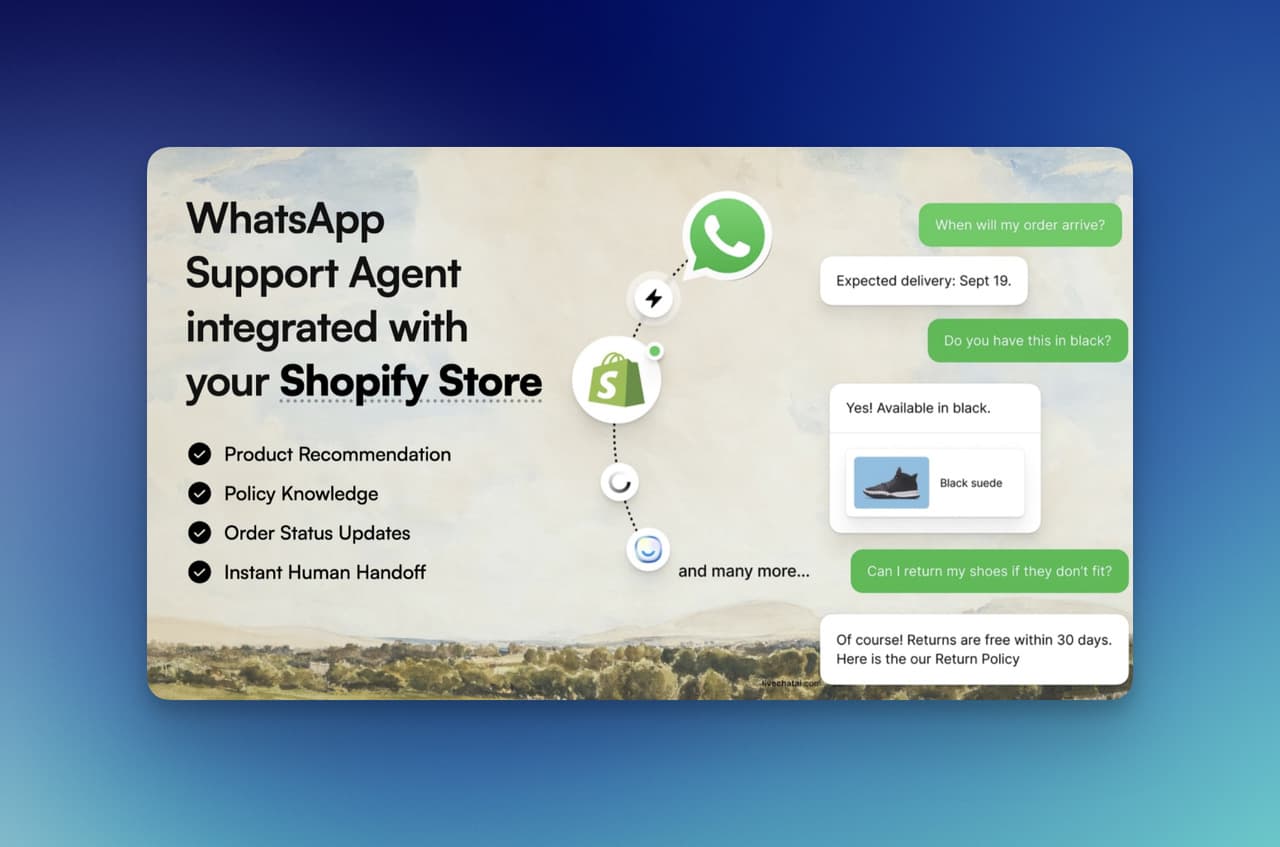
WhatsApp isn’t just another channel. It’s the most human digital channel businesses have access to.
When a customer messages a brand on WhatsApp, expectations are clear:
- They expect immediate answers
- They expect accuracy
- They expect continuity
This is where AI shines—if it’s connected properly.
In our Shopify integrations, LiveChatAI can:
- Recommend products
- Answer policy questions
- Check order status
- Escalate to a human instantly when needed
Not because it’s “smart,” but because it’s connected.
Context-Aware Product Recommendations Are the Breakthrough
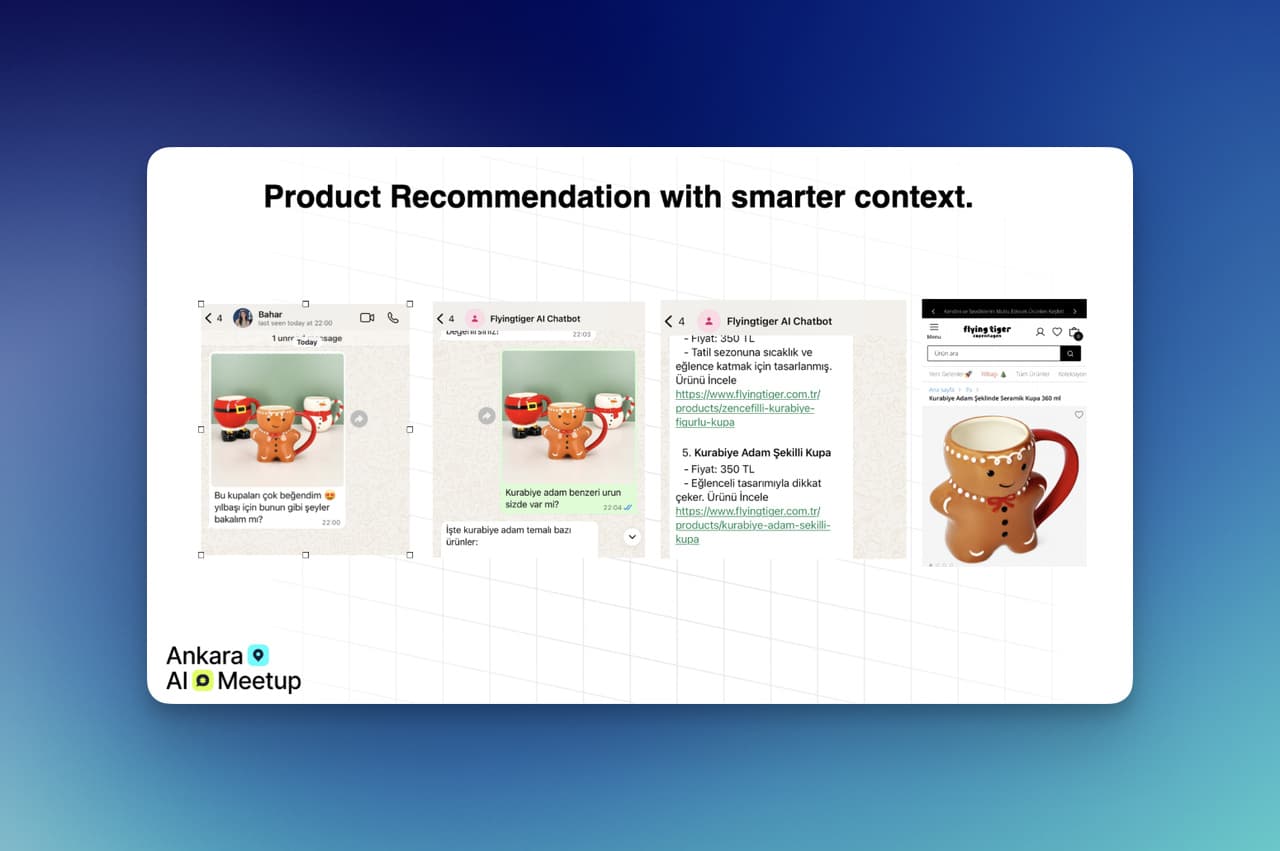
One of the most powerful shifts I’ve seen is moving from keyword-based recommendations to intent-based conversations.
Instead of:
“Show me mugs”
Customers say:
“I need a gift under 600 TL, something durable, suitable for a New Year’s dinner.”
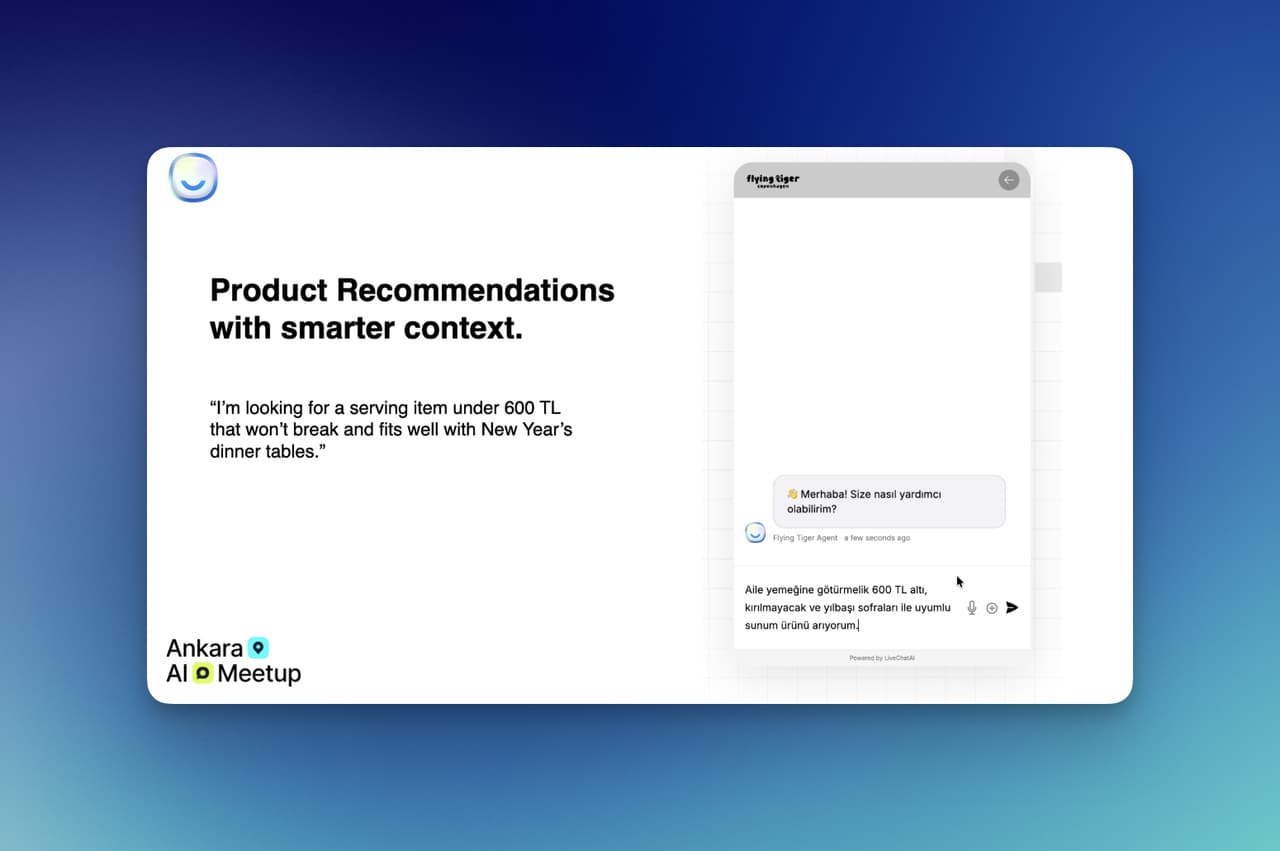
That’s not a search query. That’s a conversation.
And when AI understands:
- Budget
- Occasion
- Constraints
- Preferences
Recommendations stop feeling automated and start feeling helpful.
I’ve watched conversion behavior change dramatically when customers feel understood—not sold to.
This Is Bigger Than Support
At this point, it should be clear why I no longer see AI as a support tool.
Support is reactive. Commerce is proactive.
When AI sits inside conversations, understands context, and can take action, it becomes part of the decision engine of the business.
And this is just the beginning.
From Answers to Actions
At some point, every AI product hits the same wall.
It answers questions well. It sounds confident. Customers are impressed—for a while.
And then someone asks something simple like:
“Can you start the return for me?” “Can you check this order?” “Can you add this to my cart?”
That’s where most AI experiences quietly fail.
Because talking is easy. Doing is hard.
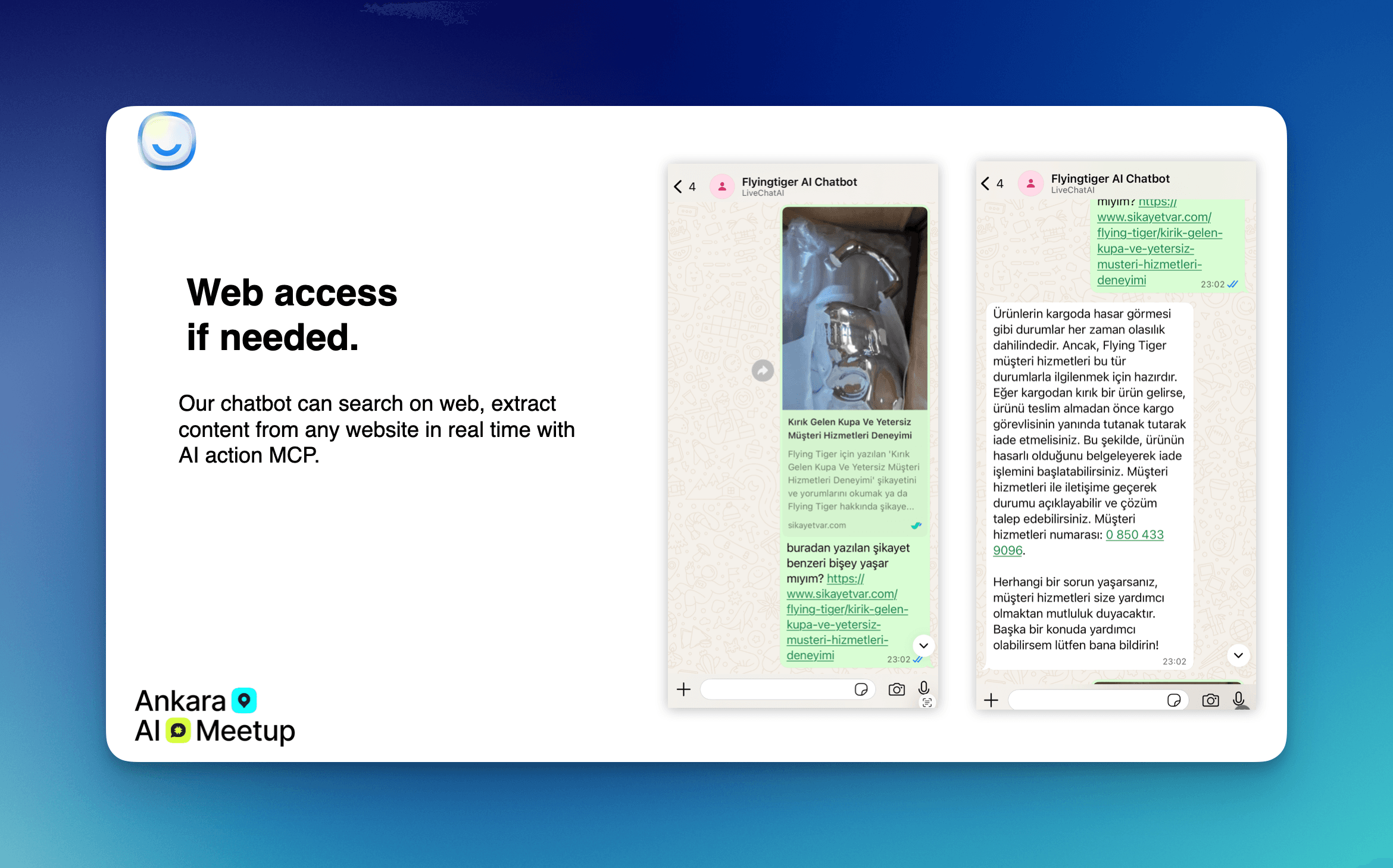
While building LiveChatAI, I learned very quickly that answering questions—even perfectly—is not enough in a real commerce environment. Customers don’t come to chat just to learn. They come to move forward.
They want progress.
Talking Isn’t the Same as Helping
In theory, a great answer should solve the problem. In practice, it rarely does.
When a customer asks about a return policy, what they usually mean is: “I want this return process to start, right now, without friction.”
When they ask about availability, they often mean: “I’m deciding whether to buy—help me finish this decision.”
If AI stops at explanation, the customer still has work to do. And the moment effort reappears, conversion drops.
That’s the gap we kept seeing over and over again.
So instead of asking “How do we make answers better?” we started asking something else:
“What should happen next?”
Designing AI That Can Move Things Forward
The shift happened when we stopped thinking of AI as a conversational layer and started treating it as an interface to actions.
Not autonomous actions. Not magic decisions.
Very specific, controlled actions.
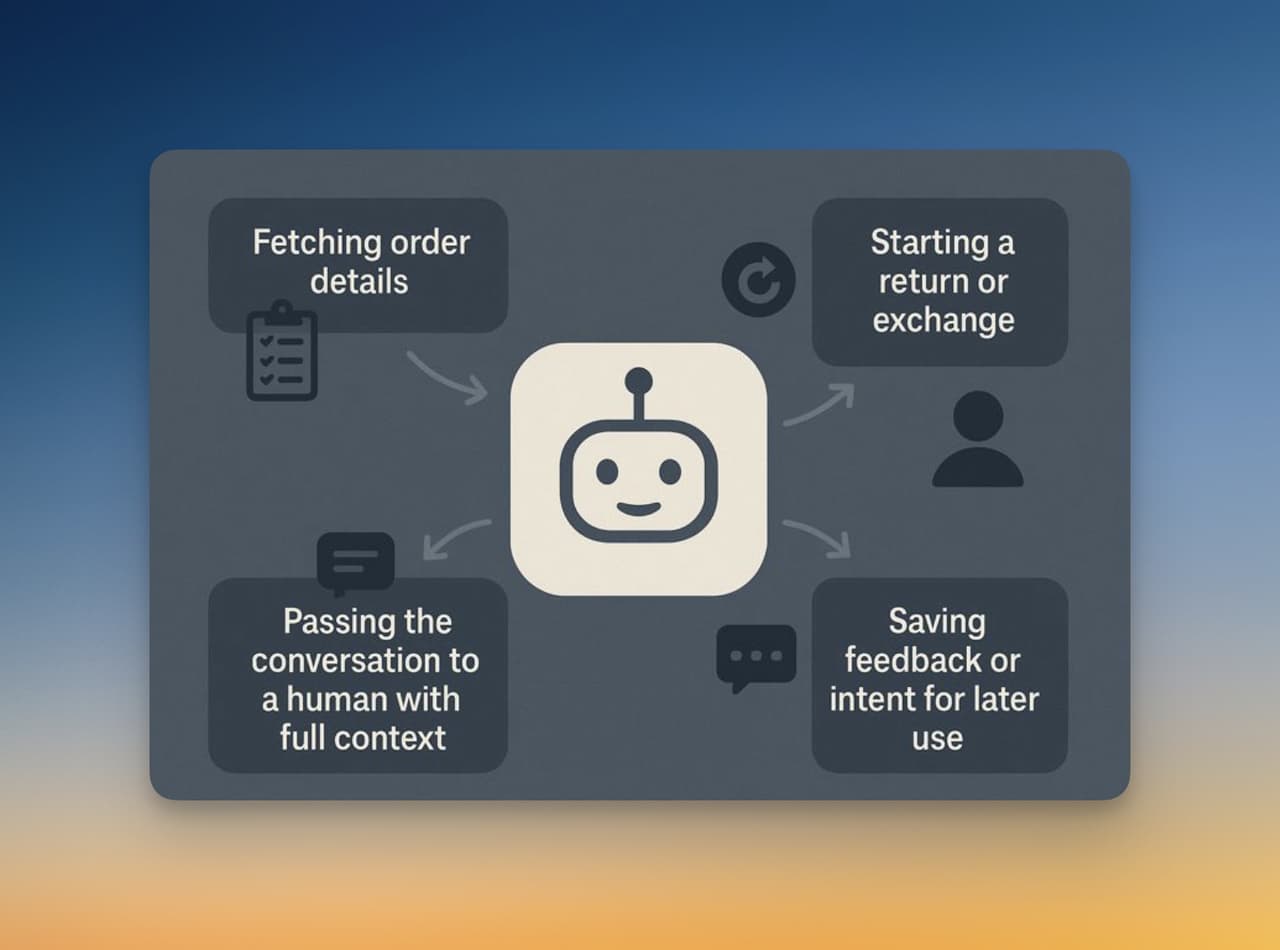
The kind of things a good support or sales agent already does every day:
- Fetching order details
- Starting a return or exchange
- Passing the conversation to a human with full context
- Saving feedback or intent for later use
The difference is that AI can do this instantly, consistently, and without fatigue.
But only if it’s designed that way.
Why Constraints Matter More Than Intelligence
One thing I’ve become very opinionated about is this:
Unconstrained AI is not a feature. It’s a liability.
In commerce and customer support, trust is fragile. One wrong action can break it.
That’s why we never wanted AI to “decide freely.” Every action needs boundaries.
In practice, this means:
- Actions are explicitly defined
- Triggers are intentional
- Inputs are structured
- Outputs are predictable
The AI doesn’t improvise workflows. It follows them.
That balance—between flexibility and control—is what makes AI usable at scale without creating chaos.
Real Conversations Are Messy (And AI Has to Handle That)
Customers don’t speak in clean prompts.
They send photos. They jump between topics. They explain things emotionally. Sometimes they’re frustrated, sometimes vague.
Returns, damaged products, missing items—these are not edge cases. They're a daily reality in eCommerce.
If AI can’t operate inside that mess, it becomes irrelevant the moment things stop being perfect.
What I’ve seen work best is AI that:
- Acknowledges the situation
- Explains the process clearly
- Guides the customer step by step
- Knows when to step aside and involve a human
Not because it’s trying to be human—but because it respects the customer’s time.
Why Fresh Information Beats Clever Responses
Another hard lesson: A confident wrong answer is worse than no answer.
Commerce changes constantly:
- Orders update
- Inventory shifts
- Policies evolve
- External information appears
If AI relies only on what it thinks it knows, accuracy degrades silently.
That’s why real-time access to up-to-date information matters more than clever phrasing or fancy prompts. When AI can verify, check, and adapt its response based on the latest context, trust stays intact.
In my experience, customers forgive slow answers. They don’t forgive incorrect ones.
Keeping Humans in the Loop Isn’t a Weakness
One misconception I still hear a lot is that AI should replace human agents.
I don’t agree with that.
The goal isn’t replacement. The goal is leverage.
AI should absorb repetition, noise, and routine decisions so that humans can focus on:
- Edge cases
- Emotional conversations
- Judgment calls
- Relationship-building moments
When AI and humans are designed to work together, support stops being a cost center and starts becoming a competitive advantage.
Where This Is Headed
I believe we’re moving toward a world where conversations become the primary interface for commerce.
Not forms. Not dashboards. Conversations.
In that world, the companies that win won’t be the ones with the most impressive AI demos. They’ll be the ones who quietly design systems that:
- Respect context
- Move customers forward
- Stay accurate under pressure
- Feel helpful instead of automated
That’s the kind of AI I’m trying to build.
Not because it’s trendy—but because it’s what real businesses actually need.
What I’m Building Toward
I don’t think the future of AI in commerce is about bigger models or flashier interfaces.
I think it’s about removing friction at the exact moment it appears.
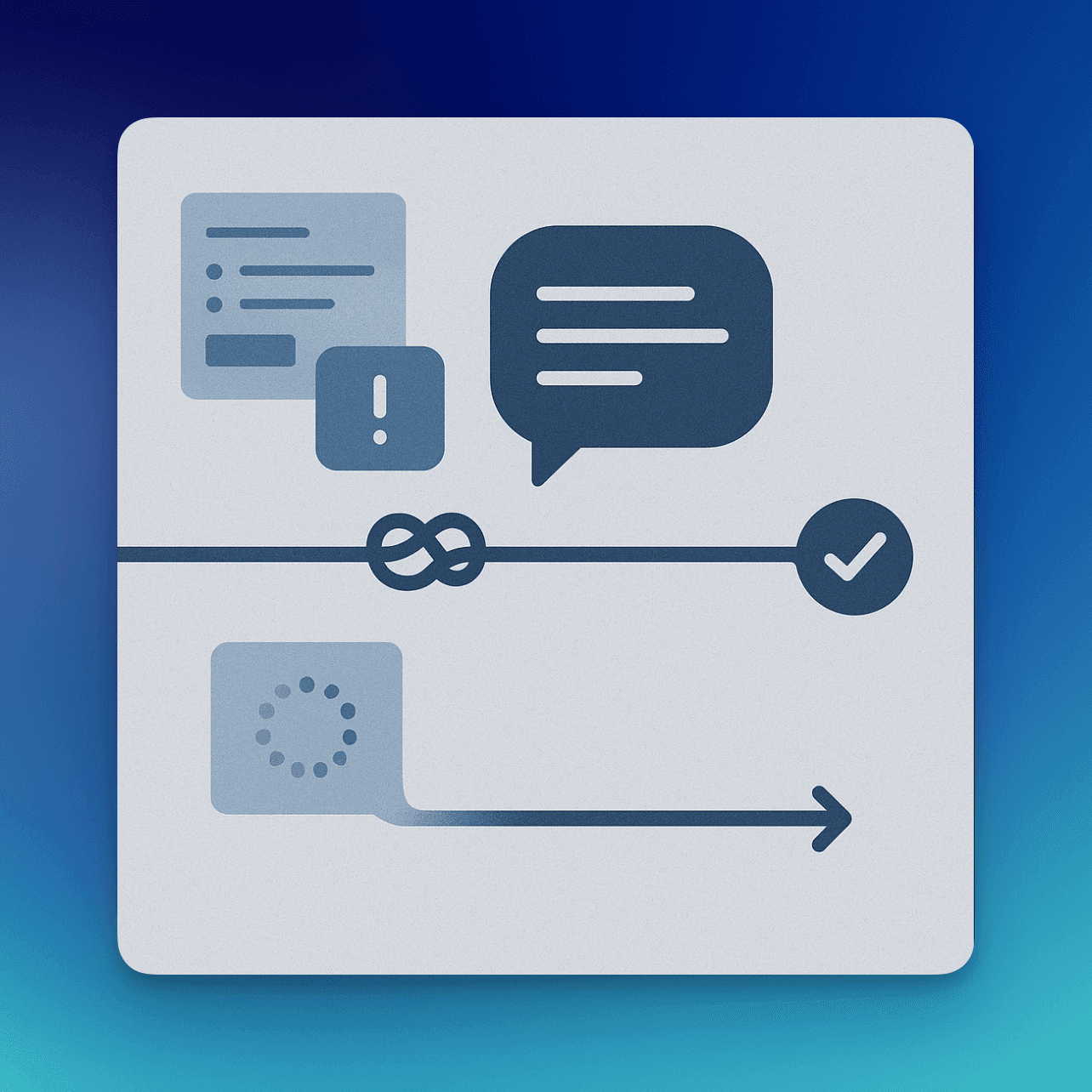
Most customer experiences don’t fail because businesses don’t care. They fail because systems are slow, fragmented, or disconnected. Customers feel that gap immediately. Every extra step, every repeated explanation, every handoff adds an invisible cost.
What excites me about conversational AI isn’t automation. It’s alignment.
When systems understand intent, context, and timing, interactions stop feeling like “support” and start feeling like progress.
That’s the bar I’m holding myself to.
Experience Compounds Faster Than Features
After building products for years, one thing has become very clear to me:
Features don’t compound. Experiences do.
You can copy a feature in weeks. You can’t copy a well-designed experience without understanding the problem deeply.
AI accelerates this gap.
Companies that design for real conversations—messy, emotional, time-sensitive conversations—will quietly pull ahead. Not because their AI is smarter, but because their systems respect how people actually behave.
That’s where real differentiation comes from.
A Personal Note
I didn’t start working with AI because it was trending.
I started because I was frustrated watching businesses lose customers for reasons that had nothing to do with product quality or price. They lost them in moments of confusion, delay, or miscommunication.
AI, when designed carefully, can protect those moments.
It can give people clarity instead of friction. Speed instead of waiting. Confidence instead of doubt.
That’s the problem I wake up thinking about.
If You’re Exploring This Path Too
If you’re a founder, marketer, or product leader thinking about conversational AI, my only advice is this:
Don’t start with the model. Start with the moment.
Look at where customers hesitate, repeat themselves, or drop off. Those are the places where AI can help—if it’s built with intention.
That’s the work I’m continuing to do.
Quietly, carefully, and very deliberately.
Frequently Asked Questions
What is the real difference between traditional chatbots and AI-powered conversational agents?
Traditional chatbots are designed to answer predefined questions. They work well for static FAQs but break down when conversations require context or action. AI-powered conversational agents, when designed properly, understand intent, maintain context, and can move the interaction forward by triggering real processes instead of just responding with text.
Can AI really handle customer support without harming the customer experience?
Yes—if it’s designed with clear boundaries. AI works best when it handles repetitive, high-frequency interactions and leaves edge cases, emotional conversations, and judgment calls to humans. The goal isn’t replacement; it’s reducing friction and response time while keeping humans in the loop when needed.
Why is taking action more important than giving perfect answers?
Because customers don’t come to chat to learn—they come to progress. A perfectly written answer that still requires the customer to take multiple steps creates friction. AI becomes truly useful when it helps complete tasks, not just explain them.